Map of Lancashire, A Description of the Country from thirty to forty miles around Manchester, Aikin, 1795, p. 9.
a
a
a
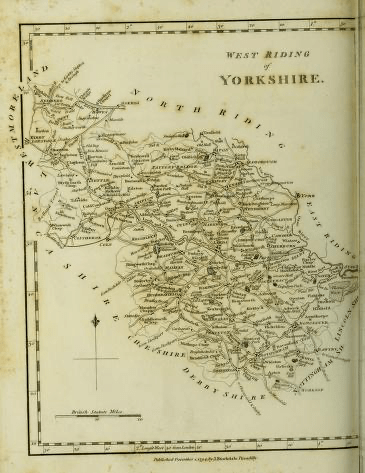
Map of West Riding of Yorkshire, A Description of the Country from thirty to forty miles around Manchester, Aikin, 1795, p. 89.
Map British Isles, Distribution of the Population, 1841
Map England and Wales, Distribution of the Population, Census 1851
Map England and Wales, Distribution of the Occupations of the People, Census 1851
a
KONICA MINOLTA DIGITAL CAMERA
Plan of Manchester, 1841, Pigot’s Commercial Directory of Manchester
Map of Manchester, Engels, 1844
a
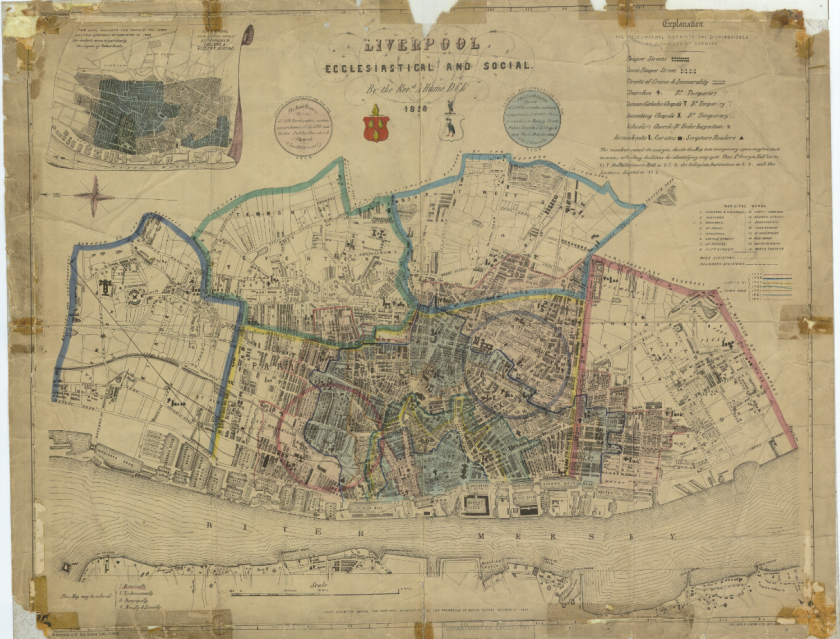
Abraham Hume, Rev., Map of Liverpool, Ecclesiastical and Social, 1858
The expanded version shows the streets with extreme poverty
Liverpool, 1859, part of Birkenhead, the docks, and Cheshire coast, John R. Isaac
Leeds, sanitary map, cholera epidemic, made in 1832 by Dr. Robert Baker; presented in “Report on the Sanitary Conditions of the Labouring Population”, Edwin Chadwick, 1842.
(the houses drawn in dark colour are those of the working classes; the square objects with smoke are the textile mills; the blue spots are localities of cholera cases in 1832; the red spots are localities with contagious diseases in 1834 to 1839; the “less cleansed” districts are painted over in dark brown)
Ager, A. W. Crime and Poverty in 19th-Century England: The Economy of Makeshifts A&C Black, Bloomsbury Publishing plc, London, 2014
Aidt, Toke; Leon, Gabriel; Satchell, Max The Social Dynamics of Collective Action: evidence from the Captain Swing Riots, 1830-31 CESifo Working Papers, download from http://www.ssrn.com
Allen, Robert C. The Great Divergence in European Wages and Prices from the Middle Ages to the FirstWorld War Explorations in Economic History, Vol. 38, 2001, pp. 411-447
Allen, Robert C. English and Welsh Agriculture, 1300-1850: Outputs, Inputs and Income Nuffield College, Oxford, 2005
Allen, Robert C. The High Wage Economy of Pre-Industrial Britain Nuffield College, 2006
Allen, Robert C. Engels’ Pause: Technical Change, Capital Accumulation, and Inequality in the British Industrial Revolution Explorations in Economic History, 2009 http://www.nuff.ox.ac.uk/Users/Allen/engelspause.pdf
Allen, Robert C. Class Structure and Inequality during the Industrial Revolution: Lessons from England’s Social Tables, 1688-1867 Economic History Review, February 2018 https://doi.org/10.1111/ehr.12661
Amos, Denise M. Working-Class Diet and Health in Nottingham, 1850-1939 Thesis submitted to the University of Nottingham for the Degree of Doctor in Philosophy, October 2000
Amos, S. W. Social Discontent and Agrarian Disturbances in Essex, 1795-1850 M. A. Thesis, Durham Theses, Durham University, 1971 http://etheses.dur.ac.uk/10399/
Anderson, Imogen The Decline of Mortality in the Nineteenth Century, with Special Reference to three EnglishTowns Submitted for the Degree of M. A. by Research, University of Durham http://etheses.dur.ac.uk/5687
Andrew, Alison The Working Class and Education in Preston 1830-1870: A Study in Social Relations Thesis submitted for the Degree of Doctor of Philosophy, University of Leicester, 1987 https://lra.le.ac.uk/handle/2381/7697
Anglesey, Marquess of A History of the British Cavalry, 1816-1919, Volume 2: 1851-1871 Chapter VII, Rank and File Pen & Sword Books Ltd., Barnsley, 1975
Anthony, Charles Robert Seaport, Society and Smoke: Swansea as a place of Resort and Industry c. 1700 to c. 1840 Thesis submitted for the Degree of Doctor of Philosophy, Centre for Urban History, University of Leicester, September 2002 https://lra.le.ac.uk/bitstream/2381/31049/1/U601322.pdf
Armstrong, Alan Stability and Change in an English County Town: a Social Study of York 1801-51 Cambridge University Press, Cambridge, 2005
Aspin, Chris The Water Spinners Helmshore Local History Society, Helmshore, 2003
Ashton, T. S. The Standard of Life of the Workers in England, 1790-1830 The Journal of Economic History, Vol. 9, Supplement: The Tasks of Economic History (1949), pp. 19-38 http://www.jstor.org/stable/2113044
Atkins, P. J. London’s Intra-Urban Milk Supply, circa 1790-1914 Transactions of the Institute of British Geographers, New Series, Vol. 2, No. 3, (1977), pp. 383-399
Atkins, Peter J. “A Tale of Two Cities”: a Comparison of Food Supply in London and Paris in the 1850´s In Book: Food and the City in Europe since the late Eighteenth Century, 2007 (pp. 25-38)
Bagnas, Valerie Hickman A Micro-History of the Poor Relief Response to Crisis and Dearth: Quainton,Buckinghamshire, 1796-1804 Thesis submitted for the Degree of Master of Philosophy at the University of Leicester https://lra.le.ac.uk/bitstream/2381/36396/1/2016BAGNASVHMPhil.pdf
Bagshaw, Peter The 1832 Poor Law Commission’s Answers to Rural Queries. Goudhurst, A Case Study of a Wealden Parish Archaeologia Cantiana, 1998, 118: pp. 63-76 https://kentarchaeology.org.uk/node/12508
Bailey, Michael R. Decision-making Processes in the Manufacturing Sector: The Independent Locomotive Industry in the 19th Century D. Phil. in Railway Studies, University of York, Institute of Railway Studies, January 1999 http://etheses.whiterose.ac.uk/2476/1/DX208420.pdf
Ball, Emma The impact of industrialization on adult mortality in Eastern Scotland, c. 1810-1861 A thesis submitted for the degree of PhD at the University of St. Andrews, 1996 http://hdl.handel.net/10023/2917
Barber, Brian John Leeds Corporation, 1835-1905: a History of its Environmental, Social and Administrative Services PhD Thesis, University of Leeds, 2020 uk.bl.ethos.753984
Barnsby, George J. The Standard of Living in the Black Country during the Nineteenth Century Economic History Review, No. 24, 1972, no. 2, pp. 220-239 http://www.jstor.org/stable/2594431
Baugh, D. A. The Cost of Poor Relief in South-East England, 1790-1834 Economic History Review, Vol. 28, No. 1 (Feb. 1975), pp. 50-68 http://www.jstor.org/stable/2594372
Blackman, Janet The food supply of an industrial town: A Study of Sheffield’s Public Markets 1780–1900. Business History, 5:2, pp. 83-97, (1963) http://dx.doi.org/10.1080/00076796300000002
Blanc, G., and Wacziarg, R., Change and Persistence in the Age of Modernization: Saint-Germain-d’Anxure, 1730-1895; NBER Working Paper 25490, 2018, http://www.nber.org/papers/w25490
Blaug, Mark The Myth of the Old Poor Law and the Making of the New The Journal of Economic History, Vol. 23, No. 2 (June 1963), pp. 151-184 https://www.jstor.org/stable/2116435
Bohlender, Matthias “…. um die liberale Bourgeoisie aus ihrem eignen Munde zu schlagen“, Friedrich Engels und dieKritik im Handgemenge (“… to defeat the liberal bourgeoisie with their own words”, Friedrich Engels and the Critique by Streetfighting) Marx-Engels Jahrbuch 2007, Akademie Verlag, Internationale Marx-Engels-Stiftung, pp. 9-33 http://mega.bbaw.de/begleitende-publikationen/mejb/1mejb-2007.pdf
Bolton, Margaret Causes of Death in Ramsgate 1774-1812: the Exceptional Detail provided by the Rev. Richard Harvey in the Parish Registers of St. Lawrence Kent Archaeological Society, 2016 https://kentarchaeology.org.uk/node/13018
Boot, H. M.; MainDonald, J. H. New estimates of age- and sex-specific earnings and the male–female earnings gap in the British cotton industry, 1833–1906 Economic History Review, 61, 2 (2008), pp. 380–408 https://doi.org/10.1111/j.1468-0289.2007.00398.x
Bowie, G. Windpowered Grain Milling, Flour Production and Bread Consumption in Hampshire in the eighteenth and nineteenth Centuries Proceedings Hampshire Field Club & Archaeological Society, Vol. 51, 1995, pp. 235-254
Bowman, John Frederick The Iron and Steel Industries of the Derwent Valley: a Historical Archaeology Thesis submitted for Doctor of Philosophy, School of History, Classics and Archaeology, Newcastle University, April 2018
Boxer, Jennifer L. “A Spirit of Benevolence”; Manchester and the Origins of Modern Public Health 1790-1834 A Thesis submitted to the Faculty of the Dorothy F. Schmidt College of Arts and Letters In Partial Fulfillment of the Requirements for the Degree of Master of Arts, Florida Atlantic University, Boca Raton, Florida, May 2013 https://fau.digital.flvc.org/islandora/object/fau%3A4083/datastream/OBJ/view
Boyer, George R. An Economic History of the English Poor Law, 1750-1850 Cambridge University Press, Cambridge, 1990
Boyer, George R. The Historical Background to the Communist Manifesto Journal of Economic Perspectives, Volume 12, Number 4, Fall 1998, pp. 151-174
Boyer, George R. The Evolution of Unemployment Relief in Great Britain Journal of Interdisciplinary History, 34 (3), 2004, pp. 393-433
Brown, Elaine Working-Class Education and Illiteracy in Leicester, 1780-1870 Thesis submitted for the Degree of Doctor of Philosophy at the University of Leicester, January 2002
Brown, John C. The Condition of England and the Standard of Living: Cotton Textiles in the Northwest,1806-1850 The Journal of Economic History, Vol. 50, No. 3 (Sep. 1990), pp. 591-614 Cambridge University Press http://www.jstor.org/stable/2122819
Buckberry, Jo; Crane-Kramer, Gillian The dark satanic mills: Evaluating patterns of health in England during the Industrial Revolution International Journal of Paleopathology, 39 (2022) pp. 93-108
Bull, G. B. G. Thomas Milne’s Land Utilization Map of the London Area in 1800 The Geographical Journal, Vol. 122, No. 1, (Mar.,1956) pp. 25-30 https://www.jstor.org/stable/1791472
Burnett, John Plenty and Want: A Social History of Food in England from 1815 to the Present Day Routledge, Abingdon, Oxfordshire, 1989
Burnette, Joyce Child Day-Labourers in Agriculture: Evidence from farm accounts, 1740-1850 Economic History Review, Vol. 65, No. 3 (August 2012), pp. 1077-1099 https://www.jstor.org/stable/23271563
Butler, Graham A. Disease, Medicine and the Urban Poor in Newcastle-upon-Tyne, c. 1750-1850 Thesis submitted in fulfilment of the requirements for the Degree of Doctor of Philosophy, School of Historical Studies, Newcastle University, January 2012
Caprettini, Bruno; Voth, Hans-Joachim Rage against the Machines: labour-saving technology and unrest in industrializing England, 1830-1832 Working Paper, University of Zurich
Chaloner, W. H. “The Hungry Forties” Chapter 15 of: Industry and Innovation: Selected Essays Routledge Library Editions, Industrial Economics, 2018
Chaloner, W. H.; Henderson, W. O. Friedrich Engels und das England der “Hungrigen 1840er Jahre” ORDO: Jahrbuch für die Ordnung von Wirtschaft und Gesellschaft, Vol. 25 (1974), pp. 261-281 Lucius & Lucius Verlagsgesellschaft mbH http://www.jstor.org/stable/23742437 Translated by Erich Hoppmann from:Institute of Economic Affairs, The Long Debate on Poverty, IEA Readings 9, London 1972, pp. 169-186 Friedrich Engels and the England of the “Hungry Forties”
Chapman, S. D. The Transition to the Factory System in the Midlands Cotton-Spinning Industry The Economic History Review, New Series, Vol. 18, No. 3 (1965), pp. 526-543 Economic History Society http://www.jstor.org/stable/2592563
Chinn, Carl Poverty amidst Prosperity: the Urban Poor in England, 1834-1914 Manchester University Press, Manchester, 1995
Chivers, Janet Mary A Resonating Void; Strategies and Responses to Poverty, Bath, 1770-1835 A thesis submitted in partial fulfilment of the requirements of the University of the West of England, Bristol, for the degree of Doctor of Philosophy at Bath Spa University, 2006 researchspace.bathspa.ac.uk/1468
Cinnirella, Francesco Optimists or Pessimists? A Reconsideration of Nutritional Status in Britain, 1740-1865 European Review of Economic History, 12, 325-254 (first published online 20 Oct 2008)
Clapham, J. H. Some Factory Statistics of 1815-16 The Economic Journal, Vol. 25, No. 99 (Sep. 1915), pp. 475-479 http://www.jstor.org/stable/2221911
Clark, Gregory; Huberman, Michael; Lindert, Peter H. A British Food Puzzle, 1770-1850 The Economic History Review, New Series, Vol. 48, No. 2 (May, 1995), pp. 215-237 http://www.jstor.org/stable/2598401
Clayton, Paul; Rowbotham, Judith How the Mid-Victorians Worked, Ate and Died International Journal of Environmental Research and Public Health, ISSN 1660-4601, 2009, 6, pp. 1235-1253 http://www.ncbi.nlm.nih.gov/pmc/articles/PMC2672390/
Clayton, Paul; Rowbotham, Judith An Unsuitable and Degraded Diet? Part One: Public Health Lessons from the Mid-Victorian Working Class Diet Journal of the Royal Society of Medicine, 2008, Jun 1, 101 (6), pp. 282-289 https://www.ncbi.nlm.nih.gov/pmc/articles/PMC2408622 Part Two: Realities of the Mid-Victorian Diet Journal of the Royal Society of Medicine, 2008, Jul 1, 101 (7), pp. 350-357 https://www.ncbi.nlm.nih.gov/pmc/articles/PMC2442131Part Three: Victorian Consumption Patterns and their Health Benefits Journal of the Royal Society of Medicine, 2008, Sep 1, 101 (9), pp. 454-462 https://www.ncbi.nlm.nih.gov/pmc/articles/PMC2587384
Clemens, E. M. B.; Pickett, Kathleen, Stature and Weight of Men from England and Wales in 1941 British Journal of Preventive and Social Medicine, 1957
Clutton-Brock, Juliet George Garrard’s Livestock Models Agricultural History Review, Volume 24 Part 1 (1976), pp. 18-29
Coleman, Terry The Railway Navvies Head of Zeus, London, 2015 (first published 1965)
Collier, Frances The Family Economy of the Working Classes in the Cotton Industry, 1784-1833 Manchester University Press, Manchester, 1964
Collins, E. J. T. Harvest Technology and Labour Supply in Britain, 1790-1870 Thesis submitted to the University of Nottingham for the Degree of Doctor of Philosophy, May 1970 http://eprints.nottingham.ac.uk/11840/1/526755.pdf
Collins, E. J. T. Dietary Change and Cereal Consumption in Britain in the Nineteenth Century The Agricultural History Review, Vol. 23, No. 2 (1975), pp. 97-115 http://www.jstor.org/stable/40273664
Collins, E. J. T. The Rationality of “Surplus” Agricultural Labour: Mechanization in English Agriculture inthe Nineteenth Century The Agricultural History Review, Vol. 35, No. 1 (1987), pp. 36-46 http://www.jstor.org/stable/40274515
Cookson, Gillian The West Yorkshire Textile Engineering Industry, 1750-1850 Submitted for the Degree of D. Phil, University of York, Department of Economics and Related Studies, July 1994
Coss, Edward J. All for the King’s Shilling: The British Soldier under Wellington, 1808-1814 University of Oklahoma, Norman, Oklahoma, 2010
Crafts, Nicholas; Wolf, Nicholaus The Location of the UK Cotton Textiles Industry in 1838: a Quantitative Analysis EHES Working Papers in Economic History, No.45, September 2013 European Historical Economics Society
Crafts, Nicholas Slow Real Wage Growth during the Industrial Revolution: Productivity Paradox or Pro-Rich Growth?CAGE Working Paper no. 474, May 2020
Crompton, D. G. Industrialisation, Population Change and Patterns of Disease and Mortality in Wigan 1800-1850 Unpublished Ph. D. Dissertation, Manchester University, 2011
Cuca, James R. Industrial Change and the Progress of Labor in the English Cotton Industry International Review of Social History, Vol. 22, No. 2 (1977), pp. 241-255 https://jstor.org/stable/44581773
Darby, Henry Clifford (ed.) New Historical Geography of England after 1600 University of Cambridge, Cambridge, 1973
Darra Mair, L. W., Dr. A Report on Relative Mortality in Through and Back-to-Back Houses in certain Towns inthe West Riding of Yorkshire Local Government Board His Majesty’s Stationery Office, 1910
Davenport, Romola J. Urbanization and Mortality in Britain, c. 1800-50 Cambridge Group for the History of Population and Social Structure, Department of Geography, University of Cambridge Economic History Review, 73, 2 (2020), pp. 455-485
Davenport, Romola J.; Boulton, Jeremy The first stage of the epidemiological transition in British cities MortalityandepidemiologicalchangeinManchester1750-1800 Power Point presentation
Davies, Julian Paul Artisans and the City: A Social History of Bristol’s Shoemakers and Tailors, 1770-1800 A Thesis submitted to the Faculty of Arts of the University of Bristol for the Degree of Doctor of Philosophy Department of Historical Studies, Faculty of Arts, The University of Bristol, June 2003
Deane, Phyllis Contemporary Estimates of National Income in the First Half of the Nineteenth Century The Economic History Review, New Series, Vol. 8, No. 3 (1956), pp. 339-354 https://www.jstor.org/stable/2598486 Contemporary Estimates of National Income in the Second Half of the Nineteenth Century The Economic History Review, New Series, Vol. 9, No. 3 (1957), pp. 451-461 https://www.jstor.org/stable/2591135
De Beer, Hans Observations on the History of Dutch Physical Stature from the Late Middle Ages to the Present Economics & Human Biology, April 2004 https://doi.org:10.1016/j.ehb.2003.11001
Dockerill, Bertie Liverpool Corporation and the Origins of Municipal Social Housing, 1842-1890 Transactions of the Historic Society of Lancashire and Cheshire, 165 (2016), December 2016, pp. 39-56
Drukker, J. W., Tassenaar, Vincent Paradoxes of modernization and material well-being in the Netherlands during the nineteenth century Book: Health and Welfare during Industrialization, Richard H. Steckel and Roderick Floud (eds.), 1997, pp. 331-378. http://www.nber.org/chapters/c7435
Duggan, Ed The Impact of Industrialization on an Urban Labour Market: Birmingham, England, 1770-1860 Thesis for Dissertation for D. Phil, University of Wisconsin, Madison, 1972 Short commentary by the author: Edward P. Duggan The Impact of Industrialization on an Urban Labor Market: Birmingham, England,1770-1860 The Journal of Economic History, Vol. 34, No. 1, The Tasks of Economic History (Mar., 1974), pp. 279-282 Published by: Cambridge University Press on behalf of the Economic History Association http://www.jstor.org/stable/2116973
Eccleston, Bernard A Survey of Wages Rates in Five Midland Counties, 1750-1834 Thesis submitted for the Degree of Doctor of Philosophy, University of Leicester, September, 1976 https://lra.le.ac.uk/bitstream/2381/35547/1/U418412.pdf
English Heritage (Michael E. Rose) Ancoats, Cradle of Industrialisation 2011
English Heritage The Buildings of the Textile Industry in the Borough of Pendle, Lancashire
Errazurez, A. Some Types of Housing in Liverpool 1785-1890 The Town Planning Review, Vol. 19, No. 2 (Spring, 1946), pp. 57-68 Liverpool University Press http://www.jstor.org/stable/40101876
Essex University The Online Historical Reports Website histpop.org
Evans, Christopher Work and Authority in an Iron Town: Merthyr Tydfil, 1760 – c. 1815 Thesis presented for the Degree of Ph. D. in the Faculty of Arts, University of London, 1988 https://core.ac.uk/download/pdf/78865713.pdf
Fairlie, Susan The Corn Laws and British Wheat Production, 1829-76 The Economic History Review, New Series, Vol. 22, No. 1 (Apr. 1969), pp. 88-116 https://www.jstor.org/stable/2591948
Feinstein, Charles H. Pessimism Perpetuated: Real Wages and the Standard of Living in Britain during and after the Industrial Revolution Journal of Economic History, 58 (1998), pp. 625-658 http://www.jstor.org/stable/2566618
Feinstein, Charles H. Wage-earnings in Great Britain during the Industrial Revolutionin: Applied Economics and Public Policy(ed.) Iain Begg, S. G. B. Henry Department of Applied Economics, University of Cambridge Cambridge University Press, Cambridge, 1998
Flavell, Neville The Economic Development of Sheffield and the Growth of the Town, c.1740 – c.1820 PhD The Division of Adult Continuing Education, University of Sheffield, February 1966
Floud, Roderick; Wachter, Kenneth W.; Gregory, Annabel The Physical State of the British Working Class, 1870-1914: Evidence from Army Recruits NBER Working Paper 1661, July 1985
Floud, Roderick Long-term Changes in Nutrition, Welfare and Productivity in Britain: Physical and Socio-economic Characteristics of Recruits to the Army and Royal Marines, 1760-1879 [computer file], UK Data Archive, Essex, July 1986. SN = 2131
Floud, Roderick; Wachter, Kenneth; Gregory, Annabel Height, Health and History: Nutritional Status in the United Kingdom, 1750-1980 Cambridge Studies in Population, Economy and Society in Past Time Cambridge University, Cambridge, 1990
Floud, Roderick Height, Weight and Body Mass of the British Population since 1820 NBER Working Paper Series on Historical Factors in Long Run Growth Historical Paper 108, National Bureau of Economic Research, Cambridge, Massachusetts, 1998 http://www.nber.org/papers/h0108.pdf
Floud, Roderick; Fogel, Robert, W.; Harris, Bernard; Hong, Sok Chul (2011) Diet, Health and Work intensity in England and Wales, 1700-1914 Working paper 15875, National Bureau of Economic Research, Cambridge, MA, April 2010 http://www.nber.org/papers/w15875
Floud, Roderick; Fogel, Robert W., Harris, Bernard; Hong, Sok Chul The Changing Body: Health, Nutrition and Human Development in the Western World since 1700 New Approaches to Economic and Social History National Bureau of Economic Research; Cambridge University Press, 2011
Floud, Roderick; Wachter, Kenneth W. Poverty and Physical Stature: Evidence on the Standard of Living of London Boys 1770-1870 Social Science History, Vol. 6, No. 4, Trends in Nutrition, Labor, Welfare, and Labor Productivity (Autumn, 1982), pp. 422-452 http://www.jstor.org/stable/1170971
Fogel, Robert W., et al. Changes in American and British Stature since the Mid-eighteenth Century NBER Working Paper 890, May 1982
Fogel, Robert W. Nutrition and the Decline in Mortality: some preliminary findings NBER Working Paper No. 1402, 1984
Fogel, Robert William New Sources and New Techniques for the study of secular trends in nutritional status, health, mortality, and the process of aging NBER Working Paper no. 26, May 1991
Fogel, Robert William Economic Growth, Population Theory, and Physiology: the bearing of long-term processes on the making of economic policy Nobel Prize Lecture 1993 Nobelprize.org
Fogel, Robert William The Escape from Hunger and Premature Death, 1700-2100 Cambridge University Press, 2004
Foster, John Class Struggle and the Industrial Revolution: Early Industrial Capitalism in three Industrial Towns Methuen, London, 2005 https://libcom.org/files/0416841007.pdf
French, Henry An Irrevocable Shift: Detailing the Dynamics of Rural Poverty in Southern England, 1762-1834: A Case Study The Economic History Review, Vol. 68, Issue 3, pp. 769-805, 2015 https://ore.exeter.ac.uk/repository/handle/10871/16485
Friswell, Caroline A. Did King Dirt and Bumbledom defeat the Objects of the Public Health Act, 1848?; a Case Study of the Political, Social and Cultural Attitudes to Public Health Reform in Newcastle-upon-Tyne, Gateshead and Sunderland, 1835-1858 Thesis submitted for PhD, University of Durham, Department of History https://core.ac.uk/download/pdf/9348162.pdf
Galbi, Douglas A. Child Labor and the Division of Labor in the Early English Cotton Mills Centre for History and Economics, King’s College, CambridgeJournal of Population Economics (1997) 10: pp. 357-375 http://www.galbithink.org/child.pdf
García Montero, Hector Estatura y Niveles de Vida en la España Interior, 1765-1840 (Height and Living Standards in the Central Regions of Spain, 1765-1840) Tésis Doctoral, Universidad Complutense de Madrid, Madrid, 201 http://eprints.ucm.es/25295/1/T35354.pdf
Gehrmann, Rolf Säuglingssterblichkeit in Deutschland im 19. Jahrhundert (Infant Mortality Rate in Germany in the 19th Century) Comparative Population Studies – Zeitschrift für Bevölkerungswissenschaft,Jg. 36, 4 (2011): pp. 807-838.
Gilboy, Elizabeth W. Wages in Eighteenth Century England President and Fellows of Harvard College Humphrey Milford / Oxford University Press, London, 1934
Gilboy, Elizabeth W. The Cost of Living and Real Wages in Eighteenth Century England The Review of Economics and Statistics, Vol. 18, No. 3 (Aug., 1936), pp. 134-143 The MIT Press http://www.jstor.org/stable/1927839
Ginswick, Jules Labour and the Poor in England and Wales 1849-1851, Letters to the Morning Chronicle from Correspondents Vol. 1, Lancashire, Cheshire, Yorkshire Vol. 3, The Mining and Manufacturing Districts of South Wales and North Wales Frank Cass, London, 1983
Gournish, T. R. The Cost of Living in Glasgow in the Early Nineteenth Century The Economic History Review, New Series, Vol. 25, No. 1 (Feb., 1972), pp. 65-80 https://www.jstor.org/stable/2599737
Gowland, Rebecca L.; Caffell, Anwen; Newman, Sophie et al. Broken Childhoods: Rural and Urban non-adult Health during the Industrial Revolution in Northern England (eighteenth-nineteenth centuries) Bioarchaeology International, 2018, pp. 44-62
Gowland, Rebecca L., et al. The expendables: Bioarchaeological evidence for pauper apprentices in 19th century England and the health consequences of child labour PLoS ONE 18(5): e0284970, 2023 https://doi.org/10.1371/journal.pone.0284970
Grady K. The Cattle and Meat Trades in Leeds, 1780-1900 Northern History, XXXVII, December 2000
Green, David R. From Artisans to Paupers: Economic Change and Poverty in London, 1790-1870 Scolar Press, Aldershot, Hampshire, 1995
Greenfield, Jill Gender and Technology in the East Midlands Boot and Shoe Industry Submitted for the Degree of Ph. D., Centre for the Study of Women and Gender, University of Warwick, March 1998 http://wrap.warwick.ac.uk/36273/1/WRAP_THESIS_Greenfield_1998.pdf
Griffin, Carl J. “As Lated Tongues Bespoke’: Popular Protest in South-East England, 1790-1840” A dissertation submitted to the University of Bristol in accordance with the requirements of the degree of Ph D in the Faculty of Social Sciences, November 2001 https://research-information.bristol.ac.uk/files/34503575/DX223381.pdf
Griffin, Emma Liberty’s Dawn: A People’s History of the Industrial Revolution Yale University Press, New Haven, Massachusetts, 2013
Griffin, Emma Diets, Hunger and Living Standards during the British Industrial Revolution Past & Present, Volume 239, Issue 1, May 2018, pp. 71-111 https://doi.org/10.1093/pastj/gtx061
Griffin, Emma A Short History of the British Industrial Revolution Palgrave, 2018
Griffiths, Sarah Businessmen and Benefactors: The Macclesfield silk manufacturers and their support for the town’s charitable institutions, 1750-1900 Journal of the Historical Society of Lancashire and Cheshire, vol. 157 (2008), pp. 67-91
Hamlin, C. Could you starve to Death in England in 1839? The Chadwick-Farr Controversy and theLoss of “Social” in Public Health American Journal of Public Health, 1995 June, 85 (6), pp. 856-866 https://www.ncbi.nlm.nih.gov/pmc/articles/PMC1615507
Hammond, J. L., Hammond, Barbara The Village Labourer, 1760-1832: a Study of the Government of England before the Reform Bill, 1760-1832 Longmans, Green and Co., London, 1912
Hammond, J. L., Hammond, Barbara The Town Labourer, 1760-1832: The New Civilization Longmans, Green and Co., London, 1917
Hammond, J. L., Hammond, Barbara The Skilled Labourer, 1760-1832 Longmans, Green and Co., London, 1919
Hampson, Peter Wright Working-Class Capitalists: the Development and Financing of Worker-Owned Companies, in the Irwell Valley, 1849-1875 Doctoral Thesis, University of Central Lancashire www.clok.uclan.ac.uk/12134
Hampson, Peter Wright Working-class Women Shareholders in mid-nineteenth Century Lancashire Journal of the Historic Society of Lancashire & Cheshire, Vol. 165 (2016), pp. 79-98
Harley, C. Knick Cotton Textile Prices and the Industrial Revolution Department of Economics Research Reports, 9415, University of Western Ontario, 1994
Harley, Joseph Material Lives of the Poor and their strategic Use of the Workhouse during the final Years of the English Poor Law Continuity and Change 30 (1), 2015, pp. 71-103
Harris, Bernard Public Health, Nutrition, and the Decline of Mortality: the McKeown Thesis revisited Social History of Medicine, Volume 17, Issue 3, December 2004, pp. 379-407 https://doi.org/10.1093/shm/17.3.379
Harris, Bernard; Floud, Roderick; Fogel, Robert W.; Hong, Sok Chul Diet, Health and Work Intensity in England and Wales, 1700-1914 Working Paper w15875, National Bureau of Economic Research, April 2010 http://www.nber.org/papers/w15875
Harris, Bernard; Floud, Roderick; Hong, Sok Chul Food for Thought: Comparing estimates of food availability in England and Wales, 1700-1914 NBER Working Paper Series, 20177 (May 2014) http://www.nber.org/papers/w20177
Harris, Bernard; Floud, Roderick; Hong, Sok Chul How Many Calories? Food Availability in England and Wales in the 18th and 19th Centuries Research in Economic History, vol. 31 (2015), pp. 111-191 http://strathprints.strath.ac.uk/50435
Harris, Bernard Food Supply, Health and Economic Development in England and Wales during the eighteenth and nineteenth Centuries Scientia Danica, Series H, Humanistica. 4, 7, 2016, pp. 141-154
Harris, Bernard Anthropometric History and the Measurement of Wellbeing Vienna Yearbook of Population Research, 19 (2021)
Harrison, Joanne The Origin, Development, and Decline of Back-to-Back Houses in Leeds, 1787-1937 Industrial Archaeology Review, Volume 39, 2017, Issue 2, pp. 101-116
Hart, Rosine Weavers of Profit: Terminating Building Societies in Lancashire, 1780-1840 Financial History Review, Cambridge University Press, Vol. 16(01), April 2009, pp. 27-45
Hartwell, R. M. The Rising Standard of Living in England, 1800-1850 The Economic History Review, New Series, Volume 13, Issue 3 (1961), pp. 397-416 https://www.jstor.org/stable/2599511
Hartwell, R. M. The Standard of Living: II. By R. M. Hartwell The Economic History Review, New Series, Vol. 16, No. 1 (1963), pp. 135-146 https://www.jstor.org/stable/2592522
Haslett, John; Lowe, W. J. Household Structure and Overcrowding among the Lancashire Irish Preliminary Discussion for a Dissertation, University of Dublin 38638-Article Text-46108-1-10-20140508.pdf
Hayman, Richard The Shropshire Wrought-Iron Industry, c. 1600-1900: A Study of Technological Change Thesis submitted to the University of Birmingham for the Degree of Doctor of Philosophy, July 2003 http://etheses.bham.ac.uk/248/1/Hayman04PhD_A1a.pdf
Hayton, Sandra A Search for the Underclass: A Comparative Study of Cellar Dwellers in Manchester, Salford, Stockport and Rochdale,1861-1871 For the Degree of Doctor of Philosophy, University of Salford, Department of Politics and Contemporary History, 1995 https://core.ac.uk/download/pdf/1664596.pdf
Healy, M. J. R.; Jones, E. L. Wheat Yields in England, 1815-59 Journal of the Royal Statistical Society, Series A (General), Vol. 125, No. 4 (1962), pp. 574-579 https://www.jstor.org/stable/2982614
Hennock, E. P. The Origin of the Welfare State in England and Germany, 1850-1914: Social Policies compared Cambridge University Press, Cambridge, 2007
Higgs, Edward Domestic Servants and Households in Rochdale, 1851-1871 Routledge, Abingdon, 1986
Hill, Bridget Servants: English Domestics in the Eighteenth Century Clarendon Press, Oxford, 1996
Hill, Judith Poverty, Unrest and the Response in Surrey, 1815-1834 Doctoral Thesis, Roehampton University, 2006
Historic England The Textile Mills of Lancashire: The Legacy Oxford Archaeology North
Historic England Manchester’s Northern Quarter 2008
Hobsbawm, E. J. The Standard of Living during the Industrial Revolution: A Discussion: I. By E. J. Hobsbawm The Economic History Review, New Series, Volume 16, Issue 1 (1963), pp. 119-134 http://www.jstor.org/stable/2592521
Hobsbawm, E. J. The British Standard of Living, 1790-1850 The Economic History Review, New Series, Vol. 10, No. 1 (1957), pp. 46-68 https://www.jstor.org/stable/pdf/2600061
Hobsbawm, Eric; Rudé, George Captain Swing Lawrence and Wishart, London, 1969
Honeyman, Katrina Child Workers in England, 1780–1820: Parish Apprentices and the Making of the Industrial Labour Force Ashgate, Aldershot, Hampshire, 2007
Hopkins, Eric Working Hours and Conditions during the Industrial Revolution: A Re-Appraisal The Economic History Review, New Series, Vol. 35, No. 1 (Feb., 1982), pp. 52-66 http://www.jstor.org/stable/2595103
Hopkins, Eric Working-Class Housing in Birmingham during the Industrial Revolution International Review of Social History, Vol 31, No. 1 (1986), pp. 80-94
Hopkins, Eric Childhood Transformed: Working-class Children in Nineteenth-century England Manchester University Press, Manchester, 1994
Horrell, Sara; Humphries, Jane Old Questions, New Data, and Alternative Perspectives: Families’ Living Standards in theIndustrial Revolution The Journal of Economic History, Vol. 52, No. 4 (Dec., 1992), pp. 849-880 http://www.jstor.org/stable/2123230
Horrell, Sara; Humphries, Jane; Weale, Martin An Input-Output Table for 1841 The Economic History Review, New Series, Vol. 47, No. 3 (Aug., 1994), pp. 545-566 http://www.jstor.org/stable/2597593
Horrell, Sara; Humphries, Jane; Vogt, Hans-Joachim Stature and Relative Deprivation: Fatherless Children in Early Industrial Britain Continuity and Change 13 (I), 1998, pp. 73-115 http://crei.cat/people/voth/voth_stature.pdf
Horrell, Sara; Humphries, Jane, Weisdorf, Jacob Family Standards of Living over the Long Run, England, 1280-1850 Past and Present, no. 250 (Feb. 2021)
Horrell, Sara; Meredith, David; Oxley, Deborah Anthropometric Measures of Living Standards and Gender Inequality in Nineteenth-century Britain Local Population Studies, 2007, 79 (79), pp. 66-74
Horrell, Sara; Meredith, David; Oxley, Deborah Measuring Misery: Body mass, aging and gender inequality in Victorian London Explorations in Economic History, 46 (2009), pp. 93-119 https://doi.org/10.1016/j.eeh.2007.12.001
Howe, Ellic The London Compositor: Documents relating to Wages, Working Conditions and Customs of the London Printing Trade, 1785-1900 Bibliographical Society, 1947, London
Howell, David W. Land and People in Nineteenth Century Wales Routledge Library, The Victorian World, Abingdon, 1977
Huberman, Michael Industrial Relations in the Industrial Revolution: Evidence from M’Connel and Kennedy 1810-1840 The Business History Review, Vol. 65, No. 2 (Summer 1991), pp. 345-378 https://www.jstor.org/stable/3117406
Huck, Paul Infant Mortality and Living Standards of English Workers During the Industrial Revolution The Journal of Economic History, Vol. 55, No. 3 (Sep., 1995), pp. 528-550 http://www.jstor.org/stable/2123661
Hudson, Pat Regions and Industries: A Perspective on the Industrial Revolution in Britain Cambridge University Press, Cambridge, 1989
Humphreys, Valerie An Examination of the Halifax Textile Industry in a Period of intense TechnologicalChange, 1700 to 1850 Offered for the Degree of Ph. D., in the discipline of History, 31st December 1988 oro.open.ac.uk/57049/8/361442.pdf
Humphries, Jane Childhood and Child Labour in the British Industrial Revolution Cambridge Studies in Economic History, Cambridge University Press, Cambridge, 2010
Humphries, Jane The Lure of Aggregates and the Pitfalls of the Patriarchal Perspective: a Critique of the High Wage Economy Interpretation of the British Industrial Revolution The Economic History Review, Vol. 66, No. 3 (August 2013), pp. 693-714 https://www.jstor.org/stable/42922018
Humphries, Jane; Schneider, Benjamin Spinning the Industrial Revolution The Economic History Review, Volume 72, Issue 1, February 2019, pp. 126-155, https://doi.org/10.1111/ehr.12693
Hunt, Christopher John The economic and social conditions of lead miners in the Northern Pennines in the eighteenth and nineteenth centuries Thesis submitted for the Degree of M. Litt. of the University of Durham, 1968 http://etheses.dur.ac.uk/9958/1/9958_6752.PDF?UkUDh:CyT
Hunt-Watts, Holly Jill Food and Nutrient Intake in Low-Income Families: A Comparative Study Ph. D. Thesis, University of Leeds, 2018 uk.bl.ethos/770099
ifo Institute iPEHD The ifo Prussian Economic History Database ipehd.ifo
Inglis, Lucy “Human Sympathy is a Strange Thing”: an Overview of Abject Poverty in 18th Century London London Historians Limited
Inwood, Kris; Kippen, Rebecca; Maxwell-Stewart, Hamish; Steckel, Richard The Short and the Tall: Comparing Stature and Socioeconomic Status for Male Prison and Military Populations Project Muse Social Science History, Volume 44, Number 3, Fall 2020, pp. 463-483 Cambridge University Press
Ittmann, Karl The Worsted Trade and the Development of Bradford Chapter 1 of: Work, Gender, and Family in Victorian England, Macmillan Press, Basingstoke, 2016
Jaadla, Hannaliis; Shaw-Taylor, Leigh; Davenport, Romola Height and Health in late eighteenth-century England Population Studies, A Journal of Demography, published online 29th September 2020 https://doi.org/10.1080/00324728.2020.1823011
Jackson, John T. Nineteenth-Century Housing in Wigan and St. Helens Journal of the Historic Society of Lancashire & Cheshire, Vol. 129 (1979)
Jennings, Sheila Ann A Ravelled Skein: The Silk Industry in South West Hertfordshire, 1790-1890 Thesis submitted in partial fulfillment of the requirements of the University of Hertfordshire for the degree of Doctor of Philosophy, July 2002 http://uhra.herts.ac.uk/handle/2299/14044
Johnson, Paul; Nicholas, Stephen Health and Welfare of Women in the United Kingdom, 1785-1920 In: Richard H. Steckel and Roderick Floud, Health and Welfare during Industrialization, 1997 http://www.nber.org/chapters/c7432
Johnstone, Christine The Standard of Living of Worsted Workers in Keighley during the Nineteenth Century A thesis presented for the degree of Doctor of Philosophy to the University of York (Department of Economics and Related Studies), September 1976 etheses.whiterose.ac.uk/26152/1/461031.pdf
Jones, E. L. The Agricultural Labour Market in England, 1793-1872 The Economic History Review, New Series, Vol. 17, No. 2 (1964), pp. 322-338 http://www.jstor.org/stable/2593009
Jones, Gareth Stedman Outcast London, A Study in the Relationship between Classes in Victorian Society Clarendon Press, Oxford, 1971
Kaijage, Frederick James Labouring Barnsley, 1816-1856: A Social and Economic History Thesis submitted for the Degree of Doctor of Philosophy in the Centre for the Study of Social History, the University of Warwick, September 1975 http://wrap.warwick.ac.uk/34689/1/WRAP_THESIS_Kaijage_1975.pdf
Karn, M. N. Summary of Results of Investigations into the Height and Weight of Children of the British Working Classes during the last Hundred Years Annals of Human Genetics (1936), Blackwell Publishing Ltd.
Kasuga, Ayuka Views of Smoke in England, 1800-1830 Thesis submitted to the University of Nottingham for the Degree of Doctor of Philosophy School of Geography, University of Nottingham, December 2013
Keibeck, Sebastiaan, A. J. The Male Occupational Structure of England and Wales, 1600-1850 Dissertation submitted for the Degree of Doctor of Philosophy, Faculty of History, University of Cambridge, December 2016
Kelly, Morgan; Ó Gráda, Cormac Numerare est Errare: Agricultural Output and Food Supply in England before and during the Industrial Revolution The Journal of Economic History, 2013, vol. 73, issue 4, pp. 1132-1163 https://ssrn.com/abstract=2035354
Kelly, Morgan; Ó Gráda, Cormac Adam Smith, Watch Prices, and the Industrial Revolution The Quarterly Journal of Economics, Volume 131, Issue 4, November 2016, pp. 1727-1752 https://doi.org/10.1093/qje/qjw026
Kemsley, W. F. F. Weight and Height of a Population in 1943 Annals of Human Genetics, 1950
Kingsford, P. W. Victorian Railwaymen: The Emergence and Growth of Railway Labour, 1830-1870 Routledge, Abingdon, Oxfordshire, 2006
Kirby, Peter Thomas Aspects of the Employment of Children in the British Coal-Mining Industry, 1800-1872 Thesis submitted for the Degree of Doctor of Philosophy Department of History, University of Sheffield, 1995 https://etheses.whiterose.ac.uk/2496071/296852.pdf
Kirby, Peter Thomas Child Workers and Industrial Health in Britain, 1780-1850 Chapter 3: Certifying Surgeons, Children’s Ages and Physical Growth The Boydell Press, Woodbridge, 2013 Statistics: Anthropometric Data relating to Working-class Children, 1841 doc.ukdataservice.ac.uk/doc/3108/mrdoc/pdf/guide.pdf
Kirby, R. G; Musson, A. E. Voice of the People: John Doherty, 1798-1854: Trade Unionist, Radical and Factory Reformer Manchester University Press, Manchester, 1975
Kitson Clark, G. Hunger and Politics in 1842 The Journal of Modern History, Vol. 25, No. 4 (Dec., 1953), pp. 355-374 http://www.jstor.org/stable/1875085
Knowles, L. C. A. The Industrial and Commercial Revolutions in Great Britain during the Nineteenth Century G. Routledge & Sons, London, 1922
Koditschek, Theodore Class Formation and Urban Industrial Society: Bradford, 1750-1850 Cambridge University Press, Cambridge, 1990
Komlos, John Shrinking in a Growing Economy? The Mystery of Physical Stature during the Industrial Revolution The Journal of Economic History, Vol. 58, No. 3 (Sep. 1998), pp. 779-802; www.jstor.org/stable/2566624
Komlos, John; Küchenhoff, Helmut The Diminution of the Physical Stature of the English Male Population in the eighteenth Century Cliometrica, 2012, 6; pp. 45-62
Lack, Katharine Joan Family Dispersal in Rural England: Herefordshire, 1700-1871 Thesis submitted to the University of Birmingham for the degree of Doctor of Philosophy, March 2012 http://etheses.bham.ac.uk/3730/1/Lack2012PhD.pdf
Lane, Joseph Peter Networks, Innovation and Knowledge: The North Staffordshire Potteries, 1750-1851 A Thesis submitted in the Department of Economic History of the London School of Economics for the Degree of Doctor of Philosophy, London, September 2017
Laxton, P. Liverpool in 1801: a Manuscript Return for the first National Census of Population Transactions of the Historic Society of Lancashire and Cheshire, vol. 130 (1980)
Lazonick, William Competitive Advantage on the Shop Floor Edward Elgar, London, 1992, p. 81
Lee, Clive Howard A Cotton Enterprise, 1795-1840: A History of M’Connel & Kennedy Fine Cotton Spinners Manchester University Press, Manchester, 1972
Lemire, Beverly The British Cotton Industry and Domestic Market: Trade and Fashion in an early Industrial Society, 1750-1800 Submitted in fulfillment of requirements for the Degree of D. Phil., Faculty of Modern History, Balliol College, Oxford, Trinity Term, 1984 ethos.bl.uk.352259
Lemire, Devon A Historiographical Survey of Literacy in Britain between 1780 and 1830 Constellations (University of Alberta Student Journal) 4 (1) (2013) https://doi.org/10.29173/cons18862
Leunig, Timothy Time is Money: A Re-Assessment of the Passenger Social Savings from Victorian British Railways Journal of Economic History, 66 (3), 2006, pp. 635-673 http://eprints.lse.ac.uk/6352/
Lewis, Bridget Charitable Provision for the Rural Poor: a Case Study of Policies and Attitudes in Northamptonshire in the First Half of the Nineteenth Century Submitted for the Degree of Doctor of Philosophy, University of Leicester, 2003
Lilley, Suzanne “Cottoning On” to Workers’ Housing: A Historical Archaeology of Industrial Accommodation in the Derwent Valley PhD Thesis, University of York, 2015 http://etheses.whiterose.ac.uk/id/eprint/10012
Lindert, Peter H. and Jeffrey G. Williamson Revising England’s Social Tables 1688-1812 Explorations in Economic History, 19, pp. 385-402 (1982)
Lindert, Peter H. and Jeffrey G. Williamson English Workers’ Living Standards during the Industrial Revolution: a New Look The Economic History Review, Second Series, Volume XXXVI, No.1, February 1983
Lowe, W. J. The Irish in Lancashire: a Social History, 1846-71 Unpublished PhD. Thesis, University of Dublin, 1974 Lowe TCD THESIS 1051 The Irish in.pdf
Lucas, Robin The Tax on Bricks and Tiles, 1784-1850 Construction History, Vol. 13, 1997
Lyons, John S. Powerloom Profitability and Steam Power Costs: Britain in the 1830s Explorations in Economic History 24(4), October 1987, pp. 392-408
Major, Susan The Million Go Forth: Early Railway Excursion Crowds, 1840-1860 Submitted for the Degree of Doctor of Philosophy, University of York, Railway Studies, August 2012 http://etheses.whiterose.ac.uk/3112/1/Corrected_thesis.pdf
Makepeace, Margaret The East India Company’s London Workers: Management of the Warehouse Labourers, 1800-1858 The Boydell Press, Woodbridge, Suffolk, 2010 Short description in:Economic History Society Conference April 2011
Maltby, Josephine The Wife’s Administration of the Earnings? Working-Class Women and Savings in theMid-Nineteenth Century Working Paper 43, ISSN Number 1743-4041, February 2009, University of York, The York Management School http://eprints.whiterose.ac.uk/8795
Mapes, Philippa The English Wallpaper Trade, 1750-1830 Thesis submitted for the Degree of Doctor of Philosophy at the Leicester University, February 2016
Martin, W. J. The Physique of Young Adult Males Medical Research Council, Memorandum No. 20, H. M. S. O. 1949
Martínez-Carrion, José Miguel The evolution of height in France and Spain, 1770-2000. Historiographic background and new evidence. Article in Dynamis (Granada, Spain), January 2011
Martinez-Carrion, José Miguel La talla de los europeos, 1700-2000: Ciclos, crecimiento y desigualdad Investigaciones de Historia Económica, 8 (2012), pp. 176-187 http://dx.doi.org/10.1016/j.ihe.2012.06.002
Martinez-Carrion, José Miguel Living standards, nutrition and inequality in the Spanish Industrialisation: an anthropometric view. Revista de Historia Industrial, no. 64, año XXV, Monográfico 2.
Mason, Nicholas “The Sovereign People are in a Beastly State”: The Beer Act of 1830 and Victorian Discourse on Working-Class Drunkenness Victorian Literature and Culture, March 2001 https://www.researchgate.net/publication/231847577
Matthews, Mike Captain Swing in Kent and Sussex: Rural Rebellion in 1830 Hastings Press, ebook/Amazon, 2006
Maw, Peter, et al. After the great inventions: technological change in UK cotton spinning, 1780-1835 The Economic History Review, Volume 75, Issue 1, Feb. 2022 https://doi.org/10.1111/ehr.13082
McGuffie, T. H. Recruiting the Ranks of the Regular British Army during the French Wars: Recruiting, Recruits, and Methods of Recruiting Journal of the Society for Army Historical Research, Vol. 34, No. 138 (June 1956), pp. 50-58 http://www.jstor.org/stable/44226688 Journal of the Society for Army Historical Research, Vol. 34, No. 139 (Sept. 1956), pp. 123-132 http://www.jstor.org/stable/44226543
McKendrick, Neil Josiah Wedgwood: an Eighteenth-Century Entrepreneur in Salesmanship and Marketing Techniques The Economic History Review, New Series, Vol. 12, No. 3 (1960), pp. 408-433
McKendrick, Neil Josiah Wedgwood and Factory Discipline Historical Journal, Vol. 4, No. 1 (1961), pp. 30-55
Meredith, David; Oxley, Deborah Blood and Bone: Body Mass, Gender and Health Inequality in Nineteenth-century British Families The History of the Family, 2015, Vol. 20, No. 2, pp. 204-230 http://doi.org/10.1080/1081602X.2015.1036902
Meredith, David; Oxley, Deborah Food and Fodder: Feeding England, 1700-1900Past and Present, no. 222 (Feb. 2022) https://doi.org/10.1093/pastj/gtt020
Mills, Stephen The Origins, Development, Decline and Reuse of the Cloth Mills of the Stroud Valleys of Gloucestershire A thesis submitted for the Degree of Doctor of Philosophy, The University of Leicester, November 1997 https://lra.le.ac.uk/bitstream/2381/30800/1/U105625.pdf
Minister, Ann Family strategies and relationships: the labouring poor of Derby and south Derbyshire, 1750-1834 This Thesis is presented for the Degree of Doctor of Philosophy of the University of Western Australia School of Humanities, Discipline of History, 2012
Mitchell, B. R. Economic Development of the British Coal Industry 1800-1914 Cambridge University Press, Cambridge, 1984
Mitchell, Brigitte The Health of Recruits for the British Army during the Early Nineteenth Century Journal of the Society for Army Historical Research, Vol. 83, No. 335 (Autumn 2005), pp. 215-227 https://www.jstor.org/stable/44231209
Mood, Jonathan William Employment, Politics and Working-Class Women in North East England, c. 1790-1914 Thesis submitted for the Degree of Doctor of Philosophy in the Department of History, University of Durham, 2006 http://etheses.dur.ac.uk/2687
Mokyr, Joel; Ó Gráda, Cormac Height and Health in the United Kingdom, 1815-1860: Evidence from the East India Army Explorations in Economic History, 1996, Vol. 33, Issue 2, pp. 141-168
Mokyr, Joel (ed.) The British Industrial Revolution: An Economic Perspective Westview Press, Perseus Books Group, Boulder, Colorado, 1999 (2nd edition)
MonGenes Sanitation in Abergavenny, 19th century
Muldren, Craig Food, Energy and the Creation of Industriousness: Work and Material Culture in Agrarian England, 1550-1780 Cambridge Studies in Economic History, Cambridge University Press, Cambridge, 2011
Navickas, Katrina Protest and the Politics of Space and Place, 1789-1848 Manchester University Press, Manchester, 2017
Nejedly, Mary Child Labour in an Industrial Town: a Study of Child Workers in Birmingham, 1750 to1880 A Thesis submitted to the University of Birmingham for the Degree of Doctor of Philosophy (unpublished), July 2018 Centre for West Midlands History, School of History and Cultures, University of Birmingham
Nevell, Michael (ed.) From Farmer to Factory Owner: Models, Methodology and Industrialisation Archaeological Approaches to the Industrial Revolution in North West England Archaeology North West, Volume 6, (Issue 16, for 2001-3)
Nevell, Michael The Archaeology of Industrialisation and the Textile Industry: the Example of Manchester and the south-western Pennine Uplands during the 18th Century (Part 1) University of Salford, Manchester Industrial Archaeology Review, XXX: 1, 2008 http://usir.salford.ac.uk/11295 Ditto (Part 2) Industrial Archaeology Review, XXX: 1, 2008 http://usir.salford.ac.uk/11371
Nevell, Michael Excavating the Cotton Mill: towards a research framework for the below-ground remains of the cotton industry Footprints of Industry: papers from the 300th anniversary conference at Coalbrookdale, 3-7 June 2009
Nevell, Michael Excavating Engels: the Archaeological Investigations of Workers’ Housing in Manchester and Salford, 2001 to 2017 University of Salford, Manchester, 2017 http://usir.salford.ac.uk/id/eprint/42567
Nevell, Michael Legislation and Reality: the archaeological evidence for sanitation and housing quality in urban workers’ housing in the Ancoats area of Manchester between 1800 and 1950 Draft of research paper
Newman, George, Sir Infant Mortality: A Social Problem E. P. Dutton and Company, New York, 1907
Newman, Sophie Louise The Growth of a Nation: Child Development in the Industrial Revolution in England, c. AD 1750-1850 Doctoral Thesis, Durham University, 2016 https://etheses.dur.ac.uk/11508
Nicholas, Stephen; Steckel, Richard H. Heights and Living Standards of English Workers during the Early Years ofIndustrialization, 1770-1815 The Journal of Economic History, Vol. 51, No. 4 (Dec. 1991), pp. 937-957 http://www.jstor.org/stable/2123399
Nisbet, Stuart M. The Making of Scotland’s first Industrial Region: The early Cotton Industry inRenfrewshire Journal of Scottish Historical Studies, 29.1, 2009, pp. 1–28 Edinburgh University Press, Edinburgh, 2009 http://www.euppublishing.com/doi/pdfplus/10.3366/E1748538X09000314
Obschonka, Martin, et al. In the Shadow of Coal: How Large-Scale Industries contributed to Present-Day Differences in Personality and Well-Being Journal of Personality and Social Psychology, 2018 Nov., 115 (5), pp. 903-907 https://doi.org/10.1037/pspp0000175
Ó Grada, Cormac; Mokyr, Joel Height and Health in the United Kingdom: Evidence from the East India Company army Working Papers 199407, School of Economics, University College Dublin, 1994
Oddy, D. J. Food in nineteenth century England: nutrition in the first urban society Proceedings of the Nutrition Society, Volume 29, Issue 1, May 1970, pp. 150-157 https://doi.org/10.1079/PNS19700034
Oddy, D. J. Urban Famine in Nineteenth-Century Britain: The Effect of the Lancashire Cotton Famine on Working-Class Diet and Health The Economic History Review, New Series, Vol. 36, No. 1 (Feb. 1983), pp. 68-86 https://www.jstor.com/stable/2598898
Öberg, Stefan Height and Health in nineteenth and twentieth century Sweden Conference Paper: Food, Population and Health, September 2014
Parker, Lee D. Corporate Social Accountability through Action: Contemporary Insights from British Industrial Pioneers
Parr, Linda Jean The History of Libraries in Halifax and Huddersfield from the Mid-Sixteenth Century to the Coming of the Public Libraries Thesis submitted for the Degree of Philosophy of the University of London, 2003 discovery.ucl.ac.uk/1382936/1/402094.pdf
Paterson, Carla Susan From Fever to Digestive Disease: Approaches to the Problem of Factory Ill-Health inBritain, 1784-1833 A thesis submitted in partial fulfillment of the requirements for the Degree of Doctor of Philosophy, in the Faculty of Graduate Studies, The University of British Columbia, October 1995 https://open.library.ubc.ca/media/download/pdf/831/1.0088365/1
Pergam, Elizabeth A. The Manchester Art Treasures Exhibition of 1857: Entrepreneurs, Connossieurs and the Public Routledge, Abingdon, 2017
Perrin, Faustine On the origins of the demographic transition: rethinking the European marriage pattern Cliometrica (2022) 16: pp. 431-475 https://doi.org/10.1007/s11698-021-00237-2
Perriton, Linda Depositor Trends in the Limehouse Savings Bank: London between 1830 and 1876 World Savings Banks Institute, May 2012
Perriton, Linda; Maltby, Josephine Savings Banks and savings behaviour in 19th century England Research paper, York Management School
Petersen, Christian; Jenkins, Andrew Bread and the British Economy, 1770-1870 Scolar Press, Abingdon, 1995
Pfister, Ulrich; Fertig, George The Population History of Germany: Research Strategy and Preliminary Results MPIDR Working Paper WP 2010-035, December 2010 https://www.demogr.mpg.de
Pfister, Ulrich; Riedel, Jana; Uebele, Martin Real Wages and the Origins of Modern Economic Growth in Germany, 16th to 19th Centuries EHES Working Papers in Economic History, No. 17, April 2012 https://ehes.org
Phillips, A. D. M. The Underdraining of Farmland in England during the Nineteenth Century Cambridge University Press, Cambridge, 1989
Pinchbeck, Ivy Women Workers in the Industrial Revolution, 1750-1850 Frank Cass, Abingdon, Oxford, New impression 1997 (first edition 1930)
Pison, Gilles France 2004: L’espérance de la Vie franchit le Seuil de 80 Ans (France 2004: Life Expectancy crosses the Threshold of 80 Years) INED, Population et Sociétés, Numéro 410, Mars 2005 https://ined.fr
Pollard, Sidney Factory Discipline in the Industrial Revolution The Economic History Review, New Series, Vol. 16, No. 2 (1963), pp. 254-271 Blackwell Publishing on behalf of the Economic History Society http://www.jstor.org/stable/2598639
Pollard, Sidney The Factory Village in the Industrial Revolution The English Historical Review, Volume LXXIX, Issue CCCXII, July 1964, pp. 513-531
Pooley, Colin; Turnbull, Jean Migration and Mobility since the 18th Century UCL Press, University College London, London, 1998
Postel-Vinay, Gilles; Sahn, David E. Explaining Stunting in Nineteenth-century France The Economic History Review, New Series, Vol. 63, No. 2 (May 2010), pp. 315-334 https://www.jstor.org/stable/27771615
Raven, Neil Chelmsford during the Industrial Revolution, c. 1790-1840 Urban History, Vol. 30, Bo. 1 (May 2003), pp. 44-62 https://www.jstor.org/stable/44598522
Razzell, P. E.; Wainright, R. W. The Victorian Working Class: Selections from the “Morning Chronicle” Routledge, London, 2014 (first published 1973)
Redford, Arthur Labour Migration in England, 1800-1850 Manchester University Press, Manchester, 1926 (reprinted 1976)
Reid, Caroline Oldcorn Middle Class Values and Working Class Culture in Nineteenth Century Sheffield Thesis submitted for the Degree of Doctor of Philosophy Department of Economic and Social History, University of Sheffield, June 1976
Reynolds, Melanie Infant Mortality and Working-Class Child Care, 1850-1899 Palgrave MacMillan, Basingstoke, Hampshire, 2016
Richardson, T. L. The Agricultural Labourers’ Standard of Living in Lincolnshire, 1790-1840: Social Protest and Public Order The Agricultural History Review, 41 (1993), 1, pp. 1-19 http://www.bahs.org.uk/AGHR/ARTICLES/41n1a1.pdf
Richardson, Thomas Lill The Standard of Living Controversy 1790-1840, with Special Reference to Agricultural Labourers in Seven English Counties Thesis submitted for the Degree of Doctor of Philosophy in the University of Hull, May 1977
Richmond, Vivienne “Indiscriminate liberality subverts the Morals and depraves the habits of the Poor« Textile History, 40 (1), May 2009, pp. 51-69
Riley, James C. Height, Nutrition, and Mortality Risk reconsidered The Journal of Interdisciplinary History, Vol. 24, No. 3 (Winter, 1994), pp. 465-492 https://www.jstor.org/stable/206681
Rimmer, W. G. Marshall’s of Leeds, Flax-Spinners, 1788-1886 Cambridge University Press, Cambridge, 1960
Rioux, Sébastien Labouring Bodies: Living Standards and the Distribution of Food in Britain, 1850-1914 A Dissertation submitted to the Faculty of Graduate Studies in Partial Fulfillment of the Requirements for the Degree of Doctor of Philosophy Graduate Program in Political Science, York University, Toronto, Ontario, December 2012
Robertson, Alexander James The Growth of the Cotton Industry and Scottish Economic Development, 1780-1835 A Thesis submitted in Partial Fulfillment of the Requirements for the Degree of M. A. in the Department of History The University of British Columbia, July 1965
Rodgers, H. B. The Lancashire Cotton Industry in 1840 Transactions and Papers (Institute of British Geographers), No. 28 (1960), pp. 135-153 https://www.jstor.org/stable/621119
Rogers, Nicholas Policing the Poor in eighteenth-century London: the Vagrancy Laws and their administration Histoire Sociale – Social History, Vol. XXIV, no. 47 (mai – May 1991), pp.127-147
Rosenbaum, S. 100 Years of Heights and Weights Journal of the Royal Statistical Society, Series A (Statistics in Society), Vol. 151, No. 2 (1998), pp. 276-309 http://www.jstor.org/stable/2982758
Rule, John The Labouring Miner in Cornwall, c.1740-c.1870: a study in social history Ph D thesis, University of Warwick, January 1971 http://go.warwick.ac.uk/wrap/3455
Salavrakos, Ioannis-Dionysios A Reassessment of the British and Allied Economic and Military Mobilization in the Revolutionary and Napoleonic Wars (1792-1815) Res Militaris, Vol. 7, No. 1, Winter-Spring 2017
Schmiechen, James Nineteenth-Century British Townscape and the Return of the Market Place to Victorian History In: Shirley, Michael H.; Larson, Todd, E. A. (eds.), Splendidly Victorian Routledge Library Editions: The Victorian World Ashgate Publishing, Abingdon, 2016
Schneider, Eric B. Inescapable Hunger? Energy Cost Accounting and the Costs of Digestion, Pregnancy and Lactation European Review of Economic History, Vol. 17, 2013
Scholliers, Peter Wages, Manufacturers and Workers in the Nineteenth-Century Factory:The Voortman Cotton Mill in Ghent Bloomsbury Academic, London, 1996
Schuima, Nick Fish and Chips: the powerhouse of the Victorian Working Class
Schwartz, Leonard D. London in the Age of Industrialisation: Entrepreneurs, labour force and living conditions, 1700-1850 Cambridge University Press, Cambridge, 1992
Schwartz, Leonard D. English Servants and their Employers during the Eighteenth and Nineteenth Centuries The Economic History Review, New Series, Vol. 52, No. 2 (May 1999), pp. 236-256 https://www.jstor.org/stable/2599938
Scola, Roger Feeding the Victorian City: The Food Supply of Manchester, 1770-1870 Manchester University Press, Manchester, 1992
Searby, P. Weavers and Freemen in Coventry: Social and Political Traditionalism in an EarlyVictorian Town Thesis submitted to the University of Warwick for the Degree of Ph. D., 1972 http://wrap.warwick.ac.uk/3472/1/WRAP_THESIS_Searby_1972.pdf
Secord, Anne Science in the Pub: Artisan Botanists in Early Nineteenth-Century Lancashire Cambridge Wellcome Institute for the History of Medicine History of Science, xxxii (September, 1994) https://doi.org/10.1177/007327539403200302
Sharpe, Pamela Explaining the short Stature of the Poor: Chronic Childhood Disease and Growth in nineteenth-century England The Economic History Review, Vol. 65, No. 4 (Nov. 2012), pp. 1475-1494 https://www.jstor.org/stable/23271698
Sharpe, Pamela; Chapman, Stanley D. Women’s Employment and Industrial Organisation: commercial lace embroidery in early nineteenth- century Ireland and England Women’s History Review, Volume 5, No. 3, 1996, pp. 325-351 http://dx.doi.org/10.1080/09612029600200121
Shepherd, Gordon Income, Domestic Economy and the Distribution of Poverty amongst Labouring Families in the Parish of Cardington, Bedfordshire, in the 1780s and 1850s Family and Community History, Volume 13/2, November 2010 http://www.open.ac.uk/Arts/history/FCH_Shepherd.pdf
Sidney, P. B. The growth of textile factories in Derbyshire during the eighteenth century A Dissertation submitted for the Degree of Master of Arts, Durham University, August 1965. http://etheses.dur.ac.uk/9713/
Silberling, Norman J. British Financial Experience, 1790-1830 The Review of Economics and Statistics, Vol. 1, No. 4 (Oct., 1919), pp. 282-297 http://www.jstor.org/stable/1928689
Silberling, Norman J. British Prices and Business Cycles, 1779-1850 The Review of Economics and Statistics, Vol. 5, Supplement 2 (Oct., 1923), pp. 223-247 http://www.jstor.org/stable/1928680
Sjovold, Torstein Stature estimation from the Skeleton Encyclopedia of Forensic Sciences, January 2000, pp. 276-284
Slater, Gilbert The English Peasantry and the Enclosure of Common Fields Studies in Economics and Political Science, No. 14, London School of Economics Archibald Constable, London, 1907
Smith, Antony David The Strike for the People’s Charter 1842 A thesis submitted to the University of London for the Degree of Doctor of Philosophy, London School of Economics and Political Science, 2002 http://etheses.lse.ac.uk/1687/1/U173775.pdf
Smith, D. M. The British Hosiery Industry at the Middle of the Nineteenth Century: An Historical Studyin Economic Geography Transactions and Papers (Institute of British Geographers), No. 32 (Jun., 1963), pp. 125-142 http://www.jstor.org/stable/621064
Smith, Lancelot David Wayland Textile Factory Settlements in the Early Industrial Revolution; with particular reference to housing owned by cotton spinners in the water power phase of industrial production Thesis presented for the Degree of Doctor of Philosophy, University of Aston, Birmingham, September 1976 https://publications.aston.ac.uk/id/eprint/40686/1/Smith_L.D.W_1976.pdf
Soderlund, Richard L. Resistance from the Margins: The Yorkshire Worsted Spinners, Policing, and the Transformation of Work in the Early Industrial Revolution International Review of Social History, Vol. 51, No. 2 (August 2006), pp. 217-246 https://www.jstor.org/stable/44582949
Solar, Peter M.; Klovland, Jan Tore New Series for Agricultural Prices in London, 1770-1914 The Economic History Review, Vol. 64, No. 1 (February 2011), pp. 72-87 https://www.ncbi.nlm.nih.gov/pubmed/21328804
Steegmann, A. Theodore 18th Century Military Stature: Growth Cessation, Selective Recruiting, Secular Trends, Nutrition at Birth, Cold and Occupation Human Biology, Vol. 57, No. 1 (Feb. 1985), pp. 77-95 https://www.jstor.org/stable/41463634
Stephenson, Judy The Organization of Work and Wages in the London Building Trades in the long Eighteenth Century PhD Thesis, London School of Economics and Political Science, 2015,
Stobart, Jon; Raven, Neil Towns, Regions and Industries: Urban and Industrial Change in the Midlands, c. 1700-1840 Manchester University Press, Manchester, 2005
Styles, John The Rise and Fall of the Spinning Jenny: domestic mechanization in eighteenth cotton spinning Textile History, Vol. 51, 2020, Issue 2, pp. 195-236 https://doi.org/10.1080/00404969.2020.1812472
Sullivan, Janet Christine Paying the Price for Industrialisation: The Experience of a Black Country Town, Oldbury, in the Eighteenth and Nineteenth Centuries A Thesis submitted to the University of Birmingham for the Degree of Doctor of Philosophy, January 2014 http://etheses.bham.ac.uk/5513/1/Sullivan14PhD.pdf
Szreter, Simon Economic Growth, Disruption, Disease, and Death: On the Importance of Public Health for Development Population and Health Review, Vol. 23, No. 4 (Dec. 1997), pp. 693-728 https://www.jstor.org/stable/2137377
Szreter, Simon; Mooney, Graham Urbanization, Mortality, and the Standard of Living Debate: New Estimates of the Expectation of Life at Birth in Nineteenth-Century British Cities The Economic History Review, New Series, Vol. 51, No. 1 (Feb., 1998), pp. 84-112 http://www.jstor.org/stable/2599693
Szreter, Simon Rapid Economic Growth and “the Four D’s” of Disruption, Deprivation, Disease, andDeath: Public Health Lessons for nineteenth-century Britain for twenty-first-century China?Tropical Medicine and International Health, Volume 4, No. 2, pp. 146-152, February 1999
Szreter, Simon Health and Urban Growth in England in the “Dark Age” of Historical Demography c.1750-1850 Paper delivered to a Conference in Honour of Richard Smith, Cambridge, 16-18 September 2011
Taylor, A. J. Concentration and Specialization in the Lancashire Cotton Industry, 1825-1850 The Economic History Review, Vol. 1, No. 2/3 (1949), pp. 114-122 http://www.jstor.org/stable/2589825
Taylor, I. C. The Court and Cellar Dwelling: The Eighteenth Century Origen of the Liverpool Slum Historical Society of Lancashire and Cheshire, Vol. 122, 1970
The Penny Magazine A day at a Derby Silk-Mill Vol. XII, No. 711. 1843. Pages 161-168 (Supplement)
Tertzakian, Alexander George Wages, employment, and technological change in English cotton spinning, c. 1780-1850 This thesis is submitted to the Faculty of History for the degree of Doctor of Philosophy, Queen’s College, University of Cambridge, March 2022. https://doi.org/www.repository.cam.ac.uk/handle/1810/342221
Thomas, Brinley Feeding England during the Industrial Revolution: A View from the Celtic Fringe Agricultural History, Vol. 56, No. 1, Symposium on the History of Agricultural Trade and Marketing (Jan. 1982), pp. 328-342 https://www.jstor.org/stable/3742321
Thomas, John Pottery in England’s Industrial History Journal of the Royal Society of Arts, Proceedings of the Society, March 27, 1936, pp. 521-546
Thomas, Wilma R. Women in the Rural Society of south-west Wales, c. 1780-1870 Thesis, Degree of Doctor of Philosophy of History, Swansea University, 2003 http://cronfa.swan.ac.uk/Record/cronfa42585
Thompson, Edward Palmer The Making of the English Working Class Pantheon Books, Random House, New York, 1964
Thompson, Edward Palmer The Moral Economy of the English Crowd in the Eighteenth Century Past and Present, No. 50 (Feb. 1971), pp. 76-136 https://www.jstor.org/stable/650244
Timmins, Geoffrey Made in Lancashire: A History of Regional Industrialisation Manchester University Press, Manchester, 1998
Timmins, Geoffrey Housing Industrial Workers during the 19th Century: Back-to-Back Housing in Textile Lancashire Industrial Archaeology Review, 35.2, 111-127, November 2013
Toms, Steve Oldham Capitalism and the Rise of the Lancashire Textile Industry University of York, The York Management School, Working Paper No. 30, ISSN 1743-4041, 2007 eprints.whiterose.ac.uk/3468/1/tomss22007.pdf
Tougan-Baranowsky, Michel Les Crises Industrielles en Angleterre (The Industrial Crises in England) Bibliothèque Internationale d’Économie Politique M. Giard & É. Briére, Paris, 1913 https://archive.org/details/lescrisesindustr00tugauoft
Trow-Smith, Robert A History of British Livestock Husbandry, 1700-1900 Routledge, Abingdon, first published 1959, reprinted 2006
Turner, Michael Counting Sheep: Waking Up to new Estimates of Livestock Numbers in England c. 1800 The Agricultural History Review, Vol. 46, No. 2 (1998), pp. 142-161 https://www.jstor.org/stable/40275252
Tuttle, Carolyn Hard at Work in Factories and Mines: The Economics of Child Labor During the British Industrial Revolution Westview Press, Boulder, Colorado, 1999
Tylecote, Mabel The Mechanics’ Institutes of Lancashire and Yorkshire before 1851 Manchester University Press, Manchester, 1957
Uings, Joy Margaret Gardens and gardening in a fast-changing industrial environment: Manchester 1750-1850 A thesis submitted to Manchester Metropolitan University for the degree of Doctor of Philosophy, April 2013 https://e-space.mmu.ac.uk/id/eprint/333028
Urdank, Albion M. Economic Decline in the English Industrial Revolution: The Gloucester Wool Trade, 1800-1840 The Journal of Economic History, Vol. 45, No. 2, The Tasks of Economic History (Jun., 1985), pp. 427-433 http://www.jstor.org/stable/2121714
Verdon, Nicola Changing Patterns of Female Employment in Rural England, c. 1790-1890 Submitted for the Degree of Doctor of Philosophy, University of Leicester, 1999 https://lra.le.ac.uk/bitstream/2381/31036/1/U594541.pdf
Victoria County History A History of the County of Leicester Volume 4, the City of Leicester, ed. R. A. McKinley The City of Leicester: Social and Administrative History 1660-1835, pp. 153-200 The City of Leicester: Social and Administrative History since 1835, pp. 251-302 The City of Leicester: Hosiery Manufacture, pp. 303-314 The City of Leicester: Footwear Manufacture, pp. 314-326 London, 1958 http://www.british-history.ac.uk/vch/leics/vol4
Victoria County History A History of the County of Warwick Volume 7, the City of Birmingham, ed. W. B. Stephens Economic and Social History: Industry and Trade, 1500-1880, pp. 81-139 Economic and Social History: Social History since 1815, pp. 223-245 London, 1964 http://www.british-history.ac.uk/vch/warks/vol7/
Virgoe, John Malcolm Rural South West Lancashire in the Eighteenth Century: the Land and the People Thesis presented for the degree of Ph. D., University of Liverpool, 2003 http://ethos.bl.uk/OrderDetails.do?uin=uk.bl.ethos.288082
Wadsworth, Alfred P; Mann, Julia de Lacy The Cotton Trade and Industrial Lancashire, 1600-1780 Manchester University Press, Manchester, 1965
Walker, J. E. M. Environment and Health in Manchester, 1750-1850 Thesis submitted to the Faculty of Technology of the University of Manchester, for the Degree of Doctor of Philosophy, October 1975
Walker, Martyn Austin Solid and Practical Education within Reach of the Humblest Means: the growth anddevelopment of the Yorkshire Union of Mechanics’ Institutes 1838-1891 Doctoral Thesis, University of Huddersfield, April 2010 http://eprints.hud.ac.uk/id/eprint/9087/
Wallace, Eileen Children of the Labouring Poor: The Working Lives of Children in Nineteenth-century Hertfordshire University of Hertfordshire Press, Hatfield, Hertfordshire, 2010
Waller, David Iron Men: How One London Factory powered the Industrial Revolution and shaped the Modern World Anthem Press, London, 2016
Wallwork, K. L. The Evolution of an Industrial Landscape: the Calder-Darwen Valley, Lancashire, from c.1740 to 1914 Unpublished Ph. D. Thesis, University of Leicester, 1966 https://lra.le.ac.uk/bitstream/2381/34501/3/U296347.pdf
Ward, J. T. The Factory Movement, 1830-1855 MacMillan, London, 1962
Ward, Leonard The Effect, as shown by Statistics, of British Statutory Regulations directed to the Improvement of the Hygienic Conditions of Industrial Occupations Journal of the Royal Statistical Society, Vol. 68, No. 3 (Sep. 1903), pp. 435-525 https://www.jstor.org/stable/2339590
Ward, M. F. Industrial Development and Location in Leeds north of the River Aire, 1775 to 1914 Thesis submitted for the degree of Ph. D., Department of Geography, University of Leeds, September 1972 http://etheses.whiterose.ac.uk/1073/1/uk_bl_ethos_516618.pdf
Watson, Michael Ian Adult Education in North Lancashire in the Second Quarter of the Nineteenth Century A Thesis presented for the Degree of Ph. D. in the University of London Institute of Education, 1988
Watt, Kathleen Ann Nineteenth Century Brickmaking Innovations in Britain: Building and TechnologicalChange Thesis submitted for the Degree of Doctor of Philosophy, The University of York, The Institute of Advanced Architectural Studies, September 1990 etheses.whiterose.ac.uk/4248/1/DX094368.pdf
Webb, Sidney and Beatrice English Local Government: Statutory Authorities for Special Purposes, Ch. 4, The Improvement Commissioners, 1922. (link in Wikipedia, “Improvements Commissioners”)
Wedgwood, Josiah C. (great-great-grandson of Josiah I) Staffordshire Pottery and its History Sampson Low, Marston & Co., London, 1913
Wells, Roger A. E. Dearth and Distress in Yorkshire, 1793-1802 Borthwick Papers No. 52, Borthwick Institute of Historical Research, University of York, 1977
Westwood, Christine The Laithe House of Upland West Yorkshire: its Social and Economic Significance A Doctoral Thesis submitted in partial fulfillment of the requirements for the award of PhD. of the Loughborough University of Technology, May 1986
Wilkes, A. R., Adjustments in arable farming after the Napoleonic Wars, British Agricultural History Society, Vol. 28.2, 1980, pp. 90-103.
Williams, Robert Bernard Accounting for Management as an Expression of Eighteenth Century Rationalism: TwoCase Studies Thesis submitted in fulfillment of the requirements for the award of the degree: Doctor of Philosophy, from the University of Wollongong, 1995 http://ro.uow.edu.au/cgi/viewcontent.cgi?article=1999&context=theses
Williams, Samantha Poor Relief, Labourers’ Households and Living Standards in Rural England, c. 1770-1834: A Bedfordshire Case Study The Economic History Review, New Series, Vol. 58 (No. 3), Aug. 2005, pp. 485-519 https://www.jstor.org/stable/3698878
Wilson Fox, A. Agricultural Wages in England and Wales during the Last Fifty Years Journal of the Royal Statistical Society, Vol. 66, No. 2 (Jun., 1903), pp. 273-359 http://www.jstor.org/stable/2339234
Wohl, Anthony S. The Eternal Slum: Housing and Social Policy in Victorian London Transaction Publishers, New Brunswick, New Jersey, 2001
Wood, George Henry Real Wages and the Standard of Comfort since 1850 Journal of the Royal Statistical Society, Vol. 72, No. 1 (Mar., 1909), pp. 91-103 http://www.jstor.org/stable/2339949
Woods, Robert; Hinde, P.R. Andrew Mortality in Victorian England: Models and Patterns The Journal of Interdisciplinary History; Vol. 18, No. 1 (Summer, 1987), pp. 27-54, MIT Press http://www.jstor.org/stable/204727
Wrigley, Tony Population Growth: England, 1680-1820 REFRESH 1, London School of Economics, Autumn 1985
Wrigley, E. A.; Schofield, R. S. The Population History of England, 1541-1871 Cambridge Studies in Population, Economy and Society in Past Time Cambridge University Press, 1989
Wrigley, E. A.; Schofield, R. S. English Population History from Family Reconstitution, 1580-1837 Cambridge University Press, 1997 Pombo.free.fr/wrigley1997.pdf
Yamamoto, Chiaki Two Labour Markets in nineteenth-century English Agriculture: The Trentham Home Farm, Staffordshire Rural History, 15, 1 (2004), pp. 89-116
Yasumoto, Minoru Urbanization and Population in an English Town: Leeds during the Industrial Revolution Keio Economic Studies Vol. 10, No. 2 (1973), pp. 61-94
Yasumoto, Minoru Economic and Demographic Implications of Working-Class Housing in Early Victorian Leeds Chapter 18 of: A. M. van der Woude (ed.); Urbanization in History: A Process of Dynamic Interactions, Clarendon Press, London, 1996
Yasumoto, Minoru Rise of a Victorian Ironopolis: Middlesborough and Regional Industrialization Boydell Press, Woodbridge, 2011
Zylberberg, David Plants and Fossils: Household Fuel Consumption in Hampshire and the West Riding of Yorkshire, 1750-1830 A Dissertation submitted to the Faculty of Graduate Studies in partial fulfillment of the Requirements for the Degree of Doctor of Philosophy, Graduate Programme in History, York University, Toronto, Ontario, April 2014
Alison, Sir Archibald England in 1815 and 1845; and the Monetary Famine of 1847; or, a Sufficient and a Contracted Currency William Blackwood and Sons, London, 1847
Allen, Zachariah The Practical Tourist, Or, Sketches of the State of the Useful Arts, and of Society, Scenery, &c. &c, in Great-Britain, France and Holland A.S. Beckwith, Providence, 1832 (the journey took place in 1825)
Anon. A Sketch of the Hours of Labour, Mealtimes, &c. &c. &c. in Manchester and its Neighbourhood: March 1st, 1825 Printed by J. Harrison and Son, London, 1825
Anonymous The Old and New Poor Law; who Gains and also Loses; Explained by Conversations of Facts of Daily Occurrence John W. Parker, London, 1835
Army Medical Department Reports on the Health of the Army, 1860-1894 Her Majesty’s Stationery Office
Ashley Cooper, Lord Anthony, later Earl of Shaftesbury Speech of Lord Ashley in the House of Commons, on Tuesday 7th of June, 1842, on moving forLeave to bring in a Bill to make Regulations respecting the Age and Sex of Children and Young Persons employed in the Mines and Collieries of the United Kingdom John Murray. London, 1842
Lord Ashley, M. P. Moral and Religious Education of the Working Classes. The Speech of Lord Ashley, M. P.in the House of Commons, on Tuesday, February 28th, 1843 John Ollivier, London, 1843 Ten Hours Factory Bill. The Speech of Lord Ashley, M. P., in the House of Commons, onFriday, March 15th, 1844 John Ollivier, London, 1844 Ten Hours Factory Bill. The Speech of Lord Ashley, M. P., in the House of Commons, onFriday May 10th, 1844 John Ollivier, London, 1844 Employment of Children in Calico Print Works. Corrected Report of the Speech of Lord Ashley, M. P., in the House of Commons, on 18th February, 1845 John Ollivier, London, 1845
Ashworth, Henry (Director of the Chamber of Commerce of Manchester) Statistics of the present Depression of Trade at Bolton; showing the Mode in which it affects thedifferent Classes of the Population Journal of the Royal Statistical Society of London, Vol. V, 1842, pp. 74-81
Aston, Joseph A Picture of Manchester Printed by W. P. Aston, Manchester, 1826 (Third Edition)
Atwater, W. O.; Woods, Chas D. The Chemical Composition of American Food Materials Government Printing Office, Washington, 1896
Austin, S., Harwood, J. Pyne, G. & C., Lancashire Illustrated Fisher, Fisher, Jackson, London, 1832
Baines, Edward, Jr. On the Woollen Manufacture of England: With Special Reference to the Leeds ClothingDistrict Quarterly Journal of the Statistical Society of London, Vol. 22, No. 1 (Mar., 1859), pp. 1-34 http://www.jstor.org/stable/2338194
Baker, Robert On the State and Condition of the Town of Leeds in the West Riding of the County of York In: Local Reports on the Sanitary Condition of the Labouring Population of England, 1842, pp. 348-409
Baker, Robert (One of the Inspectors of Factories) On the Industrial and Sanitary Economy of the Borough of Leeds, in 1858 Journal of the Royal Statistical Society, Vol. 21, No. 4, 1858, pp. 427-443 https://www.jstor.org/stable/2338327
Banfield, Thomas C. Industry of the Rhine: Manufactures, embracing a view of the social condition of the manufacturing population of that district C. Cox, London, 1848
Barfoot, Peter The Universal British Directory of Trade, Commerce and Manufacture Champante y Whitrow, London, 5 vols., 1791
Baron Howard, Richard (Physician to the Ardwick and Ancoats Dispensary) An Inquiry into the Morbid Effects of Deficiency of Food; chiefly with reference to their occurrenceamongst the destitute poor Simpkin, Marshall, & Co., London, 1839 (based on experiences in the depression in Manchester in 1838-1839)
Batchelor, Thomas (Farmer) Expense and Profit of Arable Land, in: Board of Agriculture, General View of the Agriculture of the County of Bedford, 1808, p. 70 et seq.
Beddoe, John On the Stature and Bulk of Man in the British Isles Reprinted from Vol. III of the Memoirs of the Anthropological Society of London Asher & Co., London, 1870 https://wellcomelibrary.org/item/b21445758
Billam, Francis T. A Walk through Leeds, or Stranger’s Guide to everything worth Notice, … J. H. Leach, Leeds, 1806
Bischoff, James A Comprehensive History of the Woollen and Worsted Manufactures: And the Natural and Commercial History of Sheep, from the Earliest Records to the Present Period (2 vols.) Smith, Elder and Co., London, 1842
Board of Agriculture General View of the Agriculture of … [a number of counties] First series, published 1794 Second series, published 1799-1814
Board of Agriculture Comparison of the Expenses of Arable Land in 1790 and 1804 Communications to the Board of Agriculture; on Subjects relative to the Husbandry and Internal Improvement of the Country, 1806, Vol. V, Part II, pp. 17-121
Board of Agriculture (Arthur Young, Sir John Sinclair) General Report on Enclosures B. McMillan, London, 1808
Board of Agriculture Agricultural State of the Kingdom, in February, March, and April, 1816; being the Substance of the Replies to a Circular Letter sent by the Board of Agriculture, to every Partof the Kingdom Sherwood, Nelly, and Grove, London, 1816
Board of Trade (ed. George R. Porter) Tables of the Revenue, Population, Commerce, &c. of the United Kingdom, and its Dependencies, 1833 London, His Majesty’s Stationery Office, 1834
Booth, Charles Occupations of the People of the United Kingdom, 1801-1881 Journal of the Statistical Society of London, Vol. 49, No. 2 (June 1886), pp. 314-444 https://www.jstor.org/stable/2979155
Brereton, Rev. C. D. (Rector of Little Massingham, Norfolk) A Practical Enquiry into the Number, Means of Employment, and Wages of Agricultural Labourers J. Hatchard and Son, Norwich, 1824
Brereton, Rev. C. D. (Rector of Little Massingham, Norfolk) Observations on the Administration of the Poor Laws in Agricultural Districts J. Hatchard and Son, Norwich, 1826
British Association for the Advancement of Science Anthropometric Committee, Report Annual Meeting, 1879, pp. 176-209 Biodiversity Heritage Library
Brown, William Early Days in a Dundee Mill Extracts from the Diary of William Brown, an early Dundee spinner, edited by John Hume (includes: Information regarding Flax Spinning at Leeds, 1821) Dundee Abertay Historical Society, Publication Number 20 – 1980 https://abertay.org.uk/wp-content/uploads/2017/08/early_days_in_a_dundee_mill.pdf
Buret, Eugène De la Misère des Classes Laborieuses en Angleterre et en France (2 Tomes) (On the Poverty of the Working Classes in England and in France) Chez Paulin, Paris, 1840
Butterworth, Edwin An Historical Account of the Towns of Ashton-under-Lyne, Stalybridge, and Dukinfield T. A. Phillips, Ashton, 1842
Caird, James On the Agricultural Statistics of the United Kingdom Journal of the Statistical Society of London, Vol. 31, No. 2 (Jun., 1868), pp. 127-145 http://www.jstor.org/stable/2338858 On the Agricultural Statistics of the United Kingdom (Second Paper) Journal of the Statistical Society of London, Vol. 32, No. 1 (Mar., 1869), pp. 61-77 http://www.jstor.org/stable/23388877
Cargill, William Educational, Criminal, and Social Statistics of Newcastle-upon-Tyne Journal of the Statistical Society of London, Vol. 1, No.6 (Oct. 1838), pp. 355-361 https://www.jstor.org/stable/2337753
Carpenter, W. Machinery, as it affects the Industrial Classes The Farmer’s Magazine, Vol. 14, Jul. – Dec. 1846, pp. 536-554
Cave, Edward (“Sylvanus Urban”); and successors The Gentleman’s Magazine, and Monthly Intelligencer Volumes 50 (1780) to 118 (1815) Edward Cave, London https://catalog.hathitrust.org/Record/006056643
Chadwick, David (City Treasurer of Salford) On the Rate of Wages in Manchester and Salford, and the Manufacturing Districts of Lancashire, 1839-59 Journal of the Statistical Society of London, Volume 23, March 1860 https://archive.org/details/jstor-2338478
Chadwick, Edwin On the best Mode of representing accurately by Statistical Returns, the Duration of Life, and the Pressure and Progress of the Causes of Mortality amongst different Classes of the Community, and amongst the Populations of different Districts and Countries Journal of the Statistical Society of London, Vol. VII, 1844, pp. 1-39
Cheshire, Edward (Assistant-Secretary) The Results of the Census of Great Britain in 1851, with a Description of the MachineryandProcesses Employed to Obtain the Returns; also an Appendix of Tables of Reference Journal of the Statistical Society of London, Vol. 17, No. 1 (Mar. 1854), pp. 45-72 https://www.jstor.org/stable/2338356
Children’s Employment Commission Second Report of the Commissioners, Trades and Manufactures Parliamentary Papers, House of Commons and Command, Volume 13 William Clowes and Sons, Printed for Her Majesty’s Stationery Office, London, 1843 https://catalog.hathitrust.org/Record/011641342
Children’s Employment Commission Appendix to the Second Report of the Commissioners, Trades and Manufactures, Part I,Reportsand Evidence from Sub-Commissioners William Clowes and Sons, Printed for Her Majesty’s Stationery Office, London, 1842
Children’s Employment Commission Appendix to the Second Report of the Commissioners, Trades and Manufactures, Part II, Reports and Evidence from Sub-Commissioners, 1842 William Clowes and Sons, Printed for Her Majesty’s Stationery Office, London, 1842
Cleland, John Enumeration of the Inhabitants of the City of Glasgow and County of Lanark, for the GovernmentCensus of M.DCCC.XXXI, with Population and Statistical Tables relative toEngland and Scotland John Smith & Son, Glasgow, 1832 https://archive.org/stream/enumerationofinh00clel#page/n5/mode/2up
Cobbett, William Rural Rides. In the Counties of Surrey, Kent, Sussex, Hampshire, Wiltshire, Gloucestershire, Herefordshire, Worcestershire, Somersetshire, Oxfordshire, Berkshire, Essex, Suffolk, Norfolk, and Hertfordshire, with: Economical and Political Observations relative to matters applicable to,and illustrated by, the State of those Counties respectively Published by William Cobbett, London, 1830
Cobbett, William Cobbett’s Political Register Volume LXX, from July 3, to December 25, 1830 Printed and published by the Author, London, 1830 https://catalog.hathitrust.org/Record/006064081
Cobbett, William Too Hot Cobbett’s Political Register, Volume 53, January 15, 1825, p. 156
Cobbett, William Cottage Economy: containing Information relative to the brewing of Beer, making of Bread, keeping of Cows, Pigs, Bees, Ewes, Goats, Poultry, and Rabbits, … Published by the Author, London, 1822
Commissioners for Enquiring into the Condition of the Poorer Classes in Ireland, Third Report Report on the State of the Irish Poor in Great Britain Selection of Reports and Papers of the House of Commons: Vol. 48, Irish Poor, 1834 His Majesty’s Stationery Office, London, 1836
Commissioners for Inquiring into the State of Large Towns and Populous Districts First and Second Reports, Appendix, Part I and Part II William Clowes and Sons, 1845
Committee of the Manchester Statistical Society on the State of Education in the Borough of Manchester in 1834 Report James Ridgway and Son, Manchester, 1835
Conference of Ministers of all Denominations Report of the … on the Corn Laws, held in Manchester, August 17th, 18th, 19th, and 20th,1841 Documentary Evidence Published under the Auspices of the Committee, J. Gadsby, Manchester, 1841 https://archive.org/stream/reportconferenc00repogoog#page/n4/mode/2up
Corry, John The History of Macclesfield J. Ferguson, London, 1817
Cowan, Robert Vital Statistics of Glasgow, Illustrating the Sanatory Condition of the Population Journal of the Statistical Society of London, Vol. 3, No. 3 (Oct., 1840), pp. 257-292 http://www.jstor.org/stable/2337739
Creighton, Charles A History of Epidemics in Britain Volume II: From the Extinction of the Plague to the Present Time Cambridge University Press, Cambridge, 1894
Cuddon, Ambrose (publisher) A Representation of the Manufacture of Earthenware London, 1827
Danson, J. T. Statistical Observations relative to the Growth of the Human Body (Males) in Height and Weight, from Eighteen to Thirty Years of Age, as illustrated by the Records of the Borough Goal of Liverpool. Journal of the Statistical Society of London, Vol. 25, 1862, pp. 20-26
Danson, J. T.; Welton, T. A. On the Population of Lancashire and Cheshire, and its Local Distribution during the Fifty Years1801-1851 (Part Fourth, and Last) In: Transactions of the Historic Society of Lancashire and Cheshire, Volume XII, Session 1859-60, Adam Holden, Liverpool, 1860, pp. 35-74 https://www.hslc.org.uk/wp-content/uploads/2017/10/12-3-Danson-and-Welton.pdf
Danton, J. T. A Contribution towards an Investigation of the Changes which have taken place in the Condition of the People of the United Kingdom during the eight Years extending from the Harvest of 1839 to the Harvest of 1847; and an Attempt to develop the Conexion (if any,) between the Changes observed and the Variations occurring during the same Period in the Prices of the most necessary Items of Food. Journal of the Statistical Society of London, Vol. XI No. 2, May 1848, pp. 101-140
Davies, David (Rector of Barkham, Berks.) The Case of Labourers in Husbandry: Stated and Considered, in Three Parts R. Cruttwell, Bath, 1795
Demainbray, Rev. Stephen The Poor Man’s Best Friend; or, Land to Cultivate for his Own Benefit: being the Resultsof Twenty-Four Years’ Experience, in a Letter to the Marques of Salisbury James Ridgway, London, 1831
Denton, John Bailey The Agricultural Labourer Stanford, London, 1868
Dodd, George The Food of London: The Food for a Community of Two Millions and a Half Longman, Brown, Green, and Longmans, London, 1856
Drummond, Henry (Preface) On the Condition of the Agricultural Classes of Great Britain and Ireland, with extracts from theParliamentary Reports and Evidence from 1833 to 1840, Volume II John Murray, London, 1842
Eden, Sir Frederick Morton The State of the Poor: Or, An History of the Labouring Classes in England from the Conquest to the Present Period Cambridge University Press, Cambridge, 2011 (originally published 1797), 3 vols.
Edmonds, Richard A Statistical Account of the Parish of Madron, containing the Borough of Penzance, in Cornwall Journal of the Statistical Society of London, Vol II, 1839, p. 198
Ellis, William The Country Housewife’s Family Companion James Hodges, London, 1750
Encyclopaedia Britannica: or, A Dictionary of Arts, Sciences, and Miscellaneous Literature, Enlarged and Improved “Cotton Manufacture” Supplement to the fourth, fifth and sixth Editions, Volume Third Archibald Constable, Edinburgh, 1824
Engels, Friedrich Die Lage der arbeitenden Klasse in England Otto Wigand, Leipzig, 1845 The Condition of the Working Class of England 1844 Reprint of the translation to English, 1885, authorized by Engels George Allen & Unwin, London, 1885 http://www.gutenberg.org/files/17306/17306-h/17306-h.htm
English Charity (Poor Houses in Kent) The Quarterly Review, Vol. CVI, 1835 Article VIII, p. 473
Factories Inquiry Commission Second Report of the Central Board of His Majesty’s Commissioners appointed to collect Information in the Manufacturing Districts, as to the Employment of Children in Factories, and as to Propriety and Means of Curtailing the Hours of their Labour: with Minutes of Evidence and Reports by the Medical Commissioners (Reports from Commissioners, 1833. Six Volumes – Contents of the Fifth Volume) Ordered, by the House of Commons, to be Printed, 15 July 1833
Factories Inquiry Commission Supplementary Report of the Central Board of H. Maj. Commissioners Appointed to Collect Information in the Manufacturing Districts, as to the Employment of Children in Factories, and as to the Propriety and Means of Curtailing the Hours of Their Labour, Part 1 and Part 2 Ordered to be Printed 25 March 1834
Farmer’s Magazine, The: A Periodical Work, exclusively devoted to Agriculture and Rural Affairs Archibald Constable and Co., Edinburgh Vol. 1 (1800) to Vol. 23 (1823) https://catalog.hathitrust.org/Record/007833353
Farr, Dr. William Causes of the High Mortality in Town Districts Fifth Annual Report of the Registrar-General on Births, Deaths, Marriages, 1841; pp. 406-437
Farr, William The Influence of Scarcities and of the High Prices of Wheat on the Mortality of the Peopleof England Journal of the Statistical Society of London, Vol. 9, No. 2 (Jun., 1846), pp. 158-174 http://www.jstor.org/stable/2337834
Farr, William Vital Statistics: a Memorial Volume of Selections from the Reports and Writings of William Farr Sanitary Institute of Great Britain, London, 1885
Faucher, Léon Manchester in 1844: Its Present Condition and Future Prospects Simpkin, Marshall, London, 1844
Faucher, Léon Études sur l’Angleterre (Investigations about England) Guillaumin, Paris, 1845, 2 vols.
Fielden, John The curse of the factory system, or, A short account of the origin of factory cruelties, of the attempts to protect the children by law, of their present sufferings, our duty towards them, the injustice of Mr. Thomson’s bill, the folly of the political economists, a warning against sending the children of the South into the factories of the North Cobbett, London, 1836 https://babel.hathitrust.org/cgi/pt?id=inu.30000041573936
Finch, John (the Younger, Merchant) Statistics of Vauxhall Ward, Liverpool; showing the actual condition of more than Five ThousandFamilies, Being the Result of an Inquiry recently instituted by the Liverpool Anti-Monopoly Association Joshua Walmesly, Liverpool, 1842
Friff, C. Bowles Report on the Condition of the Working Classes in Bristol Journal of the Statistical Society of London, Vol. II, 1839, pp. 368-375
Gavin, Hector, Dr. Sanitary Wanderings, being Sketches and Illustrations of Bethnal Green A Type of the Condition of the Metropolis and other Large Towns John Churchill, London, 1848
Giffen, Robert The Progress of the Working Classes in the last Half Century Inaugural Address of the President of the Statistical Society, 1883-84 Journal of the Statistical Society of London, Vol. 46, No. 4 (Dec., 1883), pp. 593-622 https://www.jstor.org/stable/2979307 Further Notes on the Progress of the Working Classes in the last Half Century Journal of the Statistical Society of London, Vol. 49, No.1 (Mar., 1886), pp. 28-100 https://www.jstor.org/stable/2979227
Gilbert, James Gilbert’s Summary of the Occupations of the People of England, Wales and Scotland, from theAbstract of the Population Commissioners James Gilbert, London, 1844 https://catalog.hathitrust.org/Record/008896221
Godolphin Osborne, Lord Sidney A View of the Low Moral & Physical Condition of the Agricultural Labourer T & W Boone, London, 1844
Grey, Earl, unsigned letter to … England in 1830: being a Letter to the (late) Earl Grey, laying before him the Condition of thePeople, as described by themselves, in their Petitions to Parliament Simpkin, Marshall, and Co., London, 1847 (reprint of original of 1830)
Guy, Dr. William Augustus On the Health of Nightmen, Scavengers, and Dustmen Journal of the Statistical Society of London, Vol. XI, 1848, p. 72
“H” Of the Quantity of Bread-corn required yearly to maintain the Inhabitants of Great Britain The Farmer’s Magazine, Edinburgh, 1801, p. 132
Hatton, John A Lecture on the Sanitary Condition of Chorlton-upon-Medlock, Delivered at the Request of theManchester and Salford Sanitary Association Beresford & Galt, Manchester, 1854 https://archive.org/stream/b22337489#page/n1/mode/2up
Hawkins, Francis Bisset Elements of Medical Statistics Gulstonian Lectures 1829
Henry, Thomas Observations on the Bills of Mortality for the Towns of Manchester and Salford Memoirs of the Literary and Philosophical Society of Manchester, Volume 3, 1790
Hindmarsh, L. On the State of Agriculture and Condition of the Agricultural Labourers of the Northern Division ofNorthumberland Journal of the Statistical Society of London, Vol. 1, No. 7 (Nov., 1838), pp. 397-414 http://www.jstor.org/stable/2337770
His Majesty’s Commissioners Extracts from the Information received by … as to the Administration and Operation of the Poor Laws See: Report from E. Chadwick, Esq., Assistant Commissioner, on London and Berkshire His Majesty’s Stationery Office, 1837
His Majesty’s Commissioners for Inquiring into the Administration and Practical Operation of the Poor Laws Report Rural Queries, session 1834, vols. xxix-xxxiv
Holland, G. Calvert The Vital Statistics of Sheffield Robert Tyes, London, 1843
Holyoake, George Jacob Self-Help by the People: The History of the Rochdale Pioneers Swan Sonnenschein & Co., London, first published 1893 (first twelve chapters printed in the Daily News in 1857)
House of Commons Abstract of the Answers and Returns made pursuant to an Act, passed in the Forty-first Year of His Majesty King George III, intituled, “An Act for taking an Account of the Population of Great Britain, and the Increase or Diminution thereof” Enumeration, Part I, England and Wales Ordered to be printed, 21st December 1801
House of Commons Abstract of the Answers and Returns made pursuant to an Act, passed in the Forty-first Year of His Majesty King George III, intituled, “An Act for taking an Account of the Population of Great Britain, and the Increase or Diminution thereof” Preliminary Observations Enumeration Abstract Parish-Register Abstract, 1811 Ordered, by the House of Commons, to be printed, 2 July 1811
House of Commons Abstract of the Answers and Returns, made pursuant to an Act, passed in the Eleventh Year of theReign of His Majesty King George IV, intutiled, “An Act for taking Account of the Population of Great Britain, and of the Increase or Diminution thereof” Preliminary Observations, 1811 and 1821 Enumeration Abstract, 1821 Parish-Register Abstract, 1821 Ordered to be printed, by the House of Commons, 10th July 1822
House of Commons Abstract of the Answers and Returns, made pursuant to an Act, passed in the Eleventh Year of the Reign of His Majesty King George IV, intutiled, “An Act for taking Account ofthe Population of Great Britain, and of the Increase or Diminution thereof” Volume 3, Parish Register Abstract, 1831 Ordered to be printed, by the House of Commons, 2 April 1833
House of Commons Abstract of the Answers and Returns made pursuant to an Act, passed in the 43rd Year of His Majesty King George III, intituled “An Act for Procuring Returns relative to the Expence and Maintenance of the Poor in England”[1802-03] Ordered by the House of Commons to be Printed, 10th July 1804
House of Lords An Account of the Cotton and Woollen Mills and Factories in the United Kingdom of Great Britainand Ireland whereof Entry has been made at the Epiphany Sessions in Every Year from the Year 1803 to the Last Year …. Appendix: Copies of Reports made by Visitors …. [Reports of the Visitors to the Mills, from 1803 to 1817, as appointed by the Act of 1802]
House of Lords Reasons in Favour of Sir Robert Peel’s Bill for ameliorating the Condition of Children employed inCotton Factories W. Clowes, London, 1819 Observations, &c., as to the Ages of Persons employed in the Cotton Mills, in Manchester, with Extracts of Evidence against Sir Robert Peel’s Bill, taken before the Lord’s Committee J. Gleave, Manchester, 1819 Answers to Certain Objections made to Sir Robert Peel’s Bill, for ameliorating the Condition of Children employed in Cotton Factories Printed by R. and W. Dean, Manchester, 1819
House of Lords The Sessional Papers 1801–1833, Vol. 156 (1823) Evidence on Silk Manufacturers Bill Printed by Order
House of Lords Minutes of Evidence taken before the Select Committee of the House of Lords appointed to consider of Poor Laws Ordered to be printed, 7th December 1830
House of Lords Sessional Papers, in the Session 1840, Vol. XXXVII Reports from Commissioners, Subjectof this Volume: Hand-Loom Weavers Printed by Order, 1840
House of Lords Sessional Papers, in the Session 1845, Vol. XXIII Report of the Commissioner appointed to enquireinto the Condition of the Frame-Work Knitters Printed by Order, 1845
Hunter, Julian, Dr. Report of Dr. Julian Hunter on the Housing of the Poorer Parts of the Population in Towns, particularly in regards to the Existence of Dangerous Degrees of Overcrowding and the Use of Dwellings unfit for Human Habitation Eighth Annual Report of the Medical Officer of the Privy Council, Dr. John Simon, 1865
Inspectors of Factories Reports, for the Half-Year ending 31stOctober 1848 Appendix, Evidence of the Opinions of Persons employed in Factories respecting the Ten-hours’ Act, collected in September, October, and November, 1848, by Mr. Horner and the five Sub-Inspectors in his District Her Majesty’s Stationery Office, London, 1849
Johns, William (Superintendent-Registrar) Report upon the Working of the Registration and Marriage Acts, during the Two Years1837-38 and 1838-39, in the Registration District of Manchester Journal of the Statistical Society of London, Volume 3, No. 2, 1840, p. 191 https://www.jstor.org/stable/2337734
Kay-Shuttleworth, Sir James Four Periods of Public Education Longman, London, 1862 (see: The Moral and Physical Condition of the Working Classes employed in the Cotton Manufacture of Manchester (updated version of the booklet of 1832), pp. 3 to 84; and: Sketch of the Progress of Manchester in thirty Years, from 1832 to 1862; pp. 87 to 170)
Kaye, T. The Stranger in Liverpool; or, an Historical and Descriptive View of the Town of Liverpool and itsEnvirons T. Kaye, Liverpool, Seventh Edition, 1823
Kennedy, John Observations on the Rise and Progress of the Cotton Trade, in Great Britain, particularly inManchester and the adjoining counties An Inquiry into the Effects produced upon Society by the Poor Laws Memoirs of the Literary and Philosophical Society of Manchester, Volume III, pp. 115-138 resp. pp. 430-445 George Wilson, London, 1819
Kennedy, John Observations on the Influence of Machinery upon the Working Classes of the Community Memoirs of the Literary and Philosophical Society of Manchester, Second Series, Volume V, pp. 25-35 Baldwin & Craddock, London, 1831
Knight, Charles The Results of Machinery, namely, Cheap Production, and Increased Employment, …. Society for the Diffusion of Useful Knowledge London, 1831
Knight, Charles Days at the Factories The Penny Magazine of the Society for the Diffusion of Useful Knowledge, Vol. XI Charles Knight & Co., London, 1842 Soap and candle making, p. 41 Gas, p. 81 Church clocks and bells, p. 121 Pianofortes, p. 169 Leather, p. 209 Copper and lead manufactures, p. 249 Distilling, p. 297 Manufacture of floor-cloth, p. 337 Book-binding, p. 377 Vinegar and British wine, p. 425 Rope and sail-cloth, p. 465 Blacking, p. 509
Knight, Charles Days at the Factories The Penny Magazine of the Society for the Diffusion of Useful Knowledge, Vol. XII Charles Knight & Co., London, 1843 Needle-mills, p. 43 Porcelain-works, p. 73 Lace, p. 113 Silk, p. 161 Potteries, p. 201 Cotton, p. 241 Print-works, p. 289 Carpets, p. 329 Steam-boat, p. 377 Alum-works, p. 421 Woollen, p. 457 Flax, p. 501
Knight, Charles Days at the Factories The Penny Magazine of the Society for the Diffusion of Useful Knowledge, Vol. XIII Charles Knight & Co., London, 1844 Yorkshire worsted factories, p. 33 Butterley iron-works, p. 73 Fitzalan steel and file works, Sheffield, p. 121 Sheffield cutlery works, p. 161 Felling chemical works, p. 201 Glass factory, p. 249 Barrowfield dye-works, Glasgow, p. 289 Tyne factories – white and red lead and shot, p. 337 Sopwith’s cabinet manufactory, p. 342 Potteries, p. 344 Stephenson’s locomotive factory, p. 377 The Walker oil-mill, p. 380 Starch factory, p. 383 Electro-plate factory, p. 417 Birmingham factories, p. 465, p. 501
Knight, Charles Relative Progress of the Population and of Industrial Wealth The British Almanac, Volume 22, 1849, Companion to the Almanac, p. 79 Charles Knight, London, 1849
Knight, Charles Passages of a Working Life during Half a Century Cambridge University Press, Cambridge, reprinted 2014, first publication 1873
Kohl, Johann Georg England, Wales and Scotland Chapman and Hall, London, 1844
Le Play, Frédéric Les Ouvriers Européens: Études sur les Travaux, la Vie Domestique et la Condition Morale desPopulations Ouvrières de l’Europe, … Ouvriers de l’Angleterre, pp. 188-211 (The European Workers: Studies on the Work, the Family Life and the Moral Condition ofthe Worker Populations of Europe, …) English Workers, pp. 188-211 L’Imprimerie Impériale, Paris, 1855 https://gallica.bnf.fr/ark:/12148/bpt6k1057844n.texteImage
Levi, Leone Wages and Earnings of the Working Classes; with some facts illustrative of their economic condition, drawn from authentic and official sources John Murray, London, 1867 https://catalog.hathitrust.org/Record/011631933
Lillie Craik, George; MacFarlane, Charles The Pictorial History of England, Volume IV, 1688-1760 Charles Knight & Co., London, 1841 Chap. IV, History of the National Industry Chap. VII, History of the Condition of the People The Pictorial History of England, Volume V, 1760-1784 Charles Knight & Co., London, 1841 Chap. IV, History of the National Industry Chap. VII, History of the Condition of the People The Pictorial History of England, Volume VI, 1783-1792 Charles Knight & Co., London, 1842 Chap. IV, History of the National Industry Chap. VII, History of the Condition of the People The Pictorial History of England, Volume VII, 1792-1802 Charles Knight & Co., London, 1842 Chap. IV, History of the National Industry Chap. VII, History of the Condition of the People The Pictorial History of England, Volume VIII, 1802-1820 Charles Knight & Co., London, 1842 Chap. IV, History of the National Industry Chap. VII, History of the Condition of the People
Logan, William (City Missionary) An Exposure from Personal Observation of Female Prostitution in London, Leeds and Rochdale and especially in the City of Glasgow G. Gallie and R. Fleckfield, Glasgow, 1843
“London Commissariat” Quarterly Review, October 1854, Vol. 95, pp. 271-308
Lords Committees, to whom was referred the Bill intituled “An Act to amend and extend an Act made in the Forty-Second Year of his present Majesty, for the Preservation of the Health and Morals of Apprentices, and others, employed in Cotton and other Mills, and Cotton and other Factories» Minutes of Evidence House of Lords, The Sessional Papers, 1801-1833, Vol. 96 (1818) Ordered to be Printed, 23d May 1818
Lords Committees, appointed to Enquire into the State and Condition of the Children employed in the Cotton Manufactories of the United Kingdom; and also to Enquire into the Execution of the Laws now existing for their Protection, and to Report thereupon Minutes of Evidence Appendices House of Lords, The Sessional Papers, 1801-1833, Vol. 110 (1819) Ordered to be Printed, 8th March 1819
Love, Benjamin Manchester as it is Love and Barton, London, 1839
Love, Benjamin Hand-Book of Manchester Love and Barton, London, 1842 (The 1842 edition reports on the very bad situation of the factory workers, worse than in the edition of 1839, and which was due to the harsh recession of 1839-1842)
Malthus, Thomas Robert An Investigation of the Cause of the present High Price of Provisions J. Johnson, London, 1800
Manchester Statistical Society Analysis of the Evidence taken before the Factory Commissioners, as far as it relates to thePopulation of Manchester, and the Vicinity, engaged in the Cotton Trade Read before the Statistical Society of Manchester, March, 1834 Bancks and Company, Manchester, 1834
Manchester Statistical Society Analysis of the Report of an Agent employed by the Manchester Statistical Society in 1834 to visit the Dwellings and ascertain the Condition of the Working Population in Police Division No. 2, and in the first Subdivision of Police Division No. 1, in the Town of Manchester Report of the Fourth Meeting of British Association for the Advancement of Science, held at Edinburgh in 1834, p. 690 John Murray, London, 1835
“Mark Lane” The Price of a Quartern Loaf Journal of the Statistical Society of London, Vol. 26, No. 4, (Dec. 1863), Miscellanea, pp. 451-459 https://www.jstor.org/stable/2338440
Marshall, John Mortality of the Metropolis: A Statistical View of the Number of Persons Reported to Have Died Truettel, Würtz, and Richter, London, 1832
Mather, Ralph An Impartial Representation of the Case of the Poor Cotton Spinners in Lancashire G. Bigg, London, 1780
McCulloch, J. R. A Dictionary Practical, Theoretical, and Historical of Commerce and Commercial Navigation Article “Prices”, pp. 1138-1140 An Account of the Contract Prices of the following Articles of Provisions &c. at the Royal Hospital, Greenwich, for the Years undermentioned New Edition, Revised and Corrected, Longmans, Green, and Co., London 1880
Meidinger, Heinrich Reisen durch Grossbritannien und Irland (Travels through Great Britain and Ireland) Heinrich Ludwig Brönner, Frankfurt am Main, 1829
Metropolitan Registrars Metropolitan Registrars‘ Returns of the Sanatory Condition of their Districts Fifth Annual Report of the Registar-General of Births, Deaths, and Marriages, 1841, pp. 473-601; map of Registrars‘ Districts, after p. 472; Mortality in the Sub-Districts, pp. 470-472
Molesworth, Rev. W. N. (incumbent at Rochdale) On the Extent and Results of Co-operative Trading Associations at Rochdale Journal of the Statistical Society of London, Vol. XXIV, 1861, p. 507
Neison, F. G. P. On a Method recently proposed for conducting Inquiries into the Comparative Sanatory Condition of various Districts, with Illustrations, derived from numerous Places in Great Britain at the Period of the last Census Statistical Society of London, Vol. VII, 1844, pp. 40-68
Nemnich, Philipp Andreas Beschreibung einer im Sommer 1799 von Hamburg nach und durch England geschehenen Reise (Description of a Journey from Hamburg to, and through, England, in the Summer of 1799) J. G. Cotta’sche Buchhandlung, Tübingen, 1800
Nemnich, Philipp Andreas Neueste Reise durch England, Schottland und Ireland, hauptsächlich in Bezug auf Produkte, Fabrike und Handlung (A Recent Journey through England, Scotland and Ireland, especially referring to Products, Factories, and Management) J. G. Cotta’sche Buchhandlung, Tübingen, 1807
Nicholson, John The Operative Mechanic and British Machinist, being a Practical Display of the Manufactories and Mechanical Arts of the United Kingdom Knight and Lacey, London, 1825
Nield, Wm. (Mayor of Manchester) Comparative Statement of the Income and Expenditure of certain Families of the Working Classes in Manchester and Dukinfield, in the Years 1836 and 1841 Journal of the Statistical Society of London, Volume 4, 1841, p. 320
Norton, Charles Eliot The Poverty of England North American Review, Vol. 109, No. 224 (July 1869), pp. 122-154 https://www.jstor.org/stable/25109485
Orange, James (Minister of the Gospel) History and Antiquities of Nottingham, Books XIII and XIV Hamilton, Adams, and Co., London, 1840
Overseers of the Parish of Lindfield, Sussex Sums paid to the Paupers of Lindfield, for the Year ending Lady-Day, 1831 Printed at the Schools of Industry, Lindfield, 1831
Parish Clerks of Liverpool General Bills of Mortality, 1802-1826
Percival, Thomas Observations on the State of Population in Manchester and other adjacent Places Essays Medical, Philosophical and Experimental, Vol. II, Part III, pp. 1-67 J. Johnson, London, 1789
Phillips, Richard The Book of English Trades: And Library of the Useful Arts: with Seventy Engravings G. Sidney, London, 1818
Pigot and Co. National Commercial Directory for 1828-9 J. Pigot & Co., London, 1829
Pigot and Slater Commercial Directory of Manchester, 1841 Pigot and Slater, 1841
Pitt, William (not the Prime Minister!) Communications to the Board of Agriculture, on Subjects Relative to the Husbandry and Internal Improvement of the Country, Vol. V, Part I, An Essay on the Production and Consumption of Corn in Great Britain; its Population at different Periods; the Means of increasing Human Subsistence; and of preventing future Scarcities 1806, Vol. V, Part I, Art. 1, p. 272 et seq.
Playfair, William A Letter on our Agricultural Distresses, their Causes and Remedies; accompanied with Tables and Copper-Plate Charts, shewing and comparing The Prices of Wheat, Bread, and Labour, from 1565 to 1821 William Sams, London, 1822 (third edition)
Poor Law Commissioners Local Reports on the Sanitary Condition of the Labouring Population of England Presented to both Houses of Parliament, by Command of her Majesty, July 1842
Poor Law Commissioners Local Reports on the Sanitary Condition of the Labouring Population of Scotland Presented to both Houses of Parliament, by Command of her Majesty, July 1842
Poor Law Commissioners Reports of Special Assistant Poor Law Commissioners on the Employment of Women and Children in Agriculture Her Majesty’s Stationery Office, 1843 https://archive.org/stream/b2874262x#page/n3/mode/2up
Porter, George Richardson An Examination of some Facts obtained at the recent Enumeration of the Inhabitants of Great Britain, …. [Comparison of the Censuses of 1821 and 1841] Quarterly Journal of the Statistical Society of London, February 1843, pp. 1-16
Porter, George Richardson The Progress of the Nation: In Its Various Social and Economic Relations, from the Beginning of the Nineteenth Century to the Present Time Sections I and II, Population and Production Charles Knight & Co., London, 1836 https://archive.org/stream/progressnation03portgoog#page/n4/mode/2up
Porter, George Richardson The Progress of the Nation: In Its Various Social and Economic Relations, from theBeginning of the Nineteenth Century to the Present Time Sections III and IV, Interchange, and Revenue and Expenditure Charles Knight & Co., London, 1838 https://archive.org/stream/progressnation01portgoog#page/n6/mode/2up
Porter, George Richardson The Progress of the Nation: In Its Various Social and Economic Relations, from the Beginning of the Nineteenth Century John Murray, London, 1851 https://archive.org/details/progressofnation00portuoft
Porter, George Richardson On the self-imposed Taxation of the Working Classes in the United Kingdom Read before the Statistical Section of the British Association, August 1850 https://www.jstor.org/stable/2338374
Porter, George Richardson On the Accumulation of Capital by the Different Classes of Society Journal of the Statistical Society of London, Vol. 14, No. 3 (Sept. 1851), pp. 193-199 https://www.jstor.org/stable/2338335
Price, Richard Observations on Reversionary Payments: … Essay I, Observations on the Expectations of Lives; … Essay IV, On the proper Method of constructing Tables for determining the Rate of Human Mortality, … T. Cadell, London, Fourth Edition, 1783
Purdy, Frederick (Principal of the Statistical Section, Poor Law Board, London) On the Earnings of Agricultural Labourers in England and Wales, 1860 Journal of the Statistical Society, Vol. 24, No. 3 (Sep. 1861) http://www.jstor.org/stable/2338485
Purdy, Frederick (Principal of the Statistical Section, Poor Law Board, London) On the Earnings of Agricultural Labourers in Scotland and Ireland, 1860 Journal of the Statistical Society, Vol. 25, No. 4 (Dec. 1862) http://www.jstor.org/stable/2338598
Radcliffe, William Origin of the New System of Manufacture; commonly called “Power-Loom Weaving”, and the Purposes for which this System was invented and brought into Use, …. James Lomax, Stockport, 1828
Rashleigh, William, M. P. Stubborn Facts from the Factories, by a Manchester Operative, published and dedicated tothe Working Classes John Ollivier, London, 1844
Raynbird, Hugh On Measure Work Journal of the Royal Agricultural Society of England, Vol. 7, 1846, pp. 120-142
Raynbird, William; Raynbird, Hugh On the Agriculture of Suffolk Longman and Co., London, 1849
Registrar-General of Great Britain Annual Report of the Registrar General of Births, Deaths, and Marriages in England, Volume 3, Occupation Abstract W. Clowes and Sons, for Her Majesty’s Stationery Office, London, 1841 http://www.visionofbritain.org.uk/census/table/GB1841OCC_M[1]
Registrar-General of Great Britain Annual Report of Births, Deaths, and Marriages; First (1837) to Twenty-Third (1860) Her Majesty’s Stationery Office
Registrar-General of Great Britain The Census of Great Britain in 1851; comprising an account of the numbers anddistribution of the people, their ages, conjugal condition, occupations, and birthplace; Occupations of the People, Table XXXIII, Occupations of the People of Great Britain in 1851, arranged in Alphabetical Order, p. 125 Longman, Brown, Green and Longman’s, London, 1854 https://babel.hathitrust.org/cgi/pt?id=hvd.32044106490006;view=1up;seq=4
Registrar-General of Great Britain Census of England and Wales for the Year 1861, Population Tables: Ages, Civil Condition, Occupations and Birth-Places of the People Her Majesty’s Stationery Office Census 1861 – Summary Tables, Occupations of the People, Table XVII, England and Wales, – Occupations of the People, arranged in alphabetical order, pp. xxxi-xxxix
Rickman, John (Clerk of the House of Commons) Abstract of the Answers and Returns, made pursuant to an Act, passed in the First Year ofthe Reign of His Majesty King George IV, intutiled “an Act for taking an Account of the Population of Great Britain, and the Increase and Decrease thereof” Ordered, by the House of Commons, to be Printed, 2 July 1822 https://archive.org/stream/abstractofanswer00grea#page/n5/mode/2up
Roberton [sic], John Observations on the Mortality and Physical Management of Children Longman et al., London, 1827
Roberts, Charles The Physical Requirements of Factory Children Journal of the Statistical Society of London, Vol. 39, No. 4 (Dec. 1876), pp. 681-733 https://www.jstor.com/stable/2339159
Rowbottom, William (hand-loom weaver) Chronology or Annals of Oldham, Diary 1787-1830 As serialised in the “Oldham Standard”, January 4th, 1887, to March 3rd, 1889, and edited by Samuel Andrew Published in Internet by the Oldham Historical Research Group http://www.pixnet.co.uk/Oldham-hrg/archives/rowbottom/pages/001-intro.html
Rundell, María Eliza A New System of Practical Domestic Economy: Founded on Modern Discoveries, and the Private Communications of Persons of Experience A New Edition, revised and enlarged, with Estimates of Household Expenses, adapted to Families of Every Description (see p. 387 et seq.) Henry Colburn, London, 1827
Sadler, Michael Thomas Factory Statistics: The Official Tables appended to the Report of the Select Committee on the Ten Hour Factory Bill J. Hatchard and Son, London, 1836
Scott, Fred The Condition and Occupations of the People of Manchester and Salford Manchester Statistical Society, read May 8th 1882, pp. 93-116
Scriven, Samuel Report to Her Majesties Commissioners on the Employment of Children and YoungPersons in the District of the Staffordshire Potteries; and on the actual State, Condition, and Treatment of such Children and Young Persons House of Commons, Children’s Employment Commission, 1841
Secretary of the Treasury, United States of America Cotton: Cultivation, Manufacture and Foreign Trade of …. Doc. No. 146, March 4, 1836 Pamphlets on Wool, Cotton, etc., 1836
Select Committee to whom the Several Petitions complaining of the Depressed State of the Agriculture of the United Kingdom were referred Minutes of Evidence taken before the ….. Ordered, by the House of Commons, to be printed, 18 June 1821
Select Committee of the House of Commons appointed in the Session of 1837, to inquire into the Administration of the Relief of the Poor, under the Orders and Regulations issued by the Commissioners appointed under the Provisions of the Poor Law Amendment Act The Parish and the Union: or, the Poor and the Poor Laws under the Old System and the New: being an Analysis of the Evidence contained in the Twenty-Two Reports Charles Knight and Co., London, 1837
Select Committee on Agriculture: House of Commons With the Minutes of Evidence Taken Before Them and an Appendix and Index: Ordered to be Printed 28 Aug. 1833
Select Committee on Artizans and Machinery First, Second, Third, Fourth, Fifth, and Sixth Reports Ordered, by the House of Commons, to be Printed, 1824
Select Committee on Education in England and Wales Report, together with Minutes of Evidence, Appendix, and Index See: Evidence of Mr. Francis Place, p. 47 and pp. 67-90 Ordered, by the House of Commons, to be Printed, 3 August 1835
Select Committee on Hand-Loom Weavers’ Petitions: House of Commons Report, with the Minutes of Evidence, and Index Ordered, by the House of Commons, to be Printed, 4 August 1834 https://catalog.hathitrust.org/Record/100660422
Select Committee on Hand-Loom Weavers’ Petitions: House of Commons Report, with the Minutes of Evidence, and Index Reports from Committees, Hand-Loom Weavers, Session 19 February – 10 September 1835, Vol. XIII Ordered, by the House of Commons, to be Printed, 1 July 1835
Select Committees on Hand-Loom Weavers’ Petitions (1834-1835) Analysis of the Evidence taken before … Ordered, by the House of Commons, to be Printed, 10 August 1835 https://catalog.hathitrust.org/Record/008559600
Select Committee on Labourers’ Wages Report Ordered, by the House of Commons, to be Printed, 4 June 1824
Select Committee on Manufactures, Commerce, and Shipping Report, with the Minutes of Evidence, and Appendix and Index Ordered, by the House of Commons, to be Printed, 19 August 1833
Select Committee on National Monuments and Works of Art Report, with the Minutes of Evidence, and Appendix Reports from Committees, Volume 6 Ordered, by the House of Commons, to be Printed, 16 June 1841
Select Committee on Public Libraries Report, together with the Proceedings of the Committee, Minutes of Evidence, and Appendix Ordered, by the House of Commons, to be Printed, 23 July 1849
Select Committee on the Silk Trade The Minutes of Evidence, and Appendix, and Index Ordered, by the House of Commons to be Printed, 2 August 1832
Select Committee on that Part of the Poor Laws relating to the Employment or Relief of able-bodied Persons from the Poor Rate Report Ordered, by the House of Commons, to be Printed, 3 July 1828
Select Committee of the House of Lords appointed to consider of the State of the Poor Laws (1830 & 1831) Report, with Minutes of Evidence, Appendices, and Index In: Selection of Reports and Papers of the House of Commons, Poor (1), Volume 39 Ordered, by the House of Commons, to be Printed, 2 September 1831
Select Committee of the House of Commons on the Poor Law Amendment Act First to Eleventh Reports, with Minutes of Evidence The Sessional Papers of the House of Lords, Session 1837, Vol. XXXII, Poor Law Amendment, Part I Twelfth to Twenty-Second Reports, with Minutes of Evidence, and Appendix The Sessional Papers of the House of Lords, Session 1837, Vol. XXXIII, Poor Law Amendment, Part II
Select Committee on the State of the Children employed in the Manufactories of the United Kingdom, 25 April – 18 June 1816 Report of the Minutes of Evidence Reports from Committees, Session 1 February – 2 July 1816, Volume III Ordered, by the House of Commons, to be Printed, 28 May & 19 June 1816
Shaw, Charles When I was a Child: Growing Up in the Potteries in the 1840’s Originally published as anonymous articles in the Staffordshire Sentinel, 1893 Guidemark Publishing Ltd, London, 2013 www.thepotteries.org/focus/011.htm
Shaw, Simeon History of the Staffordshire Potteries; and the Rise and Progress of the Manufacture ofPottery and Porcelain First published, Hanley, 1829; Reissued, Scott, Greenwood & Co., London, 1900
Shuttleworth, John Vital Statistics of the Spinners and Piecers employed in the Fine Spinning Mills of Manchester Journal of the Statistical Society of London, Vol. 5, No. 3 (Oct. 1842), pp. 268-273
Slugg, J. T. Reminiscences of Manchester Fifty Years Ago J. E. Cornish, Manchester, 1881
Smith, Charles Three Tracts on the Corn-trade and Corn-laws Printed for the Author, London, 1758
Smith, Dr. Edward On the Food of the Poorer Labouring Classes In: Sixth Report of the Medical Officer of the Privy Council House of Commons, 1864, Appendix 6, p. 219 et seq.
Smith, Dr. Edward Dietaries for the Inmates of Workhouses: Report to the President of the Poor Law Board Her Majesty’s Stationery Office, London, 1866
Society for Improving the Condition of the Labouring Classes, London The Labourers’ Friend: A Selection from the Publications of the Labourers’ Friend Society, Showing the Utility and National Advantage of Allotting Land for Cottage Husbandry Published for the Society, London, 1835
Statistical Committee appointed by the Anti-Corn Law Conference Report Charles Fox, London, 1842
Statistical Committee of the Town Council, Leeds Report on the Condition of the Town of Leeds and of its Inhabitants, October 1839 Journal of the Statistical Society of London, Jan. 1840, Vol. 2, No. 6, pp. 397-424 http://www.jstor.org/stable/2338052
Statistical Society of London Report to the Statistical Society of London from a Committee of its Fellows appointed to make an Investigation into the State of the Poorer Classes in St. George’s in the East Journal of the Statistical Society of London, Vol. 11, No. 3 (Aug. 1848), pp. 193-249 https://www.jstor.org/stable/2337956
Strang, John The Sewing Machine in Glasgow, and its Effects on Production, Prices, and Wages Journal of the Statistical Society of London, Vol. XXI, 1858, p. 464
Strang, John (City Chamberlain of Glasgow) Report on the Vital, Social and Economic Statistics of Glasgow for 1861 James McNab, Glasgow, 1862
Symonds, Jelinger C. (One of the Assistant Commissioners on the Hand-Loom Inquiry) Arts and Artisans at Home and Abroad: with Sketches of the Progress of Foreign Manufacturers William Tait, Edinburgh, 1839
Thackrah, C. Turner The Effects of Arts, Trades, and Professions, and of Civic States, and Habits of Living on Health and Longevity Longman, London, Second Edition, Greatly Enlarged, 1832
Timmins, Samuel (ed.) The Resources, Products and Industrial History of Birmingham and the Midland HardwareDistrict A series of reports collected by the Local Industries Committee of the British Association atBirmingham, in 1865 Robert Hardwicke, London, 1866 https://archive.org/details/bub_gb_S_w9AAAAcAAJ
Timperley, Charles Henry Annals of Manchester; biographical, historical, ecclesiastical, commercial, from the earliest period to the close of 1839 Bancks and Co., Manchester, 1839
Tremenheere, Henry Agricultural and Educational Statistics of Several Parishes in the County of Middlesex Journal of the Statistical Society of London, Vol. 6, No. 2 (May, 1843), pp. 120-130 https://www.jstor.org/stable/2337867
Tufnell, E. Carleton Report on the Condition of the Agricultural Population in the West of England Twelfth Annual Report of the Poor Law Commissioners, 1846, pp. 123-138 W. Clowes and Sons, London, 1846
Tulloch, Alexander Murray, Major-General Sir On the Pay and Income of the British Soldier, as compared with the Rate of Agricultural Wages Journal of the Statistical Society of London, Vol. 26, No. 2 (June 1863), pp. 168-185 https://www.jstor.org/stable/2338458
Ure, Andrew The Philosophy of Manufactures: or, An Exposition of the Scientific, Moral, and Commercial Economy of the Factory System of Great Britain Charles Knight, London, 1835
Villermé, Louis René Tableau de l’État Physique et Morale des Ouvriers employés dans les manufactures de Coton, de Laine y de Soie Jules Renouard et Cie., Paris, 1840 (2 Tomes) (Report on the Physical and Moral Condition of the Workers in the Cotton, Wool, and Silk Manufactures) https://gallica.bnf.fr/ark:/12148/bpt6k6503b.pdf
Von Raumer, Friedrich England in 1835: a series of letters written to friends in Germany during a residence inLondon and excursions into the provinces (3 vols.) John Murray, London, 1836
Wakley, Thomas, Dr. The Poor-Law Amendment Act The Lancet, Vol. 2, May 1, 1841
Walker, George The Costume of Yorkshire, illustrated by a Series of Forty Engravings Longman, etc., London, 1814 The New York Public Library, Digital Collections
Watt, Alexander The Vital Statistics of Glasgow for 1834 & 1844 David Robertson, Glasgow, 1846
Watts, John (Member of the Central Relief Committee) The Facts of the Cotton Famine Simpkin, Marshall, London, 1866
Webb, Sidney Labour in the Longest Reign, 1837-1897 Issued under the Auspices of the Fabian Society Grant Richards, London, 1897
Webb, Sidney; Webb, Beatrice The History of Trade Unionism Longmans, Green and Co., London, 1894
Wedgwood, Josiah Catalogue of Cameos, Intaglios, Medals, Bas-Reliefs, Busts and Small Statues; … Etruria, 1787 (sixth edition)
Wheeler, James Manchester, its Political, Social and Commercial History, Ancient and Modern London, Whittaker and Co., 1836
Whittaker, Treacher; Arnot, Ave-Maria-Lane A Plain Statement of the Case of the Labourer, for the consideration of the Yeomen and Gentlemen of the Southern Districts of England London, 1831, Second Edition
Wing, Charles (Surgeon to the Royal Metropolitan Hospital for Children) Evils of the Factory System, demonstrated by Parliamentary Evidence Saunders and Otley, London, 1837
Woollcombe, Gulielmus Remarks on the Frequency and Fatality of Different Diseases Longman et al., London, 1808
Young, Arthur The Farmer’s Letter to the People of England: containing the Sentiments of a practical Husbandman ….. W. Strahan, London, 1771 (third edition, corrected and enlarged, two volumes) See: Letter V, State of the Labouring Poor, Vol. I, pp. 194-213
Young, Arthur An Inquiry into the Propriety of applying Wastes to the better Maintenance and Support of the Poor; With Instances of the great Effects which have attended their Acquisition of Property, in keeping them from the Parish even in the present Scarcity. Being the Substance of some Notes taken by the Editor in a Tour in the Year 1800. J. Rackham, Bury, 1801
Young, Arthur An Enquiry into the Progressive Value of Money in England B. McMillan, London, 1812
Young, Arthur Annals of Agriculture, and other Useful Arts, Vol. 1 to Vol. 45, 1784-1808 Printed for the Editor, London https://catalog.hathitrust.org
Almost all the economic information and the descriptions of working life and daily life in this book, have been “external” to the worker, that is, they are collections of numerical data or optical observations, made by professional persons, farmers, landowners, and politicians. A small number come from agricultural labourers or industrial workers, interviewed by committees in Parliament, or by commissioners sent out by Parliament. In these latter cases, there are practically no cases of the workers giving their ideas of changes in the preceding 50 (for example) years.
As we do not experience their lives in flesh and blood, we cannot really “construct” how they might utilise information about the financial situation, and the good and bad living conditions, to give a general statement about how they felt in their terms.
The best we can do, is try to imagine what a man in 1850 might say about the changes since 1770, according to what he had heard. We will suppose that we are interviewing a man in 1850, who talked a lot with his grandfather in 1800, when the man was a child. The grandfather would have been a 10 year old boy around 1770. The questions would be: “based on what you grandfather told you, do you think that life is better now than in 1770?”, “would you like to change places with your grandfather, and go back to live in the years before 1800?”
The answers would have been different, according to the path that the family had taken in those 90 years.
The grandfather was an agricultural worker, and the grandson is also an agricultural worker:
“My grandfather and my grandmother did not have money problems. That is, so long as my grandmother had income from spinning. Afterwards, they had just enough to eat meat a few times in the week. Today, I earn a little more, and we eat meat also a few times a week, but we have enough over to buy tea, sugar, cheese, butter, and a lot of vegetables. My wife and I can both read, and the small children go to school. The work is less physically tiring, because I do not have to do any threshing, and other tasks are also done by machines. But this means that I cannot earn so much with the extra tasks. I have a better cottage than they did. We live near a small town, and from there once or twice a year we take an excursion by train.”
“I don’t think I would like to have lived in 1770. Perhaps there was a little more money, but life was harder.”
The grandfather was a weaver in the Lancashire countryside, and his family worked a plot of land; the grandson is a weaver in a cotton factory:
“My grandfather had a simple life, without any problems. He had to work about 10 hours each day, sitting down all the time, but he could take a pause when he wanted. They had enough to eat, especially because they had the oats from their plot. He told me that on a few occasions they had saved up money through the year, and they could buy a little more land.
I have a good life, the family (myself, my daughter, and a small son) earn in total 30 shillings a week in the mill. We eat meat or bacon nearly every day, we can buy things for the house, and nice clothing for the wife and girl for Saturdays. I save money in a benefit society. We don’t know the owner of the mill, and he doesn’t know us, but he doesn’t treat us badly. The work in the mill is not physically hard, like it was before the power looms. We work 56 hours a week, finishing on Saturdays at 2 o’clock. Nearly all the men can read, and all the younger women. There are problems with the filth in the streets, and the small number of privies. I have had two children who died in their first year, because my wife really does not have time to look after them and to give them milk. Working in the spinning hall of the mill affects your body; all the men are short, have sallow skin, and sharp features on the face.”
“I definitely would not have liked to live in 1770. My standard of living is the double of my grandfather’s, and the only real disadvantage is the lack of sewers and privies. The town council should do something about that.”
The grandfather was an agricultural labourer, and the grandson is a worker in a chemicals factory:
“My grandfather worked very hard, with long hours, and worked outside even when it rained. His wages were just enough so that the family could eat some meat. He had extra wages from task work and in the harvest month, but he used these to pay the year’s rent, and to buy clothing. His advantage was that he had a less stressful life, and had a social life, and often conversed with the farmer. He told me that on the occasions when he had very little money at the end of the week, the farmer would sell him some wheat at a low price. The farmer also paid for visits to the doctor.
I do not have a good life. Apparently I have good enough wages at 12 shillings a week, but I have to send the boy out to work for 3 shillings a week. Otherwise we could not pay for food – we have four children from 2 to 10 – and the rent. Sometimes the company does not pay us for one or two weeks, because they do not have any orders. The work in the factory is dangerous, and some of the men suffer with their lungs. The rooms where we live are small, and we have to share the privy with other families. We do not go out on Sundays, because we do not have any money.”
“Probably I would like to go back and work in 1770. The work was harder, but you could enjoy life.”
The grandfather was a casual building worker, and the grandson is a low-paid tailor.
“My grandfather said that he just earned enough to get to the end of the week, but he could always find work. He worked from 9 to 10 hours a week, but at his own speed. He and his family ate a lot of bread and a little meat; he drank beer every week. He did not have enough money to support his widowed mother, so he put her in the poor-house; she had a room with some other old women, and ate two quartern loaves and three plates of thick gravy each week.
I have not married, because I would not have the money to support a wife and family. I earn about 8 shillings a week, depending on the prices of the clothes, and how many pieces I can make up. I can only earn the 8 shillings if I work 14 hours a day, Sundays included. I live and work alone in my room. The problem is that there are a lot of us, bidding for the work, so the prices are very low. There is no least price, which might give us the chance to earn a living wage. For all the poor people, things have been worse since the Poor Law in 1834.”
“I would rather have worked in the last century. There was a limit to how poor you could be.”
Comments from professional persons, farmers, and visitors are unanimous that there was a visible and continuous improvement in the incomes and living standards of the great majority of the population during this period.
This improvement may well have been equivalent to an increase in the real wages of 5 per cent per decade.
Chapter 2: General Study
The time frame for describing and evaluating the Industrial Revolution in England, should not be from 1770 to 1860; it should start from 1770 for the textile and metals industries, but from 1830 for the rest of the activities of the country. In 1851, only 20 % of the country by area had considerable (more than 40 %) employment in the secondary sector.
The cotton industry in Lancashire was obviously the principal driver of the new economy from 1770 to 1830; but this does not mean that the cotton region was representative of the country in its economic structure or in its living conditions.
Chapter 3: The Growth of the Cotton, Worsted, Woollens, and Metals Industries
The cotton industry became extremely efficent and cost-optimised, not only due to the mechanical improvements and the use of the steam engine, but also due to the invention of the cotton gin in the United States, the use of liquid lime chloride for bleaching, gas lighting in the factories in the early morning and the evening, and printing on the cloth from designs engraved on metal cylinders.
From 1792 to 1832 the price of cotton yarn went down to 20 %, and from 1815 to 1833 the price of calico cloth went down to 30 %.
The better level of cotton spinners earned 30 shillings a week, and the average class about 22 shillings. As usually three members of a family worked in a cotton mill, they could generally income from 30 to 40 shillings a week. These figures did not change much from 1815 to 1860. The cotton workers in general had a surplus of earnings against expenses.
From about 1815 onwards, the cotton industry was characterised by low margins for the owners, and high volumes.
In the worsted industry (long-hair wool, used for clothing for persons) in Yorkshire, the mechanization took place from 1810 to 1850, displacing a number of manual processes. The power loom started to be used around 1840.
The wages levels for workers in the spinning and weaving processes went down, but a number of new types of jobs were introduced, with sufficient wages.
In the woollen cloth industry (short-hair wool, used for blankets and knitwear), the mechanisation came about 20 years later than in worsted, due to the different characteristics of the fibre. In 1860, the weaving was still done generally by individual weavers in their cottages.
The wages in the woollen cloth industry continued at a reasonable level during the whole period.
The metal extraction, founding, and manufacturing industries in the West Midlands (particularly Birmingham and the later “Black Country”) increased their production volume impressively during the whole period 1770 to 1860. The region also produced pottery, carpets, watches, leather and saddles, and guns barrels.
There were many technological improvements such as smelting iron with coke instead of charcoal, blast furnaces, high-precision boring of piston chambers, the Watt steam engine, the hydraulic press, railway tracks made from wrought iron (15 feet) instead of cast iron (3 feet).
The production mode in Birmingham and the other towns for metal products,was not a number of serial processes which were made faster and more efficient, as in the textile industries. The work to be done – and the price – was agreed between the men and the masters, for each different article.
As the products were always different, and often new, there were few standard prices per article, or standard wages per week. Thus it is – and was – impossible to calculate a series of wage levels through the years.
The incomes for the workers in all the West Midlands activities were generally known to be very high, starting in the eighteenth century. Many earned more than 20 shillings a week.
Life was more civilized in Birmingham than in Manchester. There was more civic spirit and more communication between men and business owners. The level of education was higher. There were better sanitary and housing conditions in Birmingham – absolutely no one lived in a cellar.
A smaller metalworking region was that around Sheffield, where cutlery, workers’ knives, shears, and files were made. The men worked individually in their workshops. The wages were 25 to 60 shillings a week; on the other hand, the workers died young, many at 35 to 40 years old, due to the dangerous nature of the work. Sheffield was possibly the town with the richest workers in the world.
Chapter 4: How was Life for the People before the Industrial Revolution?
The men who were the first workers in factories in Lancashire and Yorkshire did not come from poor agricultural regions, or from other counties. Those in the Manchester area had always worked there; those in the Pennine areas of Lancashire, moved downhill from farmsteads or villages to towns.
The workers in Lancashire did not change to working in the mills because they were working in poor areas and were looking for reasonable incomes. They were spinners or artisans who had good incomes, and were attracted to work in the mills, because they were offered excellent incomes.
The men, women and children in the countryside of Lancashire and the West Riding, had high living standards. The women and children in the farmsteads had good incomes from spinning wool or cotton, the men had weaving work 10 hours a day, and the families could work their plot of land to have enough cereal food.
The quality and variety of food in the towns of Lancashire were excellent. A large proportion of the population ate white bread, and also meat on some days of the week.
In the workhouses, the inmates had meat generally 3 times a week.
The figures for child mortality in all England in the eighteenth century were very high – 170 / 1000 for infants (0 – 12 months) and 170 / 1000 for children (13 – 60 months).
The incomes in the cotton business in Lancashire were about 9 shillings a week. In Manchester the women spinners earned about 2 to 5 shillings a week, and their husbands as weavers earned from 5 to 10 shillings.
Chapter 5: How was their New Life in the Factory?
The hours of work in the mills up to about 1805 were 10 daily, and the children were fairly well treated; around 1812 they were increased to 12.
At the time of the Select Committee hearings in 1818 and 1819, the hours were from 13 to 14 per day, and the children were beaten in the last hours of the day, because it was impossible for them to keep working; a number of children died from the extreme amount of work, and the men spinners either died before they were 40 years old, or were not able to do any physical work in other occupations.
According to the reports collected for the Law of 1833, the hours were still long, but the work was easier.In 1843, the owners of the mills and other industrial companies decided without legal compulsion to make Saturday afternoon free of work.
Less than 25 % of the workers in Manchester were employed in the cotton industry, and not all worked in continuous activities on the machines.
The children who worked in the cotton mills (up to 1833) suffered from high temperature, noise and cotton flakes in the air, work without rest for 12 hours a day, bad treatment by the spinner, danger of accidents from the machinery, and deformities in the spine and legs.
Life in the mills and company villages in the rural areas was much better than in the towns, as the owners had to offer good conditions. There were company shops, good clothing for the children, enough food, and well-constructed cottages nearby. But the owners insisted on 10 hours work a day for all the employed persons.
The men, women and children in the cotton spinning had considerably higher wage levels than those of the generation before. The people in the worsted and woollens industries did not have a noticeable real increase.
Chapter 6: How was their new Life in the Town?
The housing in Manchester was of a number of different levels of quality, and thus of rent. The larger part of the housing in the town was constructed by the better-paid workers and small shopkeepers, in “building clubs”. The men paid a monthly sum into a common bank account, and the construction costs were covered by a loan from the bank, guaranteed by the value of the building.
The sanitation in the buildings and in the streets was very bad, but in not more than the half of the areas of Manchester Old Township (1832). The local better classes carried out a number of cleaning-up works, starting in 1830. They put into use the first street sweeping machine in the world in 1843.
The extremely bad descriptions that we have of Manchester as to sanitation, housing, and living conditions of the workers, only refer to the Old Township (130,000 people, compared with 300,000 persons in the whole conurbation). The better paid workers lived in the suburbs. Even inside the area of the Old Township, there were gradations as to the bad conditions. Ancoats, Irish Town, Little Ireland, and Angel Meadow were the worst.
The child mortality in the industrial cities was very high by our standards (200 per 1000 up to 12 months, and 200 per 1000 from 13 to 60 months). These figures were not excessively high against the data of the second half of the eighteenth century. They were certainly lower than the country averages in the 19th century of Germany, Austria, and Italy, which were predominately agricultural economies. The average for England and Wales was 150 / 1000 and 110 /1000.
The high infant mortality in the industrial areas was not due to low sanitary levels. It was due to the impossibility of the mothers to look after their very young children, to give them breast milk, and to give them nutritious food. The women in general left their work – ten hours a day standing up – two weeks before birth of the child, and went back to work four weeks after the birth. The infant death rate went down during the Cotton Famine of 1861-1865, as the mothers had more time to devote to their children.
The death rate averaged over the whole of England and Wales improved from 1780 to 1830, and then remained the same up to 1860. The death rate in the industrial towns remained about the same from 1800 to 1860 (subtracting the effects of epidemics in some years), that is, a negative effect from the worsening living conditions is not to be found.
Life expectancy was clearly lower in the industrial towns than in the agricultural counties. But the figures have to be adjusted for the high death rate before 5 years, that is, the death rate for persons living after their fifth birthday was not so high. Also, the figures for adult death in the Lancashire towns, are too high, as they take as the divisor the number of persons living in i.e. 1841, which is low, because the number born in i.e. 1810, which is a function of the extreme growth rate of the population in each case.
Added to the low expectation of life, a number of the workmen had work-related diseases or injuries, which took away their strength starting at 30 years old.
Chapter 7: The Poverty of the Domestic Hand-Loom Weavers
The income of a male hand-loom weaver went down from 26 shillings in 1814 to 12 shillings in 1817 to 6 shillings in 1826. The weavers and their families had a very bad nutritional situation after 1826.
The loss of income was not due to competition from the power-loom. The decreases in earnings took place in 1817 and in 1826; there were only 10,000 power-looms in 1820, and 50,000 in 1826.
The reduction of income in 1817 was due to the export of “twist” (cotton yarn). There had been an export duty from 1810 which expired in 1817, and the export volume increased considerably with the ending of the French Wars. The export of twist meant that the cotton wholesaler on the Continent now had the yarn in his costs at a level of efficient English spinning machinery. Thus for the English wholesaler to compete, he had to bring down his costs of weaving to a level equal to those of the weaver on the Continent. This could only be done by reducing the piece prices paid to the English weaver. Unfortunately the English weaver had to buy his bread or oatmeal at English prices.
The power-loom did not take away volume from the hand-loom. The power-loom could not produce the “fancy” cloths that the hand-loom made. The power-loom was used for large series of simpler fabrics.
From 1820 to 1835, the hand-loom weavers were working flat out 12 hours a day and more to produce amount of cloth required by the market. The power-looms were adding to the total amount produced in the country, but the machine companies could not produce the looms quickly enough to cover the demand of cloth.
Chapter 8: Engels
Although nearly all the data given by Friedrich Engels in “The Condition of the Working Classes in England in 1844” are individually true, Engels filtered his information to give a uniformly bad impression of the living standards of the people.
In letters to Marx, Engels told him that the workers in continuous employment ate very well, that they had high incomes, that had “cultural Sundays” in the Manchester Hall of Science, and that they were well informed about political theory.
Engels does not mention in his book the fact that in 1843 – while he was working in Manchester – the business owners decided without legal requirement, to give Saturday afternoons free from work, without affecting wages.
The well-known “sob story”, apparently perfectly documented, about a man in St. Helens, who has to do the housework, while his wife works 12 hours in the cotton mill, cannot be true as presented. St. Helens did not have any cotton mills, but it did have coal mining, plate glass making, salt mining, copper smelting, chemicals, and brewing, so that the man could have found work.
Engels’ intention, as he says to Marx, is to use all the information from England to attack the German industry owners and bourgeoisie. His tactic is called “Critique by street-fighting” (Marx’ terminology), and consists of not being a “nice guy”.
Two German academics visited England at the same time as Engels, and their judgement on his book was that “he wrote down the bad characteristics as sharp and shrill as possible, the better characteristics as smudgy and distorted as possible.” “The individual data are true, the totality is false.”
Chapter 9: Non-Income Parameters
The average consumption of bread in England during all this period was about two quartern loaves (9 lb. total) per adult per week, corresponding to one quarter (480 lb.) per year. This was generally taken to be a sufficient amount for daily activity.
In 1834 and 1835, so much wheat was harvested that it exceeded the amount required for human consumption, and had to be given to horses and cattle.
In England and Wales the percentage of cereal consumption which was wheat, increased from 66 % in 1800 to 88 % in 1850, with a corresponding reduction in barley, oats and rye. This shows that the population had better incomes and could spend more on white bread.
We have an investigation of real consumption of meat in Liverpool, Manchester, Leeds and Sheffield, in 1815-1820, giving 95 lbs. per person per year (average of men, wives, children, babies, and indigents). Another report, from the Manchester Statistical Society in 1836 gives 100 lbs. per person per year (equivalent to 1.5 McDonald’s Quarter Pounders per person per day!).
With respect to the short book by Dr. James Philip Kay, physician in Manchester in 1832, “The Moral and Physical Condition of the Working Classes employed in the Cotton Manufacture in Manchester” (1832), and which contains very negative descriptions of the living standards and habits of the workers, Dr. Kay informs us sotto voce in his preface, that it only refers to the poor workers in the Old Township.
The consumption of food in London during the whole period was very high.
The people in the six Northern counties had a food culture based on oats, which was more efficient in terms of weight of food per shilling. They were able to use it for a variety of foods.
Average heights of the men increased by about 2 inches from 1760 to 1830 (birth years).
From around 1834 something happened with the children, such that their average height when adult went down by 2 inches. Your author attributes this to the New Poor Law, and the prohibition of “outdoor relief”.
Chapter 10: Leisure Expenses, Savings and Education, Non-Financial Improvements
A large proportion of the population had a surplus from their income, to pay for expenses other than food, clothing and rent. In 1851, 6,000,000 people (one third of the population of the country) visited the Great Exhibition; a large number came by train from all over England and Wales.
The working classes made payments out of their wages for benefit societies, savings banks, and building societies.
The better class of industrial workers made use of the Mechanics’ Institutes (from the 1820’s onwards), where they could take lessons or read books, in technical subjects, general culture, and French and German. There was a “Mechanic’s Magazine”, with advanced information about engineering and theoretical physics, with a circulation of 16,000.
Of the male workers in factories in England in 1833, 86 % could read and 43 % could write.
There was much drinking in the industrial worker class (including the women), which had its costs for the family budget. The Poor Law Commissioners, the factory owners, and the doctors, were convinced that a large part of the poverty which the working classes suffered, was due to the excess of drinking, and other wasteful expenses.
The male industrial workers had the surplus time, energy, and money to visit prostitutes; the cost per adult male worker in the large cities was about 5 pounds per year.
The working classes had a number of improvements in their lives, which were not paid out of their wages. These were street lighting by gas, subsidised third-class train transport, postage stamps, better fruit and vegetables due to railway transport, less physical effort in the textile factories, more mechanization in agriculture, less physical work in bringing the coal up from the mine face.
Up to the 1830’s the workers in the villages, and in some metals industries had to pay high prices in the village shop, respectively in the “company shop”. This was made illegal in theory from 1831.
The sale of food through the Co-Operative Societies made the prices lower for the workers.
Many manufactured goods of general use became much cheaper, due to the introduction of machinery and increased efficiency of the processes.
Chapter 11: Wages and Living Conditions of Agricultural Labourers, 1770-1815
The figure for wages usually quoted was of “weekly winter wages”. However, these were only “standard” values, and did not represent the whole income of the agricultural labourer and his family. The total came from: higher wages in the hay season, higher wages in the harvest month, task wages for special work (especially hand threshing) which were 150 – 180 % of the basic wage, work by the wife, work by the children. The whole income for a labourer with constant employment was generally about 2.2 times the standard wage. Thus a man with 8 shillings standard wage per week earned (averaged over the year) 17 shillings per week, or 44 pounds per year.
The weekly winter wages, as an average over all England, were: 6.5 shillings in 1770, 8.9 shillings in 1795, increasing continuously to 13 shillings in 1812/1813.
The cost of living index, starting from 100 in 1770, remained between 90 and 100 up to 1794, increased to maxima of 190 in 1801 and of 208 in 1812, but with lesser values in the intervening years of 1795-1815, and finished our period in 1815 at 150.
The price of a bushel of wheat (a week’s consumption for a family), started at 5 shillings in 1770, remained between 4 shillings and 6 shillings up to 1794, increased to 14 shillings in 1800/1801 and to12-15 shillings in 1809-1813, but around 9 shillings in the other years, and finished at 8 shillings in 1815.
The real wages, index 1770 = 100, remained between 90 and 110 during the whole period 1770-1815, with the exception of 80 in 1800/1801, and 120 in 1803 and in 1814/1815. The purchasing power of a weekly winter wage, in terms of bushels of wheat, was around 1.0 to 1.5 for the whole period 1795 to 1815, with the exception of 0.7 (insufficiency!) in 1800/1801 and 1812.
From the beginning of the period of high prices for wheat (1794) to the highest point (1812/1813), the weekly wages increased from 7.7 shillings to 13 shillings (x 1.69), while the price of wheat increased from 6.4 shillings per bushel to 15.3 shillings per bushel (x 2.39). However this disequilibrium only took place in the years of great scarcity (1795/1796, 1800/1801, 1810/1813); in the other years in this period, the purchasing power of the agricultural wages was at a normal level.
The grave insufficiency in earnings as to the requirement for food consumption in the years of the French Wars and the bad harvests was compensated by the following strategies: a) increase of wages to 12, 15, or 18 shillings; b) the farmers sold wheat to the labourers at low prices, generally 6 shillings the bushel; c) the labourers were given extra work on the farm, and the unemployed were given work improving roads, etc.; d) many families changed from eating wheat to eating barley, which cost about 40 % of the wheat; e) the very poor ate a large proportion of potatoes; f) the population in the North were not so much affected, as they normally ate oats, which cost much less; g) the parishes paid increased amounts in poor rates; h) there were many collections of money by the better classes to give the poor food, firewood, and coals, at very low prices.
The financial situation of the labourers and their families was much influenced by the size of the families. Those families who had more than one small child, and had no child above 10 years old, were continually very close to the bread-line (literally!), and generally had to request money from the poor-rates several times in the year. This segment (30 % of the agricultural population) was not typical. Those families with no children, or on the other hand, with children of above 10 years, who could earn money as helpers in the fields or in domestic services, could eat enough and did not need help from the parish; but with the condition that the man was in continuous employment, and never ill. Young persons (male and female) of 16 to 25 years old, usually worked for their account as indoor farm-servants or as apprentices to artisans, where they paid nothing for their “bed and board”, and could save up to 30 pounds for when they married.
The figures collected by David Davies in his “Case of the Labourers in Husbandry”, in order to show the pitiful conditions of the farm labourers, are not representative of the countryside nor of his parish. His parish was one of the smallest and poorest in England; there was no alternative in employment to field-work. The six families shown in his sample were not average; they all had a number of small children, and thus were the poorest in the village. He presented the data, obviously, with the best of intentions.
The majority of agricultural families had enough income to eat sufficient bread or cereal, eat some meat (salted pork or bacon) and vegetables, clothe themselves, pay the rent for the cottage, and buy coal or firewood. The conditions of the cottages were in general not good. Those families who worked very hard, or who rented or owned a plot of land, could accumulate savings.
The economic position of the labouring families was negatively affected in the period 1770 to 1815 by the advance of enclosures, which made it impossible for the families to pasture a cow or to collect firewood. Further, by the new processes in the woollens industry, which made it uneconomic for the wives to spin wool, and thus subtracted 3 to 4 shillings from the total income of the family. The threshing machines did not at this time cause unemployment, as there actually was a scarcity of workers (requisitioned for the armed forces), and actually improved the quality of life for the men.
There was a considerable range of standard of living between the counties. Particularly the labourers in the North lived better, as they ate oats which cost the half of the wheat, and thus could eat other types of food. Other factors, additional to the amount of monetary earnings, were: having a plot of land for vegetables, cereals or a cow, fattening and eating a pig, level of cottage rents (or rents not charged), level of cost of fuel (coals or firewood), small manufacturing activities nearby, general productivity of the land in each county. The arable counties of South Central England (Buckingham, Bedford, Berkshire, Oxford, Wiltshire, Hampshire), were not typical of the country, but rather were poorer.
The Northern counties increased their average agricultural income by much more than the other regions.
Threshing machines were introduced from 1795, and saved labour, but only in Scotland and the North.
Chapter 12: Wages and Living Conditions of Agricultural Labourers, 1815-1860
Weekly winter wages were about 12 shillings from 1815 to 1820, and then maintained in the range from 9 shillings to 11 shillings from 1821 to 1860.
There were other elements of income, which could increase the real weekly figure (average over the whole year), by about 50 %: wife’s work, children’s work, task-work, hay months, harvest month. With these amounts, the family could pay rent, clothing, and fuel.
Wheat prices were in the range of 5 to 8 shillings per bushel, so that – taking only the weekly wage of the man – the family could buy 20 to 25 quartern loaves (4.5 lbs.) per week, which was sufficient.
The standard of living for the labourers was bad from 1815 to 1822, due to financial and natural problems, but was then sufficient for the years up to 1860.
In the period from 1815 to 1830, in the majority of the villages there was a 2-tier structure of employment for the labourers. About 70 % had a continuous job with a farmer; he did not have work for more men. The other 30 % (difficult persons or bad workers) had to do informal work for the parish or were paid weekly out of parish funds; they had full-time work only in the harvest month.
The report to the Poor Law Commissioners in 1834 (“Rural Queries”), showed that in the majority of counties in England, the families could eat well enough on 10 shillings a week, and a majority of families had enough money to buy meat.
Up to 1834, the men in villages received moneys from the parish funds, to make up the difference between their weekly income (or zero income) and a basic food-line calculated from the price of a loaf (“Speenhamland System”). This gave rise to number of abuses – by the farmers and by the men – and removed the interest of the “supernumary” men in looking for work. The national Government brought in the New Poor Law, which prohibited the parishes from paying “outdoor relief”, that is payments to people living in their houses. The Government would only help families if they went into the Workhouses, which were designed to be bad experiences. This meant those men who wanted to continue to work “outside” had to accept lower wages from a farmer, and that their wives and children had to work more than before.
The few family budgets that we have for this period, and the reports of Commissioners from 1843 and in 1846, show that the labourers and their families had in general enough to eat, but everyone had to work hard. In the South-West the incomes were low, and in the North they were high.
The daily work of the farm labourers was made easier, by the use of new implements and simple machines made of metal, such as scythes, harrows, horse-drawn hay rakes and cheesepresses. From 1840 the steam engines were used to make a number of tasks more efficient, such as threshing cereals and elevators for hay; these made the work less physically demanding, but then the farmer would not pay “task-work” for easy activities.
The index of family expenses for agricultural workers, went from 150 in 1815 to 140 in 1860 (1770 = 100).
The real wages (weekly winter wages) went from 123 in 1815 to 121 in 1860 (1770 = 100), with bad years in 1816-1818 and 1842-1846.
If we take into account the total income of the family (spinning, children’s work, task-work, harvest month), the nominal income was around 13 shillings in 1770-1790, 16 to 19 shillings in 1790-1840, 15 to 17 shillings in 1840-1860. The loss of wool spinning at the beginning of the period, and the lesser percentage of task-work at the end of the period, impacted negatively.
The wages, expenses, and real wages for agricultural wages (only the man’s weekly wage; with task-work, etc.; adding spinning) changed as follows:
COMPARISON 1770 TO 1860 AGRICULTURAL WORKERS WEEKLY WAGES 1770 = 100 WAGES 169 EXPENSES 139 REAL WAGE 121
COMPARISON 1770 TO 1860 AGRICULTURAL WORKERS TOTAL FAMILY, WITHOUT SPINNING 1770 = 100 WAGES 158 EXPENSES 139 REAL WAGES 114
COMPARISON 1770 TO 1860 AGRICULTURAL WORKERS TOTAL FAMILY, WITH SPINNING 1770 = 100 WAGES 130 EXPENSES 139 REAL WAGES 94
According to Mr. Caird, an agricultural expert who visited the majority of the farming counties in 1850-51, the labourers’ wages had increased by 34 per cent against 1770, while bread was at the same level as 1770, meat had increased by 50 per cent, and cottage rent by 100 per cent.
Mr. Denton, a land engineer who had worked in many counties in the preceding 17 years, reported that in 1868 the average basic wage for labourers was 12 shillings 6 pence. He pointed out that the the agricultural worker had advantages in comparison with the industrial worker, such as a much cheaper rent, cultivating potatoes and vegetables without cost, lower price of bread and meat, better quality of air, and savings from gleaning.
Chapter 13: Captain Swing
The Swing Riots in 1830 were apparently caused by the agricultural labourers rebelling due to their poverty and hunger, which they thought were due to the threshing machines taking away their work in the winter months.
But it was not true that the threshing machines reduced the demand for labour; the workers believed this against all observation; the better classes (even Cobbett!) could not understand why the workers had this belief.
The Swing Riots did not take place in all of Southern England. Almost all the violent acts took place in Kent and East Sussex, and in a region formed by contiguous parts of Wiltshire, Hampshire, and Berkshire. In Kent and E. Sussex the disturbances took place during 4 months, in the western counties, only 15 days in total.
The disturbances were not due to generalized hunger and poverty. Data collected by three Parliamentary Commissions show that the income levels and food levels were sufficient. Descriptions of the convicted men, by the judge presiding at Winchester and by the doctor who accompanied them in their transportation to Tasmania, show that they were strong and healthy.
In Kent, in the first eight weeks of the disturbances, neither the men nor the authorities mention that the wages were insufficient and should be increased. In any case, Kent was the county in S. England with the highest standard of living.
In Kent, 82 threshing machines were destroyed, but the half of these were by criminal gangs, and about 10 by the farmers themselves. In the Western Counties, they were: Berkshire 78, Dorset 10, Hampshire 52, Wiltshire 97; about the half were destroyed by the farmers, so as not to have trouble with the gangs.
The labourers particularly in Wiltshire did not suffer much hunger, as Wiltshire was the county with proportionally most allotments in England. These made it possible for the agricultural families (with a lot of work) to eat considerable quantities of potatoes and vegetables.
In the Western Counties, in a number of cases, the labourers in each farm volunteered to guard the farm against the gangs, during the night.
Chapter 14: Developments and Wages in the Other Occupations
The occupations with the most workers according to the 1851 Census were: agricultural labourer, domestic servant, cotton spinning/ weaving/ printing, general labourer, farmer, boot and shoe maker, milliner/ dressmaker, carpenter/ joiner, army and navy, tailor, washerwoman, woollen cloth manufacture, silk manufacture, blacksmith, worsted manufacture, mason/ paver, messenger, linen and flax manufacture, seaman (merchant service), grocer, gardener, iron manufacturer / moulder / founder, innkeeper, seamstress / shirtmaker, bricklayer, butcher / meat salesman, hose (stocking) manufacturer, schoolmaster / -mistress, lace manufacture.
For a number of these, it is impossible to make a calculation of the movements in income, as a large part of the earnings were in the form of “bed and food, found”.
The persons who earned wages, that is weekly payments from employers for a given activity, in general could have a decent life. Those who had to sell the product of their work to middlemen and /or a highly competitive market, had a bad time.
A number of new occupations sprung up during the second half of our period, with good incomes at a professional level, for example, mechanics and engineers, makers of steam engines, and of textile machinery, railway engine drivers, factory clerks and warehousemen.
Chapter 15: The Poor
The very poor in the Industrial Revolution are “invisible”, that is, they do not appear in official statistics. We do not know the percentage of these people in the total of the population. Neither do we know if the percentage went up or down in our period, although it is probable that it increased from 1834.
The extreme poverty in London only started in 1840-42, when a large number of starving and unemployed men and women arrived in the Metropolis. Their bad situation was caused by the catastrophic recession and unemployment of 1839-42.
There was considerable poverty and hunger (but not starvation) among those agricultural labourers who did not have a steady job. Their situation had become worse with the New Poor Law of 1834, which prohibited the parishes from paying “outdoor relief”. In most families, the women and small children had to go to work in the fields.
The figures of weekly incomes presented in other chapters are to a certain extent theoretical. They do not include the effect of recessions with high unemployment, which reduced the average lifetime income of the workers, and caused situations of hunger. There were recessions in 1810-12, 1816-17, 1819, 1826-27, 1830-31, 1839-42, and 1847-48.
The worst recession was from 1839 to 1842. This was caused by a “bubble” of capital investment in the cotton industry in 1836-38, which then collapsed; from this point, the United States put up tariff barriers, three harvests failed consecutively, and there was contraction of the money supply by the Bank of England. Unemployment reached 30 % in some regions, and there was much reduction of working hours. Consumption of meat went down by a half. In Lancashire plus Cheshire there were about 4,000 deaths annually above the normal level.
Many children outside of the textile industries, for example in: metalworking, pottery, glass, lace, paper-making, were badly treated, as they were not subject to official reglamentation or inspection. They had very low incomes (if at all!), had to work long hours, the working conditions were bad, insanitary, and in some cases, dangerous. In some cases, the continuous heavy work attacked their bodies, such that young persons of 18 years old had the stature of 14-year old children, and had not reached sexual maturity.
Chapter 16: Calculations of Movements in Nominal Wages, Cost of Living, and Real Wages
The average of the weekly wages in the non-agricultural occupations, increased from 10.1 shillings in 1770 to 18.0 shillings in 1860 (+ 78 %).
The average of the weekly wages in agricultural plus non-agricultural occupations, increased from 8.5 shillings in 1770 to 16.3 shillings in 1860 (+ 92 %).
The average of yearly wages in agricultural plus non-agricultural occupations, discounting 10 % for lost working time, increased from 19.8 pounds in 1770 to 38.1 pounds in 1860 (+ 92 %); Feinstein’s figures were 18.0 pounds, 38.2 pounds, + 113 %).
The wages per occupation for 1860 in this study are compared against very detailed figures from Leone Levi, Wages and Earnings of the Working Class, and are very close.
The living costs for non-agricultural workers in 1860 are 150 (index 1770 = 100); the clothing costs are estimated at index = 40.
Movements in cost of living indices are very close between agricultural and non-agricultural families, except that the agricultural family was positively affected by low cereal prices.
Real wages for 1860 in terms of index 1770 = 100 were: agricultural = 121, non-agricultural = 124, total = 133 (the figure for “total” in not between the two component figures, because there was a large percent migration of workers from agricultural to non-agricultural occupations). The Allen number for real wages in 1860 is 145; the difference comes from the data for 1770.
COMPARISON 1770 TO 1860 AGRICULTURAL PLUS NON-AGRICULTURAL WORKERS 1770 = 100 WAGES 197 EXPENSES 147 REAL WAGES 133
The standard weekly wages given for agricultural and non-agricultural workers require adjustments in order to show the real incomes of the families. For the agricultural families, the changes are to include task-work, harvest month, and wives’ and children’s incomes, plus wives’ spinning up to 1820; the resulting figures are given in the chapters and conclusions about agricultural labourers. For the non-agricultural families, we have to not take 3 persons of a family at i.e. 10 shillings each, but one family of 3 persons at 30 shillings total, because this corresponds to the money to be used by the family.
With the adjustment of the figures for cotton worker families, the nominal incomes for non-agricultural change in 1770 remain the same at 10 shillings, and change in 1860 from 18 shillings to 20 shillings; the index at 1860 changes from 178 to 195. The real wages at 1860 change from index 118 to index 130.
COMPARISON 1770 TO 1860 NON-AGRICULTURAL WORKERS COTTON: TOTAL PER FAMILY 1770 = 100 WAGES 195 EXPENSES 150 REAL WAGES 130
With these adjustments, the average income for agricultural plus non-agricultural families at 1770 changes from 8.5 shillings to 11.5 shillings, and at 1860 changes from 16 shillings to 19 shillings. The index of nominal wages at 1860 changes from 197 to 168. The index of real wages at 1860 changes from 133 to 113.
COMPARISON 1770 TO 1860 AGRICULTURAL PLUS NON-AGRICULTURAL WITH CORRECTIONS 1770 = 100 WAGES 168 EXPENSES 148 REAL WAGES 113
The average wages for the working class of the country, expressed in pounds, and discounting 10 % for lost working days, are now 27 pounds in 1770 and 45 pounds in 1860 (Feinstein: 18 pounds and 38 pounds). The difference against Feinstein is due to the inclusion of the extra payments to the agricultural families.
A calculation of average wages for non-industrial workers, in terms of the number of 4 lb. units of wheat which could be bought, gives the following graphic. 15 units of 4 lbs. gives one bushel, which was taken to be enough for a minimum decent level of expenses for a worker and his family. The families had just enough income in the years from 1770 to 1830 (with the exception of high grain prices from 1795 to 1815), and a considerable surplus from 1830 to 1860.
Chapter 17: Solutions
There is an apparent contradiction between the small increase in real wages and the visible improvements in the daily life of the people.
The logical error is that it is not necessarily true, that the increase in useful income per “mouth” of a family is proportional to the increase in weekly income of the principal wage- / income-earner. This concept is invalidated in the case of a rapidly evolving economy and society, as was the Industrial Revolution from 1770 to 1860.
The main arithmetical change was that the “Job Density” per family increased, i.e. the number of persons in the family earning a decent wage was higher. In 1860, not just the father, but also the wife and one young person could earn 10 to 15 shillings a week. As a rough calculation, in 1770 the family had 1.65 employed persons with a total of1.27 times the father’s wage, and in 1860 the family had 2.1 employed persons with a total of 2.1 times the average wage in the country. These amounts were the resources for the 4.5 “mouths” of the family. We know from the 1851 Census, and from the notes of Mr. Levi, that each family had two people working, with a total of 31 shillings a week. This means that the useful income for industrial families did not increase in proportion to the average incomes, but additionally with the effect of more persons earning. The increase in real incomes from 1770 to 1860 was probably about 80 %.
It is not the case that the working class had low living standards at the beginning of the Industrial Revolution, and thus with the apparent zero increase in wages up to 1830, they continued to have a bad standard of living. A large number of the working class in 1770-1795 lived comfortably, and even if they had had zero increase in wages, they would still have lived at a decent level.
The assumption as seen in the “family budgets”, and in the classical calculation of the index of real wages, is that all the families had expenses that exactly used up all their income. But the fact is that a large number had a surplus. With the wages increasing faster than the cost of living index, this surplus necessarily increased up to 1860.
The calculation of an average of real wages over the agricultural, mining, industrial, and domestic production activities is incomplete. It leaves out the new occupations such as engineers and railway workers, and also does not take into account the service sector, which increased its participation in the economy.
Some improvements in the daily life of the people were not a charge on the pay-packet, but were paid for by the better classes or by the government. Particular cases are gas lighting in the streets, and subsidized railway travel.
The workers in many cases lived in districts with very bad sanitary conditions, and the assumption is often that this is an evidence that they were poor. The logic is not correct. Many workers with medium incomes lived in these districts, but the fact was that even if they had had more wages, they could not have found better areas. The workers and poorer professional persons who lived in these circumstances, did not give up on their lives, but had many cultural, intellectual and political interests.
A large part of our vision of life in the period of the Industrial Revolution is that there were horrible sanitary and drainage conditions in the towns, and concurrently very high mortality rates for infants below 12 months and children of from 13 to 60 months old. We make the – apparently – “logical» jump to the idea, that the fact of these conditions demonstrates that the workers were poor, and had no intellectual or cultural interests.
This was not the case. A large number of the textile workers had good incomes. The point is that they could not do anything themselves about this state of affairs, and they could not have done anything, even if they had suddenly received 5 shillings a week more. The exception is Manchester, where from 1820, the better paid workers changed their domicile to the new “suburbs”.
It is also not the case that the bad sanitary conditions were exclusive to the industrial towns in the North (they were somewhat worse in Manchester and Leeds, as parts of these were constructed on low-lying ground, immediately next to a river). The majority of medium and large towns had these problems. They were not able to solve them.
We can take the example of Abergavenny, a town of 5,000 inhabitants and 1,000 houses in Monmouthshire. The working population is mostly of building artisans of a good level (3 to 4 shillings a day), shoemakers, and agricultural labourers (10 to 14 shillings a week). The professional persons are attorneys, druggists, land agents, insurance agents. There are a number of shops (grocery, butchers, cabinet makers, booksellers, etc.) which also serve the nearby iron district.
We have a report written by a doctor in 1844. He notes that the yearly mortality in Abergavenny is 1 in 42 (Leeds 1 in 37, average of Lancashire 1 in 37), 38 % of the population die before their fifth birthday (Manchester 51 %, Leeds 49 %). The average age at death was 43 for gentlemen and professional persons and their families, 28 for tradesmen and their families, 26 for mechanics, labourers, and their families (obviously including the deaths of children).
One of the main streets has a gutter running down the middle, which is always full of “liquid refuse”. Many houses do not have a privy. In one old part of the town, the houses are all crowded together, there is only one privy, but the door and the roof do not exist, and “the soil appearing above the level of the seat, so as to render use impossible”. Close by the privy is a manure heap, and beyond it a slaughter-house with pools of mingled water, blood and urine. In Pant Lane, here are some blocks of lodging-houses, which before had only one privy for all, but two more have been built, even so, that is one privy for 50 people; the cesspool is a hole in the ground. All the wards of the town have this sort of description, except around the High Street, which appears to be acceptable.
The doctor then gives statistics of annual deaths per ward, and infectious illnesses per ward. “The conclusion drawn from this is that although the town wards where the rate of mortality is highest are inhabited chiefly by the poor, the privations caused by poverty are not alone sufficient to account for this and that the poor sanitation and other defective arrangements are the main causes for so many deaths.”
Thus we see that the professional classes and better-paid artisans get on with their lives, although they inhabit districts with horrible sanitation.
(Samuel H. Steel, A Report on the Sanitary Condition of the Town of Abergavenny, 1847)
The following investigation is from John Finch the Younger, a large-scale iron merchant, and comes from a book publishes by the Liverpool Anti-Monopoly Association, about the “Statistics of Vauxhall Ward, Liverpool; showing the actual condition of more than Five Thousand Families”, and compares their situation in 1842 with that of 1835.
Vauxhall Ward had a “large number of superior mechanics”; 15 % of the inhabitants were middle class, 45 % labourers, and 25 % mechanics and artisans. The population was 25 % born in Liverpool, and 45 % immigrated from Ireland (“mostly in indigent circumstances”). The commercial activities were “iron foundries, soap, alkali, chemical, and other manufacturies”. Of 1,600 mechanics and artisans, 150 are engineers and smiths, 160 are joiners, 250 are shoe and boot makers, 140 are tailors, 190 are sailors and ship pilots.
We show a page for a sample of 50 families in 1835 and in 1842.
From the data columns for 1835, we can calculate that the labourers have earnings of from 15 to 20 shillings, with an average of 17 shillings 6 pence. The mechanics have earnings of from 15 to 20 shillings in general (but with cases of 40, 34, 30, 30, 25), with an average of 17 shillings.
We can also see that the average family size was 4.1 persons, the average weekly income was 17 shillings 6 pence, the meat expense was 2 shillings 6 pence, the bread expenses was 3 shillings, oatmeal was 4 pence, potatoes was 1 shilling, and the residual amount for clothing, rent, fuel, and non-basic food was 10 shillings 6 pence. Nearly all the families ate meat. The amount of food consumed was 6 pounds per family, the bread was 5 quartern loaves, oatmeal was 3 pounds, potatoes was 30 pounds.
But, surprisingly, this was the worst ward in Liverpool, as to housing conditions and health. The density of housing was among the worst, the percentage of families living in courts was 40 % and in cellars was 12 %, only 30 % of streets had sewerage, the deaths were 1 in 23 of the population, and the proportion of fever cases was 4 times the average of Liverpool (see First Report on the State of Great Towns, 1844, Tables 11, 12, 13, 15, 15, pp. 148-153).
But we have seen that the people have good jobs and eat well.
Merthyr Tydfil
This was a town with coal mining and ironworks in the South of Wales, built next to deposits of coal, ironstone, and limestone. It had 10,000 inhabitants in 1800 and 40,000 in 1850. In the second quarter of the nineteenth century it was the largest ironworks complex in the world.
It had practically no sanitation; there was not one public sewer or drain in the town. There was not enough water supplied to the town – obviously the miners and the furnace workers required the water to wash themselves daily – but the water was needed for the industrial processes. In 1846, in comparison with 1601 births, there were 412 deaths of children under 5 years (260 / 1000); the region had the highest child mortality in England and Wales, apart from Lancashire and the West Riding. In 1849 there was an outbreak of cholera which killed 1,500 people, despite considerable efforts by the owners and the medical officers.
But the town had a high cultural level.
“I must again mention the booksellers because I consider them in proportion more numerous than the other trades …. a circumstance significant of the tendency to home and fireside amusements, which deserve notice and encouragement in a place where, by far, the bulk of the population is made up of the working classes.”
(Ginswick, 1983; Merthyr Tydfil and Dowlais, Letter VI, 1849, p. 67)
“I next called upon Mr. Wilkins the bookseller, who supplies the market-houses here, at Dowlais, and in the neighbouring works. He told me that if the cheap publications were in Welsh the sale would be enormous. While conversing with Mr. Wilkins, I was forcibly struck with the circumstance that the sellers of cheap publications can lead as well as follow the taste of the labouring classes. A heavy responsibility is in their hands. Mr. Wilkins disposes of:
Weekly Weekly
The Family Herald 360 The Northern Star 12
The London Journal 360 The News of the World 189
Eliza Cook’s Miscellany 18 Dipple’s Miscellany 12
The People and Howitt’s Journal 18 The Physician 24
The Home Circle 18 Lloyd’s Miscellany 24
Reynold’s Miscellany 60 The Brigand 6
Reynold’s Political Instructor 36 The Hebrew Maiden 12
The Domestic Journal 12
These particulars give a tolerably clear insight into the literary predilections of the inhabitants of this populous neighbourhood – which it will be seen, run equally in the direction of their worldly and spiritual necessities, the learning of the sceinces on which they depend for bread, ….”
(Ibid. p. 68)
In another bookseller, a large number of religious tracts were to be bought (both Church of England and Welsh Chapel).
They had a brass band.
“Wisely endeavouring to improve the character of his workmen by means of a refined amusement, Mr. Robert Crawshay has established among them a brass band, which practices once a week throughout the year. It is entirely composed of workmen. They have the good fortune to be led by a man (one of the roll-turners) who must have had somewhere a superior musical education. I had the pleasure of hearing them perform the Overture to Zampa, the Caliph of Baghdad, and Fra Diavolo, Vivi Tu, some concerted music from Roberto, Don Giovani, and Lucia, with a quantity of waltzes, polkas, and dance music. The bandmaster had them under excellent control; he everywhere took the time well, and the instruments preserved it, each taking up his lead with spirit and accuracy; in short I have seldom heard a regimental band more perfect than this handful of workmen, located (far from any place where they might command the benefit of hearing other bands) in the mountains of Wales. When I was informed of the existence of this band, I knew how to account for a circumstance that puzzled me – hearing the boys of Cyfartha works whistle the best airs from the most popular operas. The great body of men at these works are extremely proud of their musical performances, and like to boast of them. I have been told it cost Mr. Crawshay great pains and expenses to bring this band to its present excellent condition. If so, he now has his reward. Besides this, he has shown what the intellectual capacity of the workman is equal to, and, above all, he has provided a rational and refined amusement for classes whose leisure time would otherwise probably have been lass creditably spent than in learning or listening to music. I greatly wish his example were followed at other works. Give a man an instrument to learn or play, and his spare time is employed in a manner equally entertaining and improving whilst his family benefits by an occupation which, in a greater degree, keeps him out of temptation.”
(Ibid., p. 60)
“I visited the new schools and examined the children. The following is the substance of the notes I made. The exterior of the building is neat, and of the “ancient almshouse” style, with slate roof and high gables. It struck me, however, as being low – an objection the importance of which Mr. Wyatt, who is the architect, will, I hope, consider when he next designs an edifice of this kind. I first went to the boys’ school. On examining the books I found that the average attendance was about 120 daily. The boys were mostly well-clothed and clean; only one of them was barefoot. The master, who is from the training school at Westminster, observed that they were children who “but for the school would have been running the streets”. The course of instruction at present comprises reading, writing and arithmetic, geography, and the outlines of history. When the highest class boys are sufficiently advanced they will be taught grammar. I tried the second class, consisting of boys from seven to nine years old, in the Gospel of St. Luke, and they acquitted themselves very creditably, reading without hesitation and correctly. One boy in the head class was working a sum in practice, another in reduction, a third in subtraction and so on. As a body, the master the children show great acuteness and capacity. “The only difficulty I have,” said he, “is to get them to attend regularly; when they stay away for a few days they fall back. Mondays and Fridays are the worst days for attendance.” He could give me no reason why on these days the attendance was small. On turning suddenly from the master, I asked the boy nearest to me (who might be about nine years old); “What kindness did Mary Magadalene do for Christ?” He replied without a moment’s thought, “She washed his feet, and wiped them with the hair of her head”.
(Ibid., p. 77)
“I took the opportunity of visiting the Adult Schools. I could scarcely credit my senses when the governess told me that the girls I was were those whom I formerly described as stacking coal for coking, loading trams, and cleaning ore on the slopes of the mountain, black, coarsely clad and repulsive. Here they were clean, orderly, and well-dressed. The average attendance at present is 60. The governess, a very intelligent woman, of many years’ experience, speaking of the aptness of these grown up women for learning, said, “You would be surprised how rapidly they get on. Even married women have learnt to read the Testament and to write well, in one season.” They were mostly writing when I entered, using steel pens [Industrial Revolution!] and copy-books – far preferable to the slate and pencil, which I think are too much used in some of these schools. A lady of the town – one of the voluntary teachers – was here engaged in her beneficent duties. The school for men being at a distance, in George Town, Cyfartha, I had not an opportunity of visiting it. The average attendance, I was told, is about 90.”
(Ibid., p. 78)
We should also remember the workers attending the Ancoats Lyceum, in one of the poorest areas in Manchester, close to the largest mills. They decided to rent a house for lectures and for a library of 700 books. The men workers paid 8 shillings a year and the women 5 shillings.
The working class in the industrial districts did not give up on life, even if they were living in the midst of horribly dirty streets, and with a high rate of infant mortality. They were capable of cultural, intellectual, and social activities, in spite of all these disadvantages in their daily living conditions.
A number of improvements in the daily life of the working class were funded by the government, by private industry, or by rate-payers. Thus they are not visible in the long-term movements in the weekly wages. Another way of looking at this, is that they are included in the increase in Gross National Product, but not in the total of wages in the country.
Gaslighting in streets and public places was introduced from 1815 onwards. The construction of the production facilities and for the purchase of coal for the gas was paid for by private companies. Their initial costs were covered by subscription from investors. The current costs were paid by local authorities, who were reimbursed by their ratepayers.
The introduction of penny postage in a government organization reduced the cost of letters to about one quarter. Before this date, it was nearly impossible for the poorer classes to use the postal system.
The railways as such were a great improvement for everybody, as they made it much easier to travel, and reduced the transport costs for food and manufactures. For the working classes, the important change was in the “parliamentary trains”. The railway companies were legally obliged by the terms of their concessions to give subsidized tickets (one penny per mile) for third class passengers, for one train daily in each direction on every track connection.
The percentage of male workers in the services sector increased from 15 % in 1770 to 22 % in 1860; probably the same movement took place as to the female workers.
These people are not included in the calculation in this study, of the average incomes from 1770 to 1860. The calculation (and other parts of the investigation) refers to mining, agriculture, manufacturing, and domestic industry.
According to the 1851 Census there were the following common service occupations (with the number of persons, male plus female):
All of these activities came into being after 1770, due to changes in the society; the exception was “domestic servants”, who trebled their number. They were all paid on average 15 shillings a week or more (incl. value of bed and board found, in the case of the domestic servants) in 1860, and thus might well change the average percentage of wage increases. As we have seen in the first section of this chapter, their incomes should not be averaged with existing employments in the family, but added to the individual amount per “mouth”.
Another important new occupation was that of conductors and drivers of horse-drawn omnibuses. There were 16,000 of these in London in 1860. The drivers earned 34 shillings a week, and the conductors could keep 4 shillings a day out of the fares they collected.
In Sheffield, with a population of 90,000, “the expansion of the retail and service sector is apparent by 1830. In 1833, the life of the community was supported by 326 hotels, inns and taverns, 235 beershops, and 318 flour, grocery, tea and general provision dealers. There were 38 booksellers, binders and printers, 109 milliners and dressmakers, 51 straw hat makers, 39 housepainters, 16 fishmongers, 31 bakers and 13 brewers, providing food, clothing and services for an expanding population. Accountants, collectors and agents constituted a growing white collar sector. Below these, and as yet unnumbered, were the servants, apprentices and clerks who performed the chores of domestic and commercial life.”
(Reid, 1976, p. 14; extracts from William White, History and General Directory of the Borough of Sheffield, 1833)
Thus they did not impact the average growth of the country.
In 1770, the number of families of agricultural labourers was 745,000, and of non-agricultural workers was 844,000; the cotton workers were 75,000, while solely the building artisans (carpenters, joiners, painters, bricklayers, stonemasons) were 118,000.
In 1830, the cotton workers were 302,000 families (of which the domestic hand-loom weavers with low wages were the majority), and the building artisans were the majority.
So the considerable increase in the wages of the cotton mill workers did not make a large change in the average wages in the country.
Further, the Industrial Revolution did not reach large parts of the country, neither did it affect processes in the domestic industries, before 1830.
It is probable that the Industrial North, the West Midlands, and London, had better incomes, and better nutrition (meat) than the rest of the country.
Until 1830 at least, the non-industrial regions did not have a special impulse to grow, and thus grew at only the rate of before 1800.
Thus some of the statistics and some of the textual descriptions which refer to the agricultural regions of the South and South East regions may give a negative impression, which is not applicable to the industrial regions.
Following, a map of the distribution of industries, from the report on the 1851 Census: