The “Riots” in these counties took place in the southeastern half of Wiltshire, some parts of northern Hampshire, and the southwestern quarter of Berkshire, with a few events in Dorset; all were wheat areas.
(See detailed maps in: Trevor Wild, Village England, I. B. Taurus, London, 2004, Fig. 5, p. 58, using information from Hobsbawm and Rudé; Bethanie Afton, “A Want of Good Feeling”, 1830, Fig. 1, p. 238; Berkshire Record Society, Historical Atlas of Berkshire, 1998)
In these counties, the events started and ended very quickly. In the total of these counties, they took place from 15th to 30th of November; in each village or parish, they were suppressed within 3 days. Bands of men (100 to 300) went from one village to another, breaking threshing machines, and extorting money from the farmers; there was little burning of ricks, and no threatening letters.
The routes taken by the men, and the dates, were as follows:
(Andrew Charlesworth, ed., An Atlas of Rural Protest in Britain, 1548-1900, Taylor & Francis, 2017, p. 154)
This map shows that the uprising was not spontaneous in each place, rather it was transmitted from village to village by the groups of men. “It was a curious fact, that most of the riots in Wiltshire took place on the same day. Nine-tenths of the riots in that county occurred upon the 25th of November, and the whole of them took place from the 23rd to the 26th of that month.”
(Mr. Benett, M.P. for Wiltshire; Hansard, Special Commissions – Amnesty, House of Commons, 08 February 1831, p. 289)
Apparently Cobbett knew that something was going to happen!:
“The very week that he gave a good character in that House to those men in the county of Wilts, Mr. Cobbett expressed himself to this effect – “Ah!, Mr. Benett, you know little of the county of Wilts, you will not see the peasantry peaceable there many days.” He had certainly spoken of their peaceable disposition ten days previous to those riots, and they were peaceable when he described them as such.”
(Hansard, Special Commissions – Amnesty, House of Commons, 08 February 1831, p. 289)
Recorded Incidents of the 1830 Unrest in Hampshire:
(Afton, 1987, “A Want of Good Feeling”, Fig. 3, p. 240)
(Afton, 1987, “A Want of Good Feeling”, Fig. 4, p. 241)
The numbers of threshing machines broken were: Berkshire 78, Dorset 10, Hampshire 52, Wiltshire 97. These numbers are not strictly indicative of the size of the outbreak. In many cases, the farmers destroyed the machines themselves, or left them unattended so that the rioters could break them up. The farmers did not want violence on their properties.
Mr. Henry Hunt, M. P.
“With respect to the destruction of thrashing machines, of which the public had lately heard so much, it was important to bear in mind — what he was prepared to prove at the bar of that House — that in nineteen out of twenty cases the misguided labourers were encouraged by the farmers whose machines they were destroying. In some instances the farmers gave money for this purpose; and in one case the farmer, his own machine having been broken, cried out, «Smash away, let us all be on an equality.» Some actually offered their machines to be destroyed on condition that they should be all put on a level.”
(Hansard, Special Commissions – Amnesty, House of Commons, 08 February 1831, p. 254)
“My Lord, you will perhaps be surprised to hear that the greatest number of the threshing machines destroyed have been put out for that purpose by the farmers themselves.”
Letter from Mr. Williams, J. P. in Marlbourough, to the Home Secretary
(Hammond and Hammond, The Village Labourer, p. 241)
“Some of the farmers [Norfolk] are now breaking their own thrashing-machines, in order to keep the mob off their premises.”
(Cobbett, Political Register, Vol. 70, State of the Country, Suffolk, 4th December 1830, p. 914)
It is not, and was not, clear why the labourers should revolt at this date. The harvest had been sufficient, and the weather was good. We have letters sent by the wife of the parish priest at Alton, East Hampshire, to members of her family. Mrs. Hare had arrived at Alton in early 1829, and experienced the violence of a mob in November 1830.
“Alton, Nov. 25:- …….. The greater part of our rioters are men who earn from twelve to twenty shillings a week at the Wharf, and spend it all at the beer-shops.”
“Alton, Dec. 10:- The odd thing about the riots is, that this is not a year of scarcity. There has been no hard winter and no uncommon pressure of any sort to raise this outcry. And when one sees that half of the discontented are men who spend their money at the beer-shops, and who might get ample if they chose, it rather hardens one against sympathy with their distress, and inclines one to think the lenity and indulgence granted in return for their proceedings, not the best-judged. Our carpenter alleged as a reason for the riots here – “O they are so ignorant in this county, ….“ “
(Letters from Maria Hare, wife of Augustus Hare, parish priest of Alton Barnes, Hampshire)
“Do not you think that the persons concerned in the disturbances in Wiltshire might have got work if they had wished?” “I have no doubt of it.”
“Do not you think they arose from delusion among the peasantry, and attempts to inflame their minds, rather than from pressure or actual distress?” “Certainly.”
(Select Committee on Agriculture, 1833, Mr. Richard Webb, Land agent, land surveyor, farmer, Wiltshire, p. 52)
“The weather remained cold until the end of February (Hampshire Chronicle 8/2/1830). The spring and summer, however, were warm and sunny (op. cit. 5/4/30, 7/6/30, 12/7/30,6/8/30). The harvest in July and August was good – “wheat was excellent in quality and abundant in quantity”; barley and oats yielding “an extraordinary quantity and better in quality for some years past” (op. cit.6/9/30). “October was changeable but good for field labour and winter wheat sowing was largely completed that month” (op. cit. 8/11/30).
(Afton, Bethanie, 1987, “A Want of Good Feeling”, p. 246)
“I am sorry to say that Stratton and Micheldever [villages] have been the most active. Those I have been most kind to and who were best provided have taken the lead. The motive which has operated on the minds of my people has not been distress but a revolutionary spirit.”
(Thomas Baring, the major landowner in Wiltshire, Journals, quoted in Afton, Bethanie, “The motive which has operated on the minds of my people”: 1988, p. 114)
Statistics of the Savings Bank at Alton:
22,000 people in the Division, 4,200 families, 2,400 employed in agriculture.
Wiltshire: 6,779 depositors in 10 banks, average 37 pounds.
Hampshire: 7,311 depositors in 10 banks, average 38 pounds.
Berkshire: 7,007 depositors in 10 banks, average 34 pounds.
The uprisings in Wiltshire, Hampshire, and Berkshire were not caused by hunger and poverty. With respect to exactly those persons who were arrested and tried at Winchester, we have a report of their earnings:
“I have brought with me a Return which was prepared by The Reverend Mr. Hodson, the Chaplain of the County Goal of Wiltshire, with respect to 101 Persons who were committed to Prison, and tried at the late Special Commission of the County of Wilts, stating the Names of the Individuals, their Age and Profession, also the Parish in which they resided, and the Rate of Wages they received weekly, and the Amount of Parish Relief they received in addition. The Persons to whom it relates come from a Number of Parishes in the Southern Part of the County. It appears by this Return, that out of the 101 Individuals, One of them received 15s. per Week; One of them received 12s. per Week; One of them received 9s. per Week; Seventeen of them received 8s. per Week; One of them received 7s. 3d. per Week; Forty-eight of them received 7s. per Week; Three of them received 6s. 6d. per Week; Nine of them received 6s. per Week; Eight of them received 5s. per Week; Five of them received 4s. per Week; Six of them received 3s. per Week; and One of them received 2s. 6d. per Week.”
“Have you had an Opportunity of observing, whether, in cases where the Labourer’s Wages are made up out of the Poor’s Rates, they are managed as economically as where the Labourer receives the same Amount entirely in consequence of his Labour?” “Perhaps I am not a fair Judge of that, but I am inclined to believe that they are quite as economically managed; and the Wonder has always been to me, how it is possible so small a Sum as the Wages amount to so economically as the Poor do.”
“Is any Addition made to the Wages in Harvest?” “There is, invariably, I believe.”
“To what Amount?” “I think, upon the Average, 2s. a Week in Addition; from Eight to Ten Shillings a Week is the Harvest Price, and they generally add a Pound for the Harvest Month.”
(Select Committee of the House of Lords appointed to consider of the Poor Laws, Minutes of Evidence, 1830-1, Ordered to be printed, 7th December 1830)
(We have similar information from riots in Essex. “… the rioters were in good employment for men in their condition. All those brought before the magistrates were said to be in full employment and receiving wages of 11/- of 12/- a week or more with beer. An examination of the overseer’s accounts of Great Clacton confirms that the ringleaders were not dependent on poor relief before the riots. The thirteen leaders of the Arkenden mob were found to have £ 4 9s. 0d. and six silver watches on them when arrested.”)
(Amos, 1971, pp. 136-137)
With the bushel of wheat at 7 to 8 shillings, these wages as such are just enough for a family to eat well, taking into account the harvest wage, and the extra earnings from task work.
But the bad feeling of some of the labourers in Wiltshire may well have been influenced by the fact that they had had two decreases in wages in the previous 18 months.
“What is the common Rate of Wages in your Parish?” “They were reduced again in the early Part of this Winter to 7s., without the Allowance usual for families; a Man with Two Children had 7s. I think that is lower than in any preceding period; last Year it was 8s. during the Winter, and 9s. during the Summer.”
(Minutes of Evidence, Poor, 1830-1, Rev. Stephen Demainbray, Wiltshire, p. 34)
“ ….. I was asked with regard to the Rate of Wages in the Parish of Long Newnton; there is a considerable Difference between the Rate of Wages in that Part of Wiltshire and the Rate of Wages in the central Part of Wiltshire; in the central and Southern Part the Wages are considerably lower than they are in the Northern. For a great length of time, in both Parts, it has been an invariable Practice of Overseers, where Persons are receiving a very low Rate of Wages, and requiring much more than their Wages to maintain their families, to make up the Difference out of the Poor’s Rates; and the Consequence has been, that in some of those Parishes they have reduced the Wages to a very low Amount; and I am sorry to say that to that we in a great measure attribute the unfortunate State of Insurrection in which the Southern Part of the Country was during the last Autumn. ….”
(House of Lords, Minutes of Evidence … Poor Laws, 1830-1, Mr. Thomas G. B. Estcourt, M. P., referring to Gloucester and Wiltshire, p. 373)
But if the bad feeling among the men was caused by decreases in wages in 1828-30, then we may have doubts that they were hungry in the previous years.
“You had some riots in that neighbourhood, had not you?” “The riots began where the men were best paid.”
“Did the rate of wages rise there?” “Yes, it was 10s. and 11s. there before, and it rose to 12s. and 13s., and it has gone back to 10s. and 12s.; but that is as great now, because the price of wheat is reduced in that proportion.”
(House of Commons, Select Committee on Agriculture, 1833, Mr. Charles Osborn, Farmer, surveyor, and land agent, Havant, Hampshire, p. 465) (Havant “the most easterly part of Hampshire”)
There is a different tone in a letter from the M. P. for Devizes:
“My Lord, I have great satisfaction in informing your Lordship that this country is become perfectly quiet, the poor people having returned to their work with great good humour. I lament that they should have obtained an increase of Wages by such violent means but such is the total want of feeling of the Farmers towards the common labourers that I fear they would never have got it without. Their crying wants would never have reached the unfeeling hearts of these people otherwise. In most of the villages mostly agricultural they paid the labourer only 7/- a week and in Hungerford 8/- a week whearas by common consent they ought to receive 10/-. I am speaking of course of able bodied labourers – lesser wages will be paid to others according to their power of earning their pay. I never saw such happiness as has been produced by this change. It is a great step from 7 or 8 to 10/-, more than they ever expected to receive but no more than meets their want. “
(Letter of John Pearse, M. P. for Devizes, to the Home Secretary, 5th December 1830)
The labourers in Wiltshire (3 % of the agricultural labourers in England) did have, probably, the lowest basic wages in England in 1830. But they had a great advantage … the allotments. Wiltshire was generally supposed to have the largest number of allotments in England. With these plots of ground, rented from the farmer, the labourer could grow potatoes, barley and wheat; the larger part of the potato crop was eaten by himself and his family. A part of the potato crop, together sometimes with barley, would be used to fatten a pig, which could be sold or eaten. Another advantage was that the labourer could work on his plot, on those days when the farmer had no work for him.
Cobbett found a large number of labourers working their potato plots in Wiltshire in 1830.
“As I came on the road, for the first three or four miles, I saw great numbers of labourers either digging potatoes for their Sunday’s dinner, or coming home with them, or going out to dig them. The land-owners, or occupiers, let small pieces of land to the labourers, and these they cultivate with the spade for their own use. They pay, in all cases a high rent, and, in most cases, an enormous one. The practice prevails all the way from Warminster to Devizes, and from Devizes to nearly this place (Highworth). The rent is, in some places, a shilling a rod, which is, mind, 160s. or 8l. an acre!. Still the poor creatures like to have the land: they work in it at their spare hours; and on Sunday mornings early: and the overseers, sharp as they may be, cannot ascertain precisely how much they get out of their plot of ground.”
(Cobbett, Rural Rides, 1830, road from Devizes to Highworth, September 1826, p. 439)
“A little way before I got to TUTBURY I saw a woman digging some potatoes, in a strip of ground, making part of a field, nearly an oblong square, and which field appeared to be laid out in strips. She told me, that the field was part of a farm (to the homestead of which she pointed); that it was, by the farmer, let out in strips to labouring people; that each strip contained a rood (or quarter of a statute acre); that each married labourer rented one strip; and that the annual rent was a pound for the strip. Now, the taxes being all paid by the farmer; the fences being kept in repair by him; and, as appeared to me, the land being exceedingly good; all these things being considered, the rent does not appear to be too high.- This fashion is certainly a growing one; it is a little step towards a coming back to the ancient small life and lease holds and common-fields! This field of strips was, in fact, a sort of common-field; ….. “
…………..
…….. The far greater of these strips of land have potatoes growing in them; but, in some cases, they have borne wheat, and, in others, barley, this year; and these now have turnips; very young, most of them, but, in some places, very fine, and, in every instance, nicely hoed out. The land that will bear 400 bushels to the acre, will bear 40 bushels of wheat; and, the ten bushels of wheat, to the quarter of an acre, would be a crop far more valuable than a hundred bushels of potatoes, as I have proved many times, in the Register.”
(Cobbett, Rural Rides, 1830, Tutbury, road from Marlborough to Gloucester, September 1826, pp. 474-475)
Cobbett gives us information about disturbances in other counties:
(Suffolk) “On Monday morning, at a very early hour, labourers, to the number of at least eighty or ninety, met in the parishes of Sturry and Westbene, and proceeding fron farm to farm, forced every man to join their body, who did not receive wages to the amount of half-a-crown a day, which they had fixed as the minimum. In many instances they were unsuccessful, as the workmen refused to accompany them.”
(Cobbett, Political Register, Vol. 70, Labourers’ War, Suffolk, 20th November 1830, p. 791)
(Norfolk) “Some of the farmers are now breaking their own thrashing-machines, in order to keep the mob off their premises.”
(Cobbett, Political Register, Vol. 70, State of the Country, Suffolk, 4th December 1830, p. 914)
(Gloucester) “On Wednesday morning a mob of between 2 and 300 persons surrounded the farm of Mr. Allen, at Iver, and began to pull it down. They were, however, opposed by the Magistrates and a strong party of constables, and several of the ringleaders were taken into custody. Some of the men who were captured were in full employ, and receiving 12s. per week.”
(Cobbett, Political Register, Vol. 70, Rural War, Gloucestershire, 11th December 1830, p. 982)
(Bedfordshire) “On Thursday, a desperate riot took place in the village of Stotfield, Bedfordshire. For some days previous, indications of the pending storm were discoverable in the conduct and declarations of the labouring classes. On Wednesday evening, they began to assemble, and many of the more peaceable inhabitants were forcibly dragged from their beds; and compelled to join the rabble. They then proceeded to the residences of the more respectable inhabitants, demanding an increase of wages, &c.”
(Cobbett, Political Register, Vol. 70, Rural War, Bedfordshire, 11th December 1830, p. 983)
“The evidence of the high-constable of Ashford is very strong, and his means of judging extensive,- having been called upon to attend at the numerous fires which have taken place in the district. He has been present in the condemned cells, at the last parting of the convicts from the friends and relations; and it appears that all the acts of incendiarism were perpetrated by frequenters of beer-shops.”
(His Majesty’s Commissioners, Extracts from the Information received by … as to the Administration and Operation of the Poor Laws, 1837; p. 24)
“Beyond all doubt the practice of smuggling has been a main cause of the riots and fires in Sussex and East Kent; labourers have acquired the habit of acting in large gangs by night, and of systematic resistance to authority. High living is become essential to them, and they cannot reconcile themselves to the moderate pay of lawful industry.”
(Ibid, p. 26)
“The relief is in great measure compulsory; but is also considered unnecessary,- for on an accurate examination of the population, the quantity of acres and the numbers requisite for the cultivation of the land in its present state, it is calculated that the money expended for labour, within the Rape of Hastings, is sufficient for the maintenance of nearly the whole of the able-bodied labourers and families without assistance from the rates.”
(Ibid., p. 27)
“A mob of 180 persons collected at his house, demanding “bread or blood.” The greater part of them were intoxicated, but they said, that they and their children were starving. The larger part of that mob consisted, not of agricultural labourers, but of smugglers from the small villages upon the coats of Sussex, whom the vigilance of the Government prevented from carrying-on their trade.”
(Mr. J. Smith, M.P. for East Sussex; Hansard, Special Commissions – Amnesty, House of Commons, 08 February 1831, p. 252)
“It may be observed that incendiarism first began in Kent, a county notorious for smuggling, and of course presenting great facility to the lower classes of procuring spirits. I know not whether inadequacy of wages was the primary cause of offence, but I know for certain that cheap spirits will always produce abundance of crime.”
(“Rural Queries”, 1834, Q. 53, “Causes and Consequences of the Riots”, reply of the Magistrate residing in Milton, Berks.)
The thesis of Carl Griffin, “As Lated Tongues bespoke»: Popular Protest in south-east England, 1790-1840”, describes a continuity of small violent actions by the lower classes from before 1815 to 1830.
The workers (not only agricultural) in Kent had been suffering financially since 1828:
In early 1828, Sir John Holywood, in Waltham and Elmsted, was giving beef and bread to 632 families; the town of Folkestone was running a “food society” to provide soup twice a week, on Wednesdays and Saturdays, as well as organising the distribution of coals.
In the Winter of early 1829, a number of the “better classes” were giving food to children, and the Soup, Bread and Coal Society in Folkestone resumed its operations.
The magistrates of Kent, through the offices of the local M. P., Sir Edward Knatchbull, sent a letter in December 1829 to the Duke of Wellington, the then Prime Minister, requesting that he take action to help the county:
“… the deep and unprecedented distress which, from our personal and local knowledge, we are enabled to state prevails among all classes throughout this county, to a degree that must not be only ruinous to the interests of individuals, but must also, at no distant period, be attended with serious consequences to the national prosperity.”
In the first days of June 1830, a memorial as to the situation of emergency in Kent was presented to Henry Goulburn, the Chancellor of the Exchequer, personally by a number of parish officers, and with confirmation by Sir Edward Knatchbull.
(Black, 2017, quoting articles from the “Maidstone Journal”)
“The fact is indisputable that many of the labourers are in a very degraded and wretched condition, wholly unable to provide for themselves more than the bare necessaries of existence, and these of the most humble kind and limited in quantity.”
(The Maidstone Journal, 16 November 1830; quoted in Richardson, 1977, p. 160)
The weather in all England had been bad from Summer 1828 to Spring 1830. In June, July and August 1828, there were heavy rains, which damaged the wheat before and during the harvest. The winter of 1828-29 was cold, but not excessively. The Spring and Summer months of 1829 were wet and cold, and the corn harvested in end Summer 1829 was of low quality. The Winter of 1829-1830 was very cold, the coldest since 1813-14. The weather in Summer 1830 was somewhat wet, but the harvest could be brought in.
As the price of wheat increased over the limit fixed in the Corn Laws, wheat could be imported. In August, 1,400,000 quarters of wheat were imported or released from controlled warehouses, and this reduced the price from 72 shillings per quarter in August to 62 shillings in October. The 1,400,000 quarters corresponded to the yearly consumption of 1,400,000 persons.
(Tooke, 1838, pp. 194-199)
The difficult situation was not caused solely by low incomes and low poor law payments in 1829 and previous years, additional to the climate problems. It was principally caused by a nationwide recession and deflation in 1829, and the first months of 1830.
The Duke of Richmond …. knew not that it originated in distress; but this he would say, that last year, previous to his bringing forward a motion on the subject, the table of their Lordships’ House was loaded with petitions from the suffering agricultural labourers, ….”
(Cobbett, Political Economy, 1830, House of Lords, 6th November 1830, p. 653)
Petitions as to the horrible economic situation, loss of incomes for business and for workers, and hunger among the people, were sent to Parliament. The petitions of the last months of 1829 and the first months of 1830, were geographically as follows:
In each county, generally there was one petition submitted by the County Sheriff, in representation of a meeting of the gentry, clergy, magistrates and landowners in the county. On the other hand, from Kent and Hampshire we have a large number of petitions, as they were presented by each parish. There are petitions that have been signed by 3,000 to 25,000 persons.
According to the texts, all forms of employment and commerce have been affected: agricultural workers, farmers, textile factory workers, domestic weavers, pottery manufacturers, shipbuilders, shipowners, lead miners and manufacturers, banking, merchants.
Wiltshire: “the most alarming distress affects both the agricultural and manufacturing districts of that county”; Coventry: “the silent work of destruction which is now proceeding with such amazing rapidity among all classes of the agricultural, manufacturing, trading and laboring population of this once flourishing and happy kingdom; ….”; Nuneaton: “the depression in the price of wages has never found a parallel in the memory of the oldest individual now living”; Bedwick in Warwick: “they have never experienced anything like the calamity and distress which has so generally prevailed during the last twelve or fifteen months”; Croydon in Sussex: “that such of the Petitioners as have been engaged in the cultivation of the soil have been gradually becoming more and more distressed for the last twelve years, but that during the last two years the distress has become overwhelming”; Benball in Suffolk: “that they can hardly find language forcible enough to state to the House the injurious and demoralizing effect that the decreasing demand for labour is producing on the lower classes of the community”; Leominster in Hereford: “that the Petitioners are wholly of the class of working farmers, and that in the last two years very many of them, so far from receiving a fair remuneration for their labour, did not make one shilling towards their rent”.
The Bishop and Bath and Wells: “Having always taken a great interest in the condition of the poorer classes, I shall trouble the House with a few observations on the subject of the dreadful distress that now pervades the all classes of His Majesty’s subjects; and I can assure your lordships that no idea can be formed of the extent to which this misery has increased.”
(England in 1830: being a Letter to the (late) Earl Grey, laying before him the Condition of the People, as described by themselves, in their Petitions to Parliament, unsigned; Simpkin, Marshall, and Co., London, 1847 (reprint of original of 1830)).
The causes of the distress were generally felt to be:
– the contraction of the currency, to the disadvantage of those who owed money,
– as a result of the previous point, the farmers and manufacturers could not charge prices for their products, which covered their costs, and the working men could not receive wages from the farmers and manufacturers, which covered their basic needs,
– the restrictive calculations of Poor Law payments,
– the uncontrolled increase of imports,
– the excessive level of taxes, which were in great part used to pay sinecures in the government and financial obligations of the government.
We may say that the “Swing Events” in Kent started with the destruction by fire of hayricks and a barn on the 1stJune at Orpington. There were twelve more cases of arson in June and July. The fires as such did not cause much alarm, as there had been a few cases in the previous months and in 1829.
What changed the magnitude of the effect was the destruction of five threshing machines in the extreme east of Kent, on 24th, 28th, and 29th of August. From this date onwards, the “disturbances” took the form of burning hay ricks, violent bands going around the county, the sending of threatening letters, signed by a (non-existent) Captain Swing, and negotiations of wage rises under pression from crowds of workers. The county was in a state of terror during three months. See the account in the Spectator in:
Eleven threshing machines were destroyed on the 18th, 20th, and 22nd of September. During October, there were actions of firing hay ricks, destroying threshing machines, and sending threatening letter; it is not proved that there was any coordination between the persons behind these different activities. In some cases, the farmers who had reason to suspect that a mob would come to break their threshing machine, voluntarily destroyed it themselves, so as not to have any trouble with the mob (this took place in a greater proportion in Hampshire, Wiltshire, and Berkshire).
On 23rd-24thOctober there was a trial in Canterbury of the first persons accused of breaking threshing machines; the men received lenient sentences. But this had a negative effect, in that apparently the workers thought that they could multiply their activities without risk. More threshing machines were broken up; bands of men armed with sticks and agricultural implements went about the country; crowds assembled in front of farms or country houses, “asking” for increases in wages (starting with Hollingbourne, East Sutton, and Langley, all small villages near Maidstone, on the 28th and 29th of October).
In Sussex a speech was given by Cobbett at Battle on 16th October, which the Government took as a call to rebellion. The first violent event was a strike at Battle on 1st-2nd November, requiring an increase of wages from 8 shillings to 12 shillings a week. From that date, there were continually acts of arson, and threatening letters. On the 5th November, the overseer in Brede was forcibly ejected from the town; this triggered the disturbances in East Sussex.
From late October in Kent and East Sussex (particularly in the High Weald) there were also a number of peaceful and semi-peaceful meetings of crowds of workers with farmers, landowners, and magistrates. Their idea was to increase their wages to about 2s. 3d. in winter and 2s. 6d. in summer, to increase the parish unemployment payments for families with more than two children, and to reduce the abuses of the parish overseers. The crowds were in some cases well-informed, in that they understood that the farmers were not in a good financial situation, and it would be necessary to have their taxes and tithes reduced. The only violent action in a town was in Horsham, with a crowd of 1,000 to 2,000 persons.
At the end of October, the movement in East Sussex transferred also to West Sussex. On the 15th November, and following days, a number of threshing machines were broken up.
We see that there were different sectors of the population:
destroying threshing machines;
burning of hay-ricks;
general violence in the countryside;
threatening letters;
wage negotiations.
There is no evidence that these groups had persons in common, or that there was cooperation between them. There is also no evidence that in the direct wage negotiations, the labourers used threats of breaking machines, or of burning ricks, if they did not gain the amount that they wanted.
“It has been the opinion of the Magistracy in our neighbourhood, that the threatening letters sent to individuals did not emanate from the labourers.”
(Cobbett, Political Register, Vol. 70, Labourers’ War Sussex, 20th November 1830, p. 785)
It is remarkable, that if the main cause of the riots was the insufficiency of wages, during two months there were no negotiations about wages, or even demonstrations or placards about wages, or even demonstrations or placards about this need.
The reason for the riots in Kent and East Sussex was not insufficient wages in the case of those who had a steady job.
“The Earl of DARNLEY said the disturbances in Kent could not have arisen from the lowness of the rate of wages, as it was a singular fact that the wages of labour were higher in the disturbed district than in any other place in the South. He believed the disturbances did not arise from an inadequate rate of wages, but from the superabundance of labourers, and the want of employment. Throughout that part of Kent the wages of an able-bodied man were two shillings a-day; and if the farmers were disposed to give, as he understood some of them had agreed to give, two shillings and sixpence, then in his opinion the distress would be increased; because the farmer could not afford to employ so many labourers at two shillings and sixpence as he had formerly employed at two shillings.”
(Cobbett, Political Register, 1830, Vol. 69-70, Proceedings in Parliament, Nov. 12, Burnings, pp. 774-776)
“He wished to state one fact before he should sit down; the part of the county of Sussex in which the labouring population was in the most deplorable condition, had been free from outrage during the late disturbances.”
(Hansard, Special Commissions – Amnesty, House of Commons, 08 February 1831), (Mr. J. Smith, M. P. for Sussex, p. 293)
Kent was absolutely not a poor county. It had the highest reported annual income in Southern England, with 34 pounds a year (av. 13 shillings a week).
We can make a judgement as to the incomes of the labouring classes in Kent, making reference to the deposits in the Saving Banks of the county. The Savings Banks were intended for savings by the non-rich inhabitants of each region, i.e. “the labouring classes”. In Kent in November 1829 there were 23 savings banks, with 16,683 depositors, at an average of 31 pounds each. In comparison to the number of depositors, there were in total 95,000 families (including rich and professional) resident in Kent. The amount of 31 pounds is roughly equal to one year’s gross earnings of a labourer, or 50 % of the costs of construction of a cottage.
From these data, we cannot see clearly the savings of the agricultural labourers. We know that in general, 15 to 20 % of the depositors in the savings banks were farm labourers. But it must be clear that a number of these labourers had enough surplus over and above their expenses, to save a good amount each year.
(John Tidd Pratt, The History of the Savings Banks in England, Wales, and Ireland, Rivington, London, 1830; p. 79)
In Sussex, there were 8,455 depositors in 12 banks, with an average amount of 30 pounds.
It was not clear that why the riots broke out in 1830, when 1828 and 1829 had been much more difficult for the poor labourers in Kent, as it had rained a great deal, and the winters had been very cold. There had been failures of the wheat crop and of the hop harvest, and large-scale infection of “rot” in the sheep (all caused by the rains).
“The Marques of CAMDEN would venture to assert, that the distress in Kent at present was not to be compared with what it had been last year. Surely they must have suffered more in a severe winter than in a genial autumn. The fact was, that what the other side of the Channel had sent forth had done much to disturb the people throughout the county (hear, hear !). From his heart he pitied the deluded men who had engaged in the system of breaking threshing machines, and other acts of outrage; but he still contended, that if this arose from hardship and misery, the case was still more pressing last year during the severe winter.
The Duke of Richmond …. knew not that it originated in distress; but this he would say, that last year, previous to his bringing forward a motion on the subject, the table of their Lordships’ House was loaded with petitions from the suffering agricultural labourers, ….”
(Cobbett, Political Economy, 1830, House of Lords, 6th November 1830, p. 653)
“Do you consider the last Two or Three Years as average Crops in your Neighbourhood, or that the Prices have been forced up by inadequate Produce?” “The last Three Years have been the worst that I can remember in the County of Kent, owing to the Rot in Sheep, and wet summers producing miserable Crops of Corn.”
(House of Lords, Minutes of Evidence … Poor Laws, 1830-1, p. 17, Weald of Kent, Thomas Law Hodges, M. P. and acting Magistrate)
The wages given in general in Kent in 1830 and in preceding years were about 12 shillings a week (winter), which was sufficient for the families to eat well.
”What are the Wages Farmers give now to their regular Labourers in your District?“ “They vary; but I should think the Wages given by Farmers for some Years past would be from 10s. to 12s. in Winter, and from 13s. to 15s. in Summer, and probably averaging 12s. through the Year. For those going with Cattle, and therefore necessarily employed entirely at weekly Wages, I should think 12s. a Week Winter and Summer, with an additional 20s. or 40s. for the Harvest Months, was the common Price. Other Labourers may receive from 10s. to 12s. a Week when employed at daily Wages; but they are employed, especially when they have Families, in Task Work, whenever there is an Opportunity; and during that Time they may, if they please, earn much more, and as much often as from 12s. to 15s. even in the Winter, and proportionally more in the Summer, so as to make their whole Earnings considerably more than those of the former Description. In several Parishes the Farmers have lately agreed to advance Wages, so as to secure to the able-bodied Labourer 13s. 6d. in Winter, and 15s. in Summer, and in some of those Parishes they declare that that is very little, if at all, more than they were able to earn before.”
(House of Lords, Minutes of Evidence … Poor Laws, 1830-1, Mr. Thomas Partington, Chairman of the Quarter Sessions, East Division of the County of Sussex, p. 77)
“What does an able-bodied Man earn in the Harvest Months generally?” “I think he will earn from 4 l. to 5 l.”
“What would his Wife get by leasing or gleaning?” “That is very uncertain; it depends on the State of the Weather and other Things; sometimes they pick up very little; in a large Family, I think, they pick up enough to serve them for, perhaps, Three Weeks.”
“What do the labourers live upon principally?” “They live principally upon Wheaten Flour in the Shape of Bread or Puddings, Bacon and pickled Pork constantly, and occasionally some other Meat. There are few of them who do not consume more or less Butter and Cheese; Milk, when they can get it, but rarely; Tea very universally, and in considerable Quantities. They do not drink Beer in their own houses. Their Wives and Families partake nearly the same Food as themselves. These Remarks I wish only to apply to my Parish and the Districts near it, but I believe that the Habits of most in our District are nearly similar. I do not mean it to apply to other Parts of the County, particularly to the Weald.”
“What is the Price of such Tea as they drink?” “About 5s. a Pound; but they get it dearer by buying it in small Quantities in the Chandler’s Shop.”
“What is the Price of the Quartern Loaf in your District?” “The Labourers mostly bake their own Bread; and reckoning Flour at 1s. 6d. the Gallon, which is the present Price, or perhaps rather above it, it comes to about 2 ½ d. a Pound, 10d. the Four-pound Loaf; about 10 ½ d. the Quartern.”
(same witness, p. 81)
“Can you inform the Committee what the State and Condition of the Labourers in that Division [Weald of Kent] was during the last Winter, as compared with any former Period, Ten or Twelve Years ago?” “Very little different from what it was Ten or Twelve Years ago.”
(House of Lords, Minutes of Evidence … Poor Laws, 1830-1, Thomas Law Hodges, M. P. and acting Magistrate, Kent, p. 14)
“What is the Rate of Wages in your Parish?” “The Rate of Wages was 12s. a week ‘till Two Years ago. The Farmers then became so distressed that we reduced them to Half a Guinea a Week [10s. 6d.] with the Promise, that if Times mended they should be raised again. Accordingly, about Six Weeks or Two Months ago, long before any Disturbances took place in the County of Kent, we happened to have a remarkably good Hop Year in the Weald of Kent; the Farmers received more Money than they had for several Years past; and I proposed to them that they should redeem their Pledge to the Men, and give them 12s. a Week. There was not the least Objection; they were raised to 12s. a Week, which they are now receiving.”
(same witness, p. 16)
“In the Division in which you act, what is the usual Allowance to a Man and his Family per Head per Week?” “That depends upon the Number of his Family. For 12s. a Week he is expected to maintain himself, his Wife, and I think Three Children. They have a great deal of Piece-work, as it is called, in that District; in fact, they often earn as much Money in Winter as they do in Summer. There is a great deal of Wood-cutting; they earn 2s. 3d. a Day at that Work. In the Summer there is Timber-felling, Bark-stripping, and there is Hop-work. That, though the wages may be called 12s. a Week, a good Labourer does not earn so little as 14s. or 15s. a Week all the Year round, when in regular Employ.”
“… when I mentioned, as Piece-work, the Wood-cutting, the Timber-felling, and Hop-work, I ought to have included the Harvest-work.”
(same witness, p. 17, p. 18)
“Will you state what the Food of the Labouring Classes is in your Parish?”
“They generally get Pork and Bacon and Bread. When we were making the Alteration respecting the Families, by giving 18d. to the Third Child, I went round to them when a great many of them were at Dinner; and I think I never saw a Set of healthier Children than they were; and there was not a House I went into but what had Meat upon the Table – at least Pork or Bacon.”
(Minutes of Evidence Poor Laws, 1830-1, Mr. Thomas Turner, Overseer, West Sussex, p. 115)
We have information given for the village of Lenham in Kent in 1833:
ANSWERS BY THE VICAR, CHURCHWARDEN, AND ASSISTANT-OVERSEER OF LENHAM, KENT, TO THE QUERIES CIRCULATED BY THE COMMISSIONERS
Queries
Vicar
Churchwarden
Assistant Overseer
6. What might an average labourer obtaining an average amount of employment expect to earn during the year, including harvest work?
His wages, independent of his allowance according to the number of his family, would amount to 35 l., and he might expect to earn, in addition, 1 l. or 2 l. at harvest.
A good labourer in constant employment will earn 2s. 3d. per day, wet day excepted. With a little task-work, which he will have at harvest and hopping, he will average 2s. 6d. per day: he must not be sick during the year.
An industrious Labourer might earn 40 l. or 45 l.
7. What might his wife and four children, aged 14, 11, 8, and 5 years, expect to earn?
From 3 l. to 5 l.
They may earn in harvest and hopping two or three pounds: there is no employment at any other time.
They might collectively earn 5 l.
8. Could the family subsist on these earnings? And if so, on what food?
I think they might. On bread, cheese, or butter; tea, and occasionally salt pork.
They can buy more food now wheat is about 8s. per bushel for 2s. 6d., than they could for 3s. 6d., when wheat was about 15s.
I think they could. They could subsist on bread, cheese, bacon, suet-puddings, and potatoes
14. Is relief or allowance given according to any, and what, scale?
Man and wife, with 1 or 2 children, 12s; 3, 13s.;4, 14s.; 5, 15s. 6d.; 6, 17s.; 7, 18s. 6d.; 8, 20s.
Yes. The single man 5s; man and wife 10s.; ditto, 1 child, 12s.; 2, 12s; 3, 13s.; 4, 14s.: 5, 15s.; 6, 17s.; 7, 18s. 6d.; 8, 1l.; to lay about in the roads.
It is given according to an arbitrary scale adopted by the magistrates; viz., two children, 12s.; three, 13s.; four, 14s; five, 15s. 6d.; six, 17s.; seven, 18s. 6d; eight, 1 l.
19. Can you give the Commissioners any Information respecting the causes and Consequences of the Agricultural riots and Burning of 1830 and 1831?
I conceive the present system of Poor Laws tends to alienate the lower classes from those they have been in the habit of looking up to; renders them idle and improvident, and congregating them in large bodies on the roads, without the wholesome restraint of a master, affords an unchecked opportunity to a few bad characters of inciting others to indulge in wanton mischief, and often more serious crimes.
Yes. The want of employment for our labourers, and their knowledge of the abuse which causes the land to be left to run to waste.
In the Eastern Division of Kent, no doubt inadequate wages produced discontent and riot. Many dissatisfied persons here imagined this a favourable opportunity to extort a more liberal scale of payment, and entered for such purpose into a combination to enforce it. They succeeded in their demands. It did not arise from distress here, as the people were paid much more liberally than in East Kent.
(Extracts from the Information Received by His Majesty’s Commissioners, as to the Administration and Operation of the Poor Laws, Published by Authority, London, 1833, Communication of Ashhurst Majendie, example of Lenham, Kent,pp. 6-7)
It is not clear that the labourers were really suffering hunger in 1830:
“On the preceding night [4th November, in Brede, Sussex], the question of wages was discussed. It is true that the labourers complained of their wages, and being together they brought forward the question; but ——– says he is quite sure, that if they had not met for the purpose of turning out the overseer, they would never have met as they did for a rise of wages. They had no idea of it; for several said they would not mind being poor, if they could but be used with civility. Some proposed 2s. 6d. a day, from 1s. 9d. their usual wages, and some 2s. 3d.; but some said the farmers could not afford 2s. 6d., question considering their taxes and tithes, and the poor-rates, of which they knew the farmers were constantly complaining; but they all agreed that they should demand 2s. 3d. a day, and 1s. 6d. a head for each child, parish allowance, after the second. He thinks they did not on that night discuss whether the allowance to paupers in general was too small.”
(underline by this author)
(Extracts from the Information Received by His Majesty’s Commissioners, as to the Administration and Operation of the Poor Laws, Published by Authority, London, 1833, Report by Ashhurst Majendie, Communication of a Magistrate, example of Lenham, Kent, p. 33)
“I have gone to the different Pot Houses in the Villages, disguised among the Labourers, of an evening, and all their talk is about the wages, some give 1s. 8d. per day some 2s. some 2s. 3d. … all they say they want is 2s. 6d. per day and then they say they shall be comfortable. I have every reason to believe the Farmers will give the 2s. 6d. per day after a bit …. They are going to have a meeting and I think it will stop all outrages.”
(Report from Mr. D. Bishop, a London Police Officer, to the Home Office, from Deal on 11th November 1830)
(Hammond and Hammond, The Village Labourer, 1920, p. 224)
(The interesting part is the use of the word “comfortable”. This gives the idea that the labourers were already earning enough to eat well, and they wanted more, if they could obtain it.)
The number of threshing machines destroyed in Kent was 82 (plus 2 in Sussex, and none in Surrey); as given in the detailed list in the thesis of Carl Griffin, “As Lated Tongues Bespoke’: Popular Protest in South-East England, 1790-1840”. All of these actions were in the extreme East of Kent, that is, east of a meridian through Canterbury; in the other 80 % of the county of Kent, there were no cases. But of these machines, nearly half the number were broken by identifiable criminal gangs, and about 10 by the farmers themselves.
We have accounts of a large number of meetings between crowds of labourers and farmers and magistrates. In all cases, the men are requiring an increase in basic wages and in the parish payments for large families; in some cases, the removal of the poor-law overseers. In not one case do they require destruction or suspension of use of threshing machines.
Thus the use of threshing machines, and their supposed effect of reducing the amount of employment, were not a priority for the agricultural labourers in Kent.
There were about 20 peaceable and semi-peaceable meetings (the term “wage riots” is not correct), as reported in Hammonds and Griffin. The only violent rioting in a wage meeting was in Horsham.
“During the disturbances of the year 1830, very serious riots took place here [Horsham], the effects of which are felt up to the present time, not only in the increase of the rates, but in the disaffected and malicious conduct of the lower classes. The more respectable inhabitants live in continual dread of the destruction of their property.”
(Extracts of Information, Report on Horsham by C. H. McLean, p. 76)
The groups who were negotiating with the farmers, were in general peaceful:
“From the farmers they demand 2s. 6d. in summer, and 2s. in winter, as their wages for work, and constant employment. They go from farm to farm, accept what is offered in the shape of drink, victuals or money, and generally conduct themselves with firmness and moderation.”
(Gentleman’s Magazine, November 1830, p. 459)
“Divested of its objectionable character, as a dangerous precedent, the conduct of the peasantry has been admirable. There is no ground for concluding that there has been any extensive concert amongst them. Each parish, generally speaking, has risen per se; in many places their proceedings have been managed with amazing coolness and regularity; there has been little of the ordinary effervescence displayed on similar occasions. The farmers have notice to meet the men; a deputation of two or more of the latter produce a written statement, well drawn up, which the farmers are required to sign; the spokesman, sometimes a Dissenting or Methodist teacher, fulfils his office with great propriety and temper. …… The farmers universally agreed to the demands they made; that is, they were not mad enough to refuse requests which they could not demonstrate to be unreasonable in themselves, and which were urged by three hundred or four hundred men after a barn or two had been fired, and each farmer had an incendiary letter addressed to him in his pocket.”
(Special correspondent of The Times, 17th November 1830, quoted in:
Hammond and Hammond, The Village Labourer, pp. 223-224)
A similar peaceful behavior was noted in Suffolk: “Today, when something like a general rising seemed to be apprehended, nothing has appeared but a few straggling parties asking, with moderation, for an increase of wages and where refused, retiring without illtreating or insulting anybody. And really my Lord considering how much substantial grievance these poor creatures have to complain of …. it is to me astonishing to me that they have kept within such bounds.” (Letter from Col. Brotherton to Lord Melbourne, 15 December 1830; quoted in: Black, 2017)
“Now gentlemen this is wat wee intend to have for a married man to have 2s and 3d per day and all over two children 1/6 per head a week and if a man has any boys or girls over age for to have enough that they may live by there labour and likewise all single men to have 1/9 a day per head and we intend to have the rents lowered likewise and this is what we intend to have before we leave the place and if ther is no alteration we shall proceed further about it. For we are all as one and we will keep to each other.”
(Paper carried around various parishes. Mayfield, Kent, 12th November 1830), (Griffin, 2001, p.74)
In Kent, the wage assemblies only started on 28th October, that is, two months after the first threshing machines were destroyed. Which suggests that increases in wages were not that urgent. But even then, the wage assemblies in Kent only took place in the Weald, where the agricultural wages were somewhat lower, around 10 shillings instead of 12 shillings in the rest of the county.
Different witnesses gave different causes of the disturbances in Kent:
“The cause of the riots and burnings were manifold. Many people, at first, thought they were fomented by artful persons, with the view of effecting a political change; but I confess this always appeared to be absurd. I consider, and always did, that they (the riots) originated in the low wages and neglect of the labourer for some years previously; the latter (the burnings), with very few exceptions, were done to revenge private injuries.
I confidently appeal to the trials under the special commission in 1830 for the confirmation of these remarks.”
(Report from His Majesty’s Commissioners for inquiring into the Administration and Practical Operation of the Poor Laws, House of Commons, 21 February 1834, Section “Riots”, John Alex Ross, Curate, Westwell, Kent, p. 503)
“I have always considered that the riots and burnings in 1830-31 originated with persons above the common labourer, who set them afloat from a wish to promote mischief and disturbance in the county. Much mischief was also done by the press, by the writings of Cobbett, Carlisle and others, which were taken exclusively in nearly all the ale and beer houses, where they were read and commented upon by all the lower classes who frequented those houses, and who would allow no publications of a contrary description to be brought into the houses; so that the poison had its full operation, without any antidote to correct its mischievous effects. I speak here of what I know for a fact, and I have known instances of men who had for years had been steady respectable labourers, good fathers of families, and completely trusted by their masters, who were completely altered in their conduct, and ruined by this dreadful system. ….. I have never met with two opinions as to the very mischievous tendency of the beer-houses, which have destroyed the comforts of more labourers’ families than anything else which has come under my observation.”
(Report from His Majesty’s Commissioners for inquiring into the Administration and Practical Operation of the Poor Laws, House of Commons, 21 February 1834, Section “Riots”, George Fellows, Wrotham, Kent, pp. 503-504)
The basic questions as to the influence of the (supposedly) insufficient earnings as causes for the riots, are “did the labourers in general receive less than 12 shillings a week?”, and “was 12 shillings a week absolutely not enough to cover the needs of the family?”
“With us it is certain the disorders did not arise from any distress, for all hands were employed on their winter work at 12s. per week; or from any political feeling, the labourers having but two ideas, to collect money by a species of begging, and afterwards to get drunk; but neither did it arise from revenge or malice. Burnings we had none, nor was any person either injured or attempted to be injured in life or limb.”
(Report from His Majesty’s Commissioners for inquiring into the Administration and Practical Operation of the Poor Laws, House of Commons, 21 February 1834, Section “Riots”, Mr. R. Walter Forbes, Farmer, Rolvenden, Kent, p. 504)
It therefore seems clear, that the majority of the agricultural workers in Kent earned enough to eat well, and used the general insecurity in the county to obtain an increase in wages.
The “trigger” for the start of violence in Kent, was apparently the second successive failure of the hop harvest:
“21. Can you give the commissioners any information respecting the causes and consequences of the agricultural riots and burnings of 1830 and 1831?” “Having no local knowledge of the eastern part of Kent, where, I believe, the agricultural disturbances commenced in the summer of 1830, my views may be mistaken; but the fund for labour in the hop districts depends materially, in the present distressed state of agriculture, upon the advances from the factor to the grower, on the credit of the expected crop. There being a decided failure in the gardens in that part of the country in the summer of 1830, a greater number of labourers were out of employ, and the thrashing machines became the first object of attack. Whether the burnings which had likewise commenced at this period originated with the labourers, is more than I can pretend to explain, but I am satisfied they were very soon adopted by them as a means of revenge against those whom they considered their oppressors. The lenient punishment of the Kent sessions, as well as the increase in wages which was recommended and adopted in Kent, instead of conciliating (as expected), tended only to encourage combinations in the adjoining parts of the county. I conceive the latter to have been the more immediate exciting cause of the risings in the eastern part of the Sussex bordering on Kent, where the disturbances first assumed a serious aspect. The same cause for diminution of labour, viz., a failure of the hop crop, did not exist in that neighbourhood, but there were various causes of discontent which had created a feeling of much dissatisfaction amongst the labourers for some considerable time, and the then recent events in Paris had given rise to a notion amongst the lower orders, that the means of redressing their grievances were in their own hands, whilst the beer shops afforded facilities for union and combination which had never before existed amongst the agricultural population. The several causes of discontent to which I allude were, the reduced allowances from the poor-rates, principally effected by the assistant overseers, which rendered them the first objects of attack by the labourers; the degraded state to which the single men were too generally reduced, and the numerous shifts and contrivances which had been resorted to in various parishes to relieve the farmers from the burden of what they considered surplus labour. …”
(Extracts from the Information received by his Majesty’s Commissioners as to the Administration and Operation of the Poor Laws, 1833; G. Courthope, Magistrate, Ticehurst, Sussex, pp. 42-60)
The failure of the growth of hops may appear not very important, but in fact the income from this activity was fundamental for a large part of the labourers in Kent and Sussex. The whole population went out to the fields, and also a large number (20,000 in the 1820’s) came from South London to work.
“The country itself furnished a great number; as it is the custom for women, of almost every degree, to assist at the hop picking. The town of Maidstone is nearly deserted, in the height of the season. Tradesmen’s daughters, even of the higher classes; and those of farmers and yeomen of the first rank, and best education, are seen busy at the hop bins. Beside the people of the neighbourhood, numbers flock from the populous towns of Kent; and many from the metropolis; also from Wales; hop picking being the last of the summer works of these intinerants.
A few days before the picking begins, the lanes, and village greens, swarm with these strolling pickers; men, women, children and infants; living as much in a state of nature, as the American Indians, or the savages of the Southern Hemisphere; plundering the country of whatever they can easily lay their hands on, as fruit, potatoes, and more valuable articles. But these are evils of the hop culture, which cannot be avoided, in a country where more are grown, than can be harvested by its own inhabitants.”
“The earnings of pickers rising from seven to twelve shillings, a week. [in 1798]”
(Marshall, John, The Rural Economy of the Southern Counties, comprizing Kent, Surrey, Sussex, The Isle of Wight; …., London, J. Nicol, 1798; Vol. 1, pp. 242-243, p. 249)
The effect of the hop harvest was very useful for the workers, especially those who did not have a steady job through the winter. They earned double rate in the wheat harvest in August, and then again double rate in the hop harvest in September; their wages from hops might be a quarter of their earnings of the whole year. If the hops failed, as they did in 1829 and in 1830 (due to mildew), it was a hard blow.
From the information in a previous section for 1833, we can see the new wages for Kent and Sussex, which had, in fact, not increased much:
“Is the expense of labour on the farm different from what it was formerly?” “Yes; I go back 50 years [1783; before the French Wars and the high prices]; my father paid his labourers 1s. 6d. a day, I pay 2s. 3d., and usually 2s. 6d. where it is an able-bodied man; I need not go back further than 45 years, which is in recollection as to that rate of wages.”
“This you have mentioned is the usual rate of wages?” “Yes, 2s. 3d. appears to be the universal price for an able-bodied man.”
“Can any able-bodied man insure 1s. 9d. a day through the county of Kent?” “No, not the superfluity of labourers; the portion of labour I allude to is that of the steady men, employed from one end of the year to the other, whom we do not suffer to lose a day’s work; but our supernumeraries we take according to their ability, and some may be inferior; I never pay a man less than 2s. a day if he is an able-bodied man.”
“Has the price been increased since what are called the agricultural riots or disturbances?” “No, it was so before.”
“No alteration has taken place in the price of agricultural labour in consequence of those disturbances?” “Not in the Isle of Thanet.”
(Select Committee on Agriculture, 1833, Mr. John Cramp, Farmer (tenant), Kent, p. 263)
“Supposing a man has a wife and four children, what quantity of bread will they consume?” “They will consume about a quartern loaf a day.” [Families who ate predominantly bread, consumed in general 1 ½ quartern loaves a day; this means that in this case one third of their consumption by volume, was potatoes, meat, and vegetables]
“What is the price of the quartern loaf?” “I think about 10d.”
“Their bread will cost them 5s. 10d. a week?” “Yes.”
“You pay them 13s. 6d. a week?” Yes.”
“That leaves, after the payment of the bread, the clear sum of 7s. 8d.?” “Yes.”
“They have that to expend on the other necessaries of life?” “Yes.”
(Select Committee on Agriculture, 1833, Mr. John Cramp, Farmer (temant), Kent, p. 264)
“What sort of wages do the men get that are employed?” “Our men earn by task-work from 15s. to 16s. a week, and to a labourer by the day we give 2s. 3d., and in some instances 2s. 6d.”
“Are those wages much the same as they have been used to be?” “They have been the same since 1814; up to that time they paid 2s. 6d. a day, and in some instances 3s., where they were very able-bodied men.”
“Is the condition of those on the rate very much worse than those in constant employ?” “Certainly, their allowance from the rate is not at all equal to what they can earn.”
“What is the allowance from the rate to an able-bodied man?” “I cannot say, but it depends on their families, and I scarcely ever go to a parish meeting.”
“How is it that the farmer pays these high rates of wages, when there must be great competition for labour?” “I have a set of men that have worked for me for some years, and so has every farmer in the parish, and if they are good and honest set of labourers we do not think of taking advantage of them because there is a competition, since they cannot live comfortably with less wages.”
(Select Committee on Agriculture, 1833, Mr. William Taylor, Farmer, Kent, p. 294)
“Is the produce of corn less than it was Fifteen Years ago?” “In the Weald of Kent, much less.”
(Minutes of Evidence, Poor, 1830-1, Thomas Law Hodges, M. P. and acting Magistrate, Weald of Kent, p. 25)
The judge at the Winchester assizes remarked that none of the men showed signs of malnutrition:
“In alluding to the crimes of these men, Mr. Baron Vaughn made the following important remarks:- “I believe that there are little short of a hundred persons whose lives are now forfeited to the state for their participation in the guilt of these transactions. It is my firm and decided conviction, that many persons engaged in them under a delusion, and instigated by the practices of artful and evil-designing men. I state publicly, that in the course of these trials we have found few instances – and I am not certain that I could lay my finger on one – in which the pinching spur of necessity has compelled the offenders to the commission of their offence. They are, in general, persons of a different character and description. We find among them carpenters, blacksmiths, sawyers, and others, whose wages are admitted to be adequate to their wants, and who yet take an active part in perpetrating these outrages. Not only persons in the handicraft trades which I have just mentioned, but occupiers of land, gardeners, and others who labour under no necessity and suffer no want, have been found strenuously engaged in stimulating those who were in more want than themselves to the commission of these crimes. I am happy, however, to observe, that there are but few, if there are any, instances in which downright want has proved the cause of the commission of offence.” “
(Camden Pelham, The chronicles of crime; or, The new Newgate calendar, a series of memoirs and anecdotes of notorious characters. Thomas Tegg, London, 1841, Vol. II, Agricultural Riots, pp. 213-217)
The doctor accompanying convicts on their transportation to Tasmania, described them as follows: “The number of Convicts embarked [on the “Proteus”] was One Hundred and Twelve. They were a part of those ignorant and misled Englishmen turned Rioters who had overthrown order, and violated public security. Most of them were men from the Country, farm labourers; a few only were artisans. Generally speaking, they had the sturdy build of labouring men.”
(Surgeon Douglas Logan, Quoted in: Bruce W. Brown, The Machine Breaker Convicts from the Proteus and the Eliza, Thesis submitted in fulfilment of the requirements for the Degree of Master of Arts, University of Tasmania, April 2004, https://eprints.utas.edu.au/19178/1/whole_BrownBruceW2004_thesis.pdf, p. 82)
If the doctor says “they had the sturdy build of labouring men”, this means that the generality of agricultural labourers that he had known, had a strong physique. This is incompatible with the idea “the farm workers had suffered decades of hunger and poverty.”
“Scattered among the letters of commendation and petitions for mercy lodged with the Home Office in respect of many of the rioters were references to their impressive physical attributes. James Martin, a Hampshire ploughman transported on the Proteus, for example, was described in a letter from the Reverend Harvey Ashworth as “a man of great bodily strength.” Equally, in his surgeon’s report of the voyage of the Proteus, Dr Logan makes it clear they were sturdy stock. He described the 35 year old Huntingdonshire ploughman William Hughes as “a tall, broad-shouldered heavy country man.., always gifted, according to his account, with perfect health.” And Thomas Gregory, the 33 year old Hampshireman was described as “a short but well made man. He was a carpenter by trade and had always been employed in the country. He had never been subject to chest disorders before.” Even a truly ill machine breaker like John Simon Clark was described as “of a slender but not delicate frame of body. Previously to joining the Rioters he had always dwelt in the country. He had been brought up to farm labour.. and previously had excellent health.” A Port Phillip settler a few years later described the Hampshireman John Hopgood as Big Jack, “… a big burly Englishman sent out to Tasmania as a convict about the year 1831 for machine breaking.” Finally, John Capper, the superintendent of convicts at London Docks is reported, after having inspected the Eliza before she sailed, to have claimed “he never saw a finer set of men”.
(Bruce W. Brown, op. cit, p. 74)
“The special correspondent of the Times who had been present at Winchester made an interesting comparison between the Hampshire and the Wiltshire labourers on trial (8thJanuary 1831). The Wiltshire Labourers he described as more athletic in appearance and more hardy in manner. “The prisoners here turn to the witnesses against them with a bold and confident air; cross-examine them, and contradict their answers, with a confidence and a want of common courtesy, in terms of which comparatively few instances occurred in the neighbouring county.””
(Hammond, Hammond; The Village Labourer, 1920, p. 274)
“Seven men were indicted for conspiring together and riotously assembling for the purpose of raising wages and for compelling others to join them. The labourers of the parish of Fawley [on the west bank of the Solent, in Hampshire] had combined together for two objects, the first to raise their wages, which stood at 9s. a week, the second to get rid of the assistant overseer, who had introduced a parish cart, to which he had harnessed women and boys, amongst others an idiot woman, named Jane Stevens. The labourers determined to break up the cart, but they desisted on the promise of a farmer that a horse should be bought for it. Lord Cavan was the large landowner of the parish. He paid his men as a rule 9s. a week, but two of them received 10s. The mob came up to his house to demand an increase of wages: Lord Cavan was out, quelling riots elsewhere. Lady Cavan came down to see them. “Seeing you are my neighbours and armed,” said she, “yet, as I am an unprotected woman, I am sure you will do no harm.” The labourers protested that they meant no harm, and they did no harm. “I asked them,” said Lady Cavan afterwards in evidence, “why they rose then, there was no apparent distress around Eaglehurst, and the wages were the same as they had been for several years. I have been in several of their cottages and never saw any appearance of distress. They said they had been oppressed long and would bear it no longer.” One man told her that he had 9s. a week wages and 3s. from the parish, he had heard that the 3s. was to be discontinued. With the common-sense characteristic of her class Lady Cavan assured him that he was not improving his position by idling. The labourers impressed [forced them them to come with the mob] the Cavan men, and went on their peaceful way round the parish.”
(Hammond and Hammond, The Village Labourer, pp. 254-255)
It is thus not proven that the men who took part in the riots were hungry, and been hungry for years.
The idea that the labourers, were being “worked to death” by the excessive labour and the low amount of food, is not justified. In Wiltshire in 1840, of 2,016 deaths in agricultural labourers’ families, 954 were at below the age of 20, 492 at from 20 to 60, and 615 at more than 60 (Chadwick, 1842, pp. 161-164).Thus 60 % of the people who had reached the age of 20, were still living at the age of 60. (Chadwick, 1842, pp. 161-164)
Those who were arrested and found guilty were in general illiterate:
“Evidence of the ignorance of the peasantry: Committed for rioting; destroying machinery, &c. and tried before the judges of the special commission in 1830, &c.:
Berkshire.- Of 138 persons committed to Reading goal, 25 only could read; 76 could neither read nor write; 120 were under 40 years, varying from 35 to 18 years.
Hants.- Of 332 prisoners committed for trial at Winchester, 105 could neither read nor write; nearly the whole were deplorably ignorant of even the rudiments of religious knowledge.
Kent.- About one half of the prisoners committed to Maidstone gaol could neither read nor write, and nearly the whole were totally ignorant with regard to the nature and obligations of religion.
Abingdon.- Of 30 prisoners tried, 6 could read and write, 11 could read imperfectly, the remainder were wholly uneducated.
Berks.- Of 79 prisoners convicted at Aylesbury, only 30 could read and write.
Sussex.- Of 50 persons put on trial at Lewes, 13 could read and write, 12 could read imperfectly, and only one could read well.”
(George Bowring, The Domestic and Financial Condition of Great Britain, Longman, London, 1834; footnotes to p. 323 and p. 324)
In order to understand the feelings of the agricultural workers in 1830, when the Swing Riots broke out, we should revise the conditions that they had experienced in the previous 10 years, as to their incomes and their food consumption.
Our most useful “optical witness” for the living conditions of the agricultural population in the South of England in the 1820’s is William Cobbett, in his “Rural Rides”. There is a general idea, that Cobbett devotes a large part of the book to denouncing the horrible poverty of these persons. But actually in about 80 % of the pages he talks about the beauties of the English countryside and towns, and about the state of the farming; in these passages, there are no comments about the poverty of the people. In from 5 to 10 % of the pages he talks about national politics and the economy. There are about 30 pages in which he writes of the extreme poverty and the low incomes in Wiltshire and N. Hampshire.
On only one occasion does he see a threshing machine, and never refers to one nearby.
It is not true that all the agricultural labourers were hungry throughout the decade of the 1820’s. The following chart shows that the “winter weekly wages” (average of the country) were above the price of a bushel (60 lb.) during the decade. The “rule of thumb” at that time was that if a family had a weekly income of an amount equal to the price of a bushel of wheat, they could cover their expenses, eating all the wheat they needed and a little meat. We see that the income, averaged over the country, was 1.50 bushels in 1822-24 and 1.35 bushels in the years from 1825 to 1832. Kent was generally 2 shillings above the average, and Wiltshire 2 shillings below the average (but Wiltshire had a lot of allotments).
(Own calculation in Chapter 12 of this study)
In the “Rural Queries” sent out and answered in 1832, we see that of a total of 899 parishes reporting, in 71 cases it was estimated that the family “could not subsist on their earnings”, in 212 cases they could subsist (without more detail), in 125 cases they could scarcely subsist, and in 491 cases they could buy meat.
(His Majesty’s Commissioners for Inquiring into the Administration and Practical Operation of the Poor Laws; Report; Rural Queries, session 1834, vols. xxx-xxxiv, p. lxxxix; but the queries were in fact answered in 1832)
There is a detailed investigation of the wages, cost of living, and real wages (indices), of some South-Eastern counties in:
Richardson, Thomas Lill; The Standard of Living Controversy 1790-1840, with Special Reference to Agricultural Labourers in Seven English Counties; Thesis submitted for the Degree of Doctor of Philosophy in the University of Hull, May 1977.
Real Wages (Index 1790 = 100)
Wages
Cost of Living
Real Wages
Kent
1815 (*)
153
161
95
1830 (*)
126
121
104
Essex
1815
139
157
87
1830
124
122
102
Suffolk
1815
141
–
–
1830
–
–
–
Lincoln
1815
132
126
105
1830
132
119
111
Notts
1815
146
153
95
1830
–
124
–
Dorset
1815
–
134
–
1830
129
124
104
Hants
1815
130
141
93
1830
136
141
96
(*) Kent, Real Wages: 1815-1824 = around 95; 1825-1830 = around 100
Richardson, 1977, Appendix 26
From the above table, we see that the real wages in 1830 in these counties were a little above the 1790 level, and a little above the 1815 level. So we may suppose that the agricultural workers were not poor and hungry in the decade 1820-1830.
From the Minutes of Evidence of the Select Committee investigating the Poor Laws, sitting from December 1830 to April 1831, we can extract the comments of the witnesses (farmers, magistrates, land agents, etc.), with respect to the situations in different counties.
Wages 1829
Wages 1830
Wages 1831
Conditions of men with steady Employment
Conditions of men not in steady Employment
Bedford
8s.
“Eat nothing but bread”
“30 of 130 not employed in winter months”
Kent (Weald)
10s.6d.
12s.
“Eat wheaten bread of the finest quality, and meat”
Wiltshire (North)
8s.
7s.
“Not in great distress”
Sussex (Weald)
10s.
12s.
“They eat bread, a little meat, a little cheese”
Northampton
9s.
“They eat bread, bacon and potatoes”
Wiltshire (North)
8s. 6d.
“Bread and cheese and butter, very little meat”
Surrey
15s.
“Never so badly off as they are now”
Sussex (East)
11s.
“Those in regular work are very tolerably off; they eat wheaten bread, bacon”
“Few out of employ in the winter”
Lincoln
15s.
“Not at all in a bad situation”
“No general distress”
Middlesex
12s.6d.
“As good as any time I can recollect”
“In the parish, none out of employment”
Sussex (West)
10s.
12s.
“Eat bread, bacon, pork”
Kent (centre)
12s.
Sussex (West)
9s. 6d.
Sussex (West)
10s.
12s.
Sussex (Weald)
10s.
12s.
“Condition below its proper level”
Warwick
11s.
Worcester
8s.
Somerset (Wells)
9s.
“Perfectly satisfied with their pay, when they have allotments”
“The poor have suffered much”
Berkshire (East)
12s.
“Better off than I have ever seen them”
Sussex (West)
10s.
12s.
“Are in a very distressed situation”
Lincoln
10s.
Nottingham
12s.
Hertford
10s.6d
“Much better off than ten years ago”
Oxford
9s.
10s.
Wiltshire (North)
8s.
8s.
Cambridge
11s.
Berkshire (East)
9s. 6d.
At that time, the bushel of wheat cost from 7 to 8 shillings. The general idea was that a medium-sized family required a monetary amount of about three quarters of a bushel per week, and a large family required one bushel. But a large proportion of the agricultural families consumed about 25 % by volume of their carbohydrates in the form of potatoes, which cost at a maximum one halfpenny per pound, or 8 pence for a quarter part of a bushel (or they cultivated the potatoes themselves in allotments, which cost close to zero). The poorer agricultural families in the West of England ate barley, and those in the North ate oats, both of which cost about 60 % of wheat. Thus those families with 8 shillings a week could – but with difficulty – cover their weekly needs.
Additional to their weekly standard payments, the man could in some weeks carry out task work, which was valued at 50 to 70 % more than the normal day, and received a double wage during the harvest month. The wife and children could save 3 – 4 weeks of wheat consumption through gleaning of the fallen seeds; usually the eldest boy (10 to 15 years old) would have paid work on the farm, which brought another 3 shillings. On the other hand the family had to pay rent for the cottage, clothing, and fuel (wood or coals).
So we see that a family, with the father in continuous employment, and with 8 shillings standard wage, could eat sufficient bread, and some cheese, butter, and meat; but they had to work hard!
But it is not that simple. The figures above are for the men in continuous employment over a number of years with “their” farmer, and at standard “weekly winter wages”, which were generally constant over all of one county. With these wages, the men could have a decent life (obviously, these are farm workers, at the beginning of the nineteenth century, so that the word “decent” has to be understood in these terms). Men in this situation were generally referred to as “able-bodied men”; the term only on a few occasions was used to describe their bodily characteristics.
In all the years from 1815 to at least 1833, and in the majority of the agricultural counties in the South of England, about 30 % of the workers in the countryside did not have continuous employment on a farm, and had to find casual work at a much lower wage level, be “employed” by the parish at repairing roads etc., and/or receive “relief” payments from the parish to “make up” their incomes to a minimum fixed by the local magistrates (for an example of the different sources of income through the year, see Richardson, 1977, pp. 155-156). Nearly all of them did find work in the harvest season. Some of them suffered hunger in the winter months. There are a number of descriptions of these difficult conditions.
So to understand the income level and the possibilities of food consumption, we have to take the higher of the wages from the farmer, and the “support level” from the parish.
We also have to distinguish between the labourers with continuous employment with one farmer, and those who have to look for work, or be employed or paid by the parish:
“The state of the labourer is distressing in a degree not recollected, I believe, by any. Regular labourers, retained by their old master, are not included in this description. Their wages, of course, have fallen but having regular work, …. the fall in prices in most of what they have to buy, is nearly equal to that of labour. This description of labourers, under masters tolerably liberal, suffer less than any. … It is among the labourers who have not constant employ that the greatest distress prevails. ….. To lower their expenses the farmers endeavour to keep fewer labourers …. In some larger villages and towns, 30, 40, 50, 60, 70, and more men are employed at low wages, by order of the magistrates, under the surveyor of highways, lifting stones for the roads, smoothing the roads, etc.”
(A farmer from the parish of Bealings; Board of Agriculture, The Agricultural State of the Kingdom, 1816, pp. 315-317; quoted in Richardson, 1977)
“How do you account for wages not falling, when you say the number of labourers out of employ is greater: how is it wages do not drop?” “Because we most of us have a certain number of men that we employ both summer and winter, and we give them 2s. a day in winter, and by task-work they will make about half-a-crown; it is only those who have no fixed masters that are thrown upon the rates; we might perhaps want one or two each if we could afford to employ them.”
“If there are a number of men on the market not employed, does not that lower the rate of wages?” “No, not with us; I keep a set of men, and if a man does not commit a fault I keep him on in constant work, and give him 2s. a day, and frequently give him task-work, by which he can make 2s. 6d. and 3s.”
(Underline by this author)
(Select Committee Agriculture, 1833, Mr. William Simpson, Farmer and valuer, N. Riding, p. 145)
“Are the Committee to understand that in your opinion the agricultural labourer now employed, receiving the average rate of wages, is better off than he has been at any period in your knowledge?” “I think so; but it is the surplus labourers that are suffering, of which there are many in almost every parish, and these men are very badly off.”
“If there are many surplus labourers in every parish, how is it that the rate of wages does not fall from competition?” “It is generally the wish of the landlord that the wages should not fall below a certain standard, and I do not find, generally speaking, the farmers very desirous to bring them below a fair price; they pay the surplus labourers very bad prices, but the constant labourers are very well paid.”
“How is the selection made between the surplus labourers and the constant labourers?” “The surplus labourers are men that nobody will employ; they are generally men of the worst characters in the parish, and no one will employ them if he can help it, but those that do employ them say, “I do not want you, and if you must be employed I will give you a very low price.””
…..
“For what period of the year is this surplus labour so redundant?” “It commences very soon after the harvest, and they remain in that state until the spring work comes in; you may take it from November to March.”
“Are they employed for the rest of the year?” “They are.”
(Select Committee Agriculture, 1833, Mr. Robert Hughes, steward to landowners, near Salisbury, Wiltshire, pp. 55-56)
To understand numerically the situation of the under-employed (“superfluous”) workers, we can inspect the incomes from poor relief (money that was supposed to cover the difference between minimum requirements and real earnings), expressed in the equivalent of the price of a bushel of wheat:
(Baugh, D. A.; The Cost of Poor Relief in South-East England, 1790-1834; Economic History Review, Vol. 28, No. 1 (Feb. 1975), pp. 50-68)
We see that the money amount corresponds to about 0.3 quarters of wheat per year per capita (total inhabitants of the county). If we suppose that 30 % of the population is under-employed, this is 1.0 quarters of wheat per capita, that is per family member in this segment. It was generally calculated in England that a person (average of adults and children) needed to eat 1.0 quarters of wheat per year, so that the money from the parish approximately covered this.
The preceding calculation does require some large adjustments:
the family did have to pay additionally to the wheat or loaves, other food such as potatoes, bacon and cheese;
they also had to pay for clothing, fuel (wood or coals), and cottage rent;
the parish did not have to pay the man during the summer months, as everyone in the village had work at that period;
in the total of the outgoings of the parish, there were also included payments to the elderly, to the infirm, to orphans, to women with bastards, and to widows without support from children.
The fact that the data shown above are roughly constant through the years, does not necessarily mean that the situation of the men assisted was the same all the time. It may be the case, that the amounts shown are due to the amount of money that the parish officers could collect through the rates, which would be nearly constant. But the amount of money that the poor would need, could be more than this quantity in really bad years.
The amounts of “pensions” for the elderly, the infirm, and widows, were usually in the range of 30 % to 60 % of the total outgoings for “relief” of persons. Thus the payments to men in lieu of wages were not as excessive as they seemed. Following, two cases of the total yearly outgoings in Wiltshire in 1829-30:
(Select Committee of the House of Lords appointed to consider of the State of the Poor Laws (1830 & 1831), Report, p. 375, p. 376)
The different types of payments by the parish administration to persons of working age were, when necessary:
“allowance in aid of wages”, that is, “making up” the income of the family, to an amount which was supposed to be enough for the minumum necessities of the family; the amount was calculated on the basis of the “bread scale”, which was a grid with the cost of a quartern loaf, crossed with the number of persons in the family;
“child allowance” which was an additional payment per additional child, even for families with sufficient wages + income, calculated as a monetary amount when there were more than three children;
payment of the rent of the cottage where the family lived, but only for the poorest families;
employment by the parish, in laying out roads, in excavating gravel pits, or maintaining fields which were property of the parish (the wages for single men were much less than those for married men);
minimum payments in cash, in the case that the administration could not find any physical work for the man.
These payment classes have to be compared with the different employment situations of the men / families:
the man had continuous employment during the year with a farmer, and at sufficient wages;
the man had continuous employment during the year with a farmer, but at border-line wages;
the man had full agricultural employment during the harvest month, partial employment in the other spring and summer months, and work with the parish in the autumn and winter months;
the man had parish work during the year, and in some months, only a minimum wage from the parish.
This means that:
the man in continuous employment with good wages, was in a situation where he could cover food and other expenses of the family;
the man in continuous employment with insufficient wages, had his wage “made up” to a level, where he had just enough to buy food and other needs;
the “surplus” man might find work with the parish, but at low wages;
if the parish could not find work for the man, it would pay him a low daily tariff.
(For a detailed exposition of the payments, see: Judith Hill, Poverty, Unrest and the Response in Surrey, 2006; Chapter 4, Providing for the Poor outside the Workhouse, Chapter 5, Provision for Indoor Relief)
William Cobbett sent a “message” to the Government in his “Political Register” in November 1830. He showed that the amount paid by the parish, according to the tables authorized by the local magistrates in each case, were scarcely enough to buy the bread that the family needed, and which obviously left no money over to pay for their other necessities.
“Here is, at the present price of bread, 2s. 7d. a week for a man to live on and to work on. This is the scale published and acted on by the Magistrates of the Stourbridge Division [Dorset], in 1828. In some counties it is less. Why, then, LORD GREY, and then think further inquiry necessary, if you can. The quartern loaf is now 10d. Let us see, then, here are one man, one woman, one boy or girl of fifteen, one boy or girl of fourteen, one boy or girl of eleven, one little child; and for these six, here are 8s. 9d., including their earnings; that is to say, here are ten and half quartern loaves amongst the six; that is 43 lb. of bread; that is to say, 7 lb. 3 oz. of bread for each to live upon for a week, and to work upon too; and NOTHING for drink, fuel or clothing, or bedding, or washing! Look upon this, Lord Grey, and then think of extinguishing the fires by a proclamation that does nothing but menace!”
(Cobbett, Political Register, Vol. 70, 27th November 1830, p. 807)
But apparently the magistrates were being generous. The standard weekly wage in Dorset was from 7 to 8 shillings at that time. This would mean even the agricultural labourers with constant employment were not able to buy all the bread they needed. What is the explanation?
What was happening, as a differentiation between the farm workers and the under-employed, was that the “weekly winter wage” was a base amount, and those labourers who worked for a farmer, had many other income possibilities. These were: double wages for the harvest month, task-work at approx. 50 % higher rate per day, income from the wife or the children, gleaning. Particularly in Dorset, the farmers generally helped “their” workers in other aspects. They gave the man a cottage without charging rent, they paid for doctors’ visits, they allowed the man to collect fallen wood for their fire, and in bad years, they sold him wheat at perhaps one shilling under the market price.
The man without work, then, apparently had a guaranteed income from the parish which was equal to the basic wage of those labourers with steady employment. In the harvest month and the hay month, he did have real income from the work. He was supposed to tell the parish overseer weekly about all the income he had from casual work, so that he could not have a total income above the magistrates’ figure. This of course required control by the overseer. From the next source we see that this was not always the case.
“The word “scale” is unknown, but the thing exists as effectually as if it were published at every Petty Session. Every Parish Officer and Pauper knows that a Man with a Wife and three Children is entitled to have his wages “made up” (such is the phrase) to 12s. a week; and is entitled to 1s. 6d. per week for every Child beyond three; and without entering into any rigid account as to the average of his earnings. Extra receipts are supposed to go for clothes and extra payments; in reality, they often go to the beer shop.”
(Giles Miller, official of the parish of Goudhurst, Kent, answering a question of the “Rural Queries”, 1832.
Bagshaw, Peter; The 1832 Poor Law Commission’s Answers to Rural Queries. Goudhurst, A Case Study of a Wealden Parish; Archaeologia Cantiana, 1998, 118: pp. 63-76)
The parish official in Goudhurst in the Kentish Weald (where a “wage negotiation” took place in 1830) replies to the questionnaire, with the information that the man without employment would have a 12 shillings weekly payment, which was more than the agricultural wages in the majority of the counties, and certainly covered the food costs. But he also says that income from casual work in the farms or in the village, which legally should be reported to the overseer, was “pocketed” by the man. In general, the parish officials did check this, so that the man had his total real income of the week made up to the magistrates’ figure.
In all Wiltshire from 1818 to 1833, the parish administrations calculated the “making up” amounts using the “Hindon Scale”, which was a version of the “Speenhamland Table” of 1795. The full version of the grid covered four pages, and below we have an example of the calculation.
From this page, we see that – with the quartern loaf at 7 ½ pence in 1828 – the man and his family with six children had a right to 10 shillings 9 pence; this was the cost of 17 quartern loaves. For a family with three children, it would have been 7 shillings 3 pence. But then, he would not have had to request relief, as his real income was 9 shillings; this was the equivalent of 14.5 quartern loaves. In both cases, the income was sufficient to cover the food and other expenses.
In all the parishes of Berkshire, from 1800 to 1833, an updated “Speenhamland scale” was used. In general, the amounts were the monetary values of 4 quartern loaves for the man, 3 loaves for the wife, and 2 loaves for each child. This would be a total of 13 quartern loaves for a family with three children, or in money terms of 1828, 8 shillings 2 pence.
(Report of the Commissioners for Inquiring into the Administration and Practical Operation of the Poor Laws, 1834 (but answers from 1832), answers to Question 25: “Assistance to Families” for parishes in Berkshire)
(But the original Speenhamland scale of 1795 gave 18 quartern loaves to a family with three children !!!)
In Hampshire, the “bread scale” for a family was one gallon loaf plus 6 pence per head. (Select Committee Agriculture, 1833, Mr. James Comely, Farmer, Hampshire, p. 187). In 1830, for a family with three children, this would have been 10 shillings 6 pence.
We have an apparent contradiction as to the opinions of the magistrates as to the level of wages or parish allowance payments, which the agricultural families are receiving.
In Question 53 of the Rural Queries, a number of the magistrates say that a principal cause of the riots was the “low wages and the distress”.
But in a number of the answers to the “Rural Queries”, the question as to the amount of the “support level” is phrased as “the magistrates are satisfied that the man can look after his family of three children with (i.e.) 8 shillings a week”. The same type of information is given in the hearings of the Select Committees.
The explanation is in the phrase: “As parish allowance is reduced to the lowest amount which is conceived necessary for subsistence ……” (Extracts from the Information received by His Majesty’s Commissioners, 1831, Reply of Mr. Courthope, Magistrate resident in Ticehurst, Sussex, Question 11, p. 48)
And also in: “… the acts of a peasantry bowed down to the lowest possible amount of wages on which they could exist;….”(“Rural Queries”, Report of Poor Law Commissioners, 1834, referring to 1832, Question 53, Magistrate residing at St. Mary, Reading, Berkshire)
So really the idea was that the “support level” for needy families should be fixed, such that the family had just enough for the food and other expenses, but nothing more. Since the amount of actual consumption of bread for a family with three children should be about 8 quartern loaves, and the family needs 50 % additional money for other food, rent, clothing, and wood/coals, they would need the money equivalent of 12 quartern loaves, or 10 shillings at 1830 prices. Nobody starved (and the deserving cases could go into the workhouse), but they could not save anything or have any other expenses. (*)
On this basis, the families “on the parish” in Kent and Sussex had no problems, and those in Hampshire, Berkshire, and North Wiltshire in 1830 were just on the line. But those in South Wiltshire in 1830 were below the line, because – as we shall see in a later sub-chapter – in the preceding two years they had had two wage reductions of one shilling each.
It would seem that the low level of incomes and food consumption would not alone have been enough to push the labourers to revolt. The conditions were made worse by the bad treatment by the overseers, and the work on the roads and stone-breaking (the men called it “convict labour”).
(*) “It appears from all our returns, especially from the replies to question 53, of the Rural Queries, that in every district, the discontent of the laboring classes is proportioned to the money distributed in poor’s rates, or in voluntary charities. The able-bodied unmarried labourers are discontented, from being put to a disadvantage as compared with the married. The paupers are discontented, from their expectations being raised by the ordinary administration of the system, beyond any means of satisfying them. “They, as well as the independent labourers, to whom the term “poor” is equally applied, are instructed”, says Mr. Chadwick, “that they have the right to a «reasonable subsistence», or a “fair subsistence”, or an “adequate subsistence”. When I have asked of the rate distributors, what “reasonable”, “fair”, or “adequate” meant, I have in every instance been answered differently; some stating they thought it meant such as would give a good allowance of “meat every day”, which no poor man (meaning a pauper should go without); although a large proportion of the rate-payers do go without it.” ….. The violence of most of the mobs seems to have arisen from the idea that all their privations arose from the cupidity or fraud of those entrusted with the management of the fund provided for the poor.”
(Report of the Commissioners for Inquiring into the Administration and Practical Operation of the Poor Laws, 1834, General Remarks on Outdoor Relief, pp. 49-50)
We have a very interesting graph, showing the relationship between the wages paid by the farmers, and the “support minimum” paid by the parish, for 261 parishes in England, taken from the answers to the “Rural Queries” at price level 1832 (but apparently Kent and Sussex are not included in the sample).
It appears that the “support minimum” is practically independent of the wage paid by farmers, and is between 8 and 10 shillings a week, corresponding to 9.5 to 12 quartern loaves per family per week, or 1.4 to 1.75 quarters of wheat per person per year (but from the individual information a little below, we see that in Kent and Sussex the support level was somewhat higher, and certainly enough for a normal food consumption).
(Clark, Page; Welfare Reform, 1834; p. 9)
Detailed information per parish, of wages, and parish «support level»:
1824, Select Committee on Labourers’ Wages
Place
County
Wages from Farmers
Single man. Money
Family 3 children. Money
Family 3 children. Quartern loaves
Child above 3. Money
Child above 3. Quartern loaves
Buckden
Hunts
8s. 6d.
4s.
8s.
Little Stukely
Hunts
8s.
Tolbridge
Dorset
6s.
Bedford
5s.
12s.
Northiam
Sussex
9s.
6s.
1s. 9d.
Haselbury Brian
Dorset
12s.
6s.
Hurstmon-ceux
Sussex
9s.
9s.
Woburn
Bedford
Extracts from the Information Received, Poor Law Commissioners, 1833
Place
County
Wages from Farmers
Single man. Money
Family 3 children. Money
Family 3 children. Quartern loaves
Child above 3. Money
Child above 3. Quartern loaves
Lenham
Kent
13s. 6d (*).
9s.
13s.
Eastbourn
Sussex
12s.
9s.
12s.
2 Q.
Brede
Sussex
13s. 6d. (*)
1s. 6d.
Northiam
Sussex
13s. 6d. (*)
1s.
Ewhurst
Sussex
13s. 6d. (*)
1s. 6d.
Ticehurst
Sussex
12s. (*)
Shere
Surrey
5s.
9s.
1s. 6d.
Kirdford
Sussex
13s. 3d. (*)
1s. 3d.
Pulborough
Sussex
12s.
6s.
9s.
Wisborough Green
Sussex
10s. 6d.
1s. 6d.
Walberton
Sussex
12s.
Shipley
Sussex
5s.
10s.
West Wycombe
Bucks
9s.
9s.
1s. 6d.
Cranbourne
Dorset
8s.
Hasilbury Bryan
Dorset
8s.
Dun’s Tew
Oxford
9s.
Cambridge
Cambridge
13 Q.
Gamlingay
Cambridge
9s.
6s.
8s.
Friston
Suffolk
10s.
8s. 6d.
Whole County
Cambridge
11 Q.
(*) After the increases due to the «wage negotiations» 1830
We have a document made out by Mr. Francis Pym, Magistrate of Cambridgeshire, in December 1830, resuming the information received from all the parishes and hundreds (125) in the county. This was presented to the Commisioners. Cambridgeshire was a medium-level (wages 10 to 11 shillings) agricultural county.
(House of Lords, Minutes of Evidence … Poor Laws, 1830-1, pp. 398-415)
The total of labouring men was 8,900, plus 4,400 young men and boys of 10 to 20 years old.
In 75 % of the parishes, the number of “generally out of employment” was given as “none”; in the other cases, the men were paid for roadworks, etc., and/or money through the poor rate.
The weekly wages paid by farmers were 10 to 11 shillings without beer, or 9 to 10 shillings with beer.
The single men were in many cases paid less than the married men, 1 shilling or 2 shillings less.
In 50 % of the parishes, the majority of the families had a plot of land (rented or free), but only to grow potatoes.
In all the parishes, the administration gave fuel or clothing or both to the poor (in some cases, only to widows); in general, this was free, and in some cases, at reduced prices.
Following we have the answers of the magistrates and vicars to the Question 53 in the “Rural Queries”, “Can you give the commissioners any information respecting the causes and consequences of the agricultural riots and burning of 1830 and 1831?”:
We will see that the reasons for the Swing Riots were basically, with respect to the “surplus labourers”, the multiplication of the low (but not starvation!) wages, with the bad treatment and degrading parish “employment”, leading to conversations in the beer-shops with “trouble-makers”.
BERKS
BINFIELD [No reply]
BOXFORD [No reply]
BRADFIELD I think they arose from the very bad state of mind of the labourers, who were sent in numbers to idle on the roads without any one to look after them; thus affording opportunity for evil-disposed persons to disseminate evil principles among them; and advantage was taken of this, I am persuaded; they were too ill-paid before the riots, and this gave ground to work upon.
BRAY
We have had one fire in this Parish, and no rioting; supposed to have been the work of discontented individuals.
BURGHFIELD
The causes, in my mind, were principally the lowness of wages; no task-work, or, if given, restricted in earnings; and several others mentioned before.
COLESHILL
The causes; the low rate of wages; the harsh treatment of the Labourers; the desire to depress them; the general feeling of distrust and animosity existing between the agricultural labourers and their employers. The consequences; an increase of wages to the labourer, but unaccompanied by any better feeling; less discontent, however, because less suffering. I should state, however, that there was no rioting or burning in this Parish.
COOKHAM
I conceive the riots and burnings of the years 1830 and 1831, arose from the distressed and wretched state of the poor; and this wretchedness was the natural consequence of the maladministration of the Poor Laws.
DRAYTON
When the riots first broke out, had the punishment been more severe than three days’ imprisonment for breaking machines, we should not have heard of so many riots and burnings.
GREAT FARINGDON
Happily this Parish has hitherto escaped; and although riots did take place in the neighbourhood, they must be attributed to want of employment in the winter, the lowness of wages, a general discontent among the labourers, and the example set by riots in other parts of the kingdom.
EAST HENDRED
Wherever the commencement of riots was met with energy, they were suppressed without difficulty. Riots were contagious; they may be traced with geographical precision.
HURLEY
The fires that occurred in this neighbourhood, were generally attributed to the spite of individuals. General dissatisfaction as to wages could not have been the cause.
KINTBURY
I consider the proximate causes of the riots in this county, to have been a prejudice against machinery, and the contagious example of neighbouring districts. A consequence of the then rise of wages has been, increased resistance on the part of the farmer to employ so many hands, and a conviction in the minds of the labourers, that their wages would be received without exertion, and that the Magistrates can enforce them.
LAMBOURNE
Actual distress in labourers and mechanics; the low rate of wages; the idea that threshing machines kept them out of employ, and lowered wages; beer-houses; violent tracts and seditious preachers; political feeling; the example of France; they were encouraged by many who were not in any distress themselves. Consequences; a temporary increase of wages; the discontinuance of machines; wages again lowered; an impression that rioting will not succeed.
LETCOMBE REGIS
Low wages and real distress amidst a too abundant population; and the village beer-houses offered the opportunity, for introducing to one another their thoughts and feelings, and enabled them to act in concert in the riots.
LONG WITTENHAM
The general mal-administration of the Poor Laws, which in most of the disturbed districts made the labourers totally dependent on the parish, and not on their own exertions. In this place, there was no riot or burning, which I attribute to the kindness with which the poor are treated by the farmers in general.
MILTON
The causes appear to me an insufficiency of wages, and consequent deterioration of character, much aided by mere example. The fires and riots have happened in the this immediate neighbourhood in the most populous parishes. Consequences; rather better wages and more extensive employment of the poor. It may be observed that incendiarism first began in Kent, a county notorious for smuggling, and of course presenting great facility to the lower classes of procuring spirits. I know not whether inadequacy of wages was the primary cause of offence, but I know for certain that cheap spirits will always produce abundance of crime.
SHOTTESBROOK
Want of remunerating employment.
SHRIVENHAM
The low wages, and mischievous men who had sufficient wages, talking and advising others to riot, that they might have an increase of wages. The great depression of wages, and mischievous men taking advantage of that to excite the people to riot, in order to obtain an increase of wages, which they succeeding in getting.
ST. MARY, READING
From the best information I could procure, it is my belief that the riotous proceedings of 1830 and 1831 were the acts of a peasantry bowed down to the lowest possible amount of wages on which they could exist, enjoying few comforts, and lacking some things considered (by common consent) the necessaries of life.
SPEEN
The causes were; 1. General excitement by the example of successful insurrection in France and Belgium; 2. Wages too low; 3. A misconception of the effects of machinery. The consequences; 1. Increase of wages; 2. Disuse of machinery. There were no riots or burnings here, though 42 were taken, and 27 convicted in the adjoining Parish.
SUTTON WICK
Riots, by reading newspapers; burning, by ranting; for they all say, do what they will, it is no sin.
THATCHAM
The first symptoms of riot shown in the county of Berks, were, we believe, in this Parish; and as far as our observations go, the causes appear to be, – the example of the Kentish labourers; the excitement of the labourers’ minds, caused by reading certain violent publications in the beer-shops. We have had no burnings in the Parish.
UFFINGTON
The immediate exciting cause, the bad example of Hants and Sussex. The tumult was not serious with us, and easily put down. The burnings were perpetrated, it seems clear, by labourers without concert, seeing how practicable and difficult of detection they had proved in other cases. The consequences have been, I think, to direct the attention of landlords and farmers to the physical and moral improvement of the labourer. In some instances higher wages were promised than the real market price, on the spur of the occasion. This has led to distrust and discontent where the agreement was afterwards broken, and to a ruinous outlay on the part of the farmer where it was adhered to; but on the whole, all bad effects seem to be wearing out, and the thing forgotten.
UPTON NERVET
It has been suggested, that the new beer shops may have had some share in producing these riots, by giving greater facility to disorderly meetings.
WARGRAVE (1)
We had no commotions in this parish. The causes and commotions will be best known where they were experienced. I should suppose that the loss of employ, and extreme low rate of wages, occasioned by the pressure of the tithe system, must have influenced these unhappy proceedings.
WARGRAVE (2)
I think I can account for this in a great measure, for in the West of England the agricultural labourers were paid so badly, that the whole income of a man and his wife, with 3 children, was but 8s. per week, and in many instances only 7s., which drove them to desperation.
WARGRAVE (3)
Yes; the violent language of many public speakers, the seditious publications read in every ale and beer house, the facility of concealed drinking in beer houses, the facility of selling game, have undermined the former honest thoughts of the lower orders, made them dissatisfied with the situation Providence has placed them in, and brought all above them into contempt, and engendered a hope of plunder by a convulsion of the State.
WASING
Causes; evil-disposed persons worked upon an ill-paid discontented peasantry, who, for want of employment in the winter months, were in the habit of spending their time in those rural pests, the beer shops. Consequences; great destruction of property, heavy pecuniary charges on counties, parishes and individuals; and, for a time, unprecedented misery in the families of the rioters. The best and steadiest labourers were unsettled, mutual confidence destroyed, and alarm prevailed through this and the six adjoining counties. The wages of a labourer with a family, were, in most instances, raised from 9s. to 10s. a week, and of a single man in proportion.
WINKFIELD
The effect of evil-minded persons exciting the poor, who suffered from extremely reduced wages, especially the unmarried.
The main reason for the large proportion of men without agricultural employment in the parishes of the southern half of England, was that the farmers did not have enough capital or enough cash-flow to pay a larger number of labourers, and/or to pay good wages to all. This was due to the contraction of the money supply in the previous years, and the resulting reduction of prices of agricultural produce. This situation also meant that the number of acres cultivated for cereals was less than before.
“Is it your Opinion that there is sufficient Employment within the Parish for the whole Population?” “Certainly there is sufficient Employment upon the Land, if the Farmers had sufficient Capital to employ them, and more than sufficient Employment for them. I am satisfied that if the Farmers were able to employ the whole in doing the necessary Work of their Farms, to keep them up in a proper State, we should not have one Man out of Employment.”
…..
“Why do you think it has not been cultivated by Farmers as it would be for their own Interest?” “Because the Farmers have not Capital.”
“To what is the Diminution of Capital to be attributed; to Profligacy on their Part, or what?” “I think to the Difficulties which have attended the Farmers in the last few Years.”
“To what is that owing?” “To the reduced Price of the Produce of the Land of every Description.”
“And to the increased Rate of the Poor’s Rates?” “No; Poor’s Rates have diminished.”
…….
“In Reference to the Answer you gave, stating that there was sufficient perpetual Employment for all of the Labourers of the Parish, did you state that from your own Opinion, or from the Information of Farmers who have communicated that to you?” “From the Information of the Farmers. I asked them at my last Tithe Dinner, where I met them in great Numbers, that Question, whether, if they had Capital enabling them to employ the whole, they would have Employment for all residing or belonging in the Parish; they said, yes; and they went further; they said they should be very glad, if the Landlord would advance the Money, to pay an additional Rent for the Money so advanced, from a Conviction that it would improve their Land.”
(Select Committee of the House of Lords appointed to consider of the State of the Poor Laws (1830 & 1831), Hatfield, Hertfordshire, Reverend. F. J. Faithful, Clergyman, pp. 344-346)
“You say that the produce of corn is considerably less in the district in which you reside, than formerly; to what do you attribute that?” “To the loss of capital on the part of the farmer.”
“And to the employment of fewer labourers?” “The employment of fewer labourers follows the loss of capital.”
“The loss of capital you attribute to the want of remunerating prices?” “Yes; his capital has dwindled away till it has gone down to nothing.”
(Select Committee of the House of Lords appointed to consider of the State of the Poor Laws (1830 & 1831), Thomas Law Hodges, Magistrate, Weald, Kent)
“The number of able-bodied labourers in the parish, as near as I could ascertain, is 190, exclusive of about 15 mechanics, most of whom apply to the parish for work in the winter months. During last winter (1831-2), there were 118 able-bodied men, married and single, upon the parish; this leaves 72 labourers to do the work upon 9000 acres of cultivated land, and 3000 acres of woodland. The general opinion, as far as I was able to collect it, seemed to be, that there is not more than sufficient labour in the whole parish for the cultivation of the land, but the want of capital among the farmers prevents the employment of it on the land.”
(Mr. McLean, one of the Assistant Commissioners of Inquiry, reporting, in 1832, as to the Parish of Kirdford, West Sussex; quoted in “The Union and the Parish”, 1837, p. 8)
“The Earl of Stamford bore testimony to the fact, that very great distress existed throughout the country, not only in the agricultural, but in the manufacturing districts. In consequence of the act of the legislature by which the currency was altered, men who were formerly in respectable circumstances were reduced to comparative poverty; their stock was sold to pay rates and taxes, and in numerous parishes they were reduced even to the necessity of mending the roads. Many of the labourers were obliged to take refuge in the workhouse, while others were passing their time in idleness, engendering feelings of insubordination and disaffection.”
(Hansard, 4 March 1830, Lords Sitting, Distress of the Country, p. 1247)
“Lord Nugent presented a Petition, with the same prayer, from Aylesbury, Buckinghamshire, which also prayed for Parliamentary Reform. He would say nothing of distress in other places, but he could venture to assert that in Buckinghamshire it was very severe. The graziers and dairy farmers there were almost ruined, and if they paid rent at all, it was really paid out of their capital, for they were making no profit. The price at which they could sell their commodities did not pay for the expense of producing them.”
(Hansard, 16 March 1830, Commons Sitting, Distress of the Country, p. 380)
“Your Committee are induced to consider that the following important Facts have been established by the Evidence which they have collected for the Information of the House:-
First:- That there are extensive districts in Ireland, and districts in England and Scotland, where the population it as present redundant; in other words, there exists a very considerable proportion of able-bodied and active labourers, beyond that number to hich any existing demand for labour can afford employment:- That the effect of this redundancy is not only to a part of this population to a great degree of destitution and misery, but also to deteriorate the general condition of the labouring classes:- That by its producing a supply of labour in excess as compared with the demand, the wages of labour are reduced to a minimum, which is utterly insufficient to supply that population with those means of support and subsistence which are necessary to secure a healthy and satisfactory condition of the Community:- That in England, this redundant population has been in part supported by a parochial rate, which, according to the Reports and Evidence of former Committees specially appointed to consider the subject, threatens in its extreme tendency to absorb the whole rental of the Country: ….”
(Select Committee on Emigration, 1826, Report, pp. 1-2)
The labourers did know that the farmers did not have enough money to pay higher wages.
“On the preceding night [4th November 1830, in Brede, Sussex], the question of wages was discussed. It is true that the labourers complained of their wages, and being together they brought forward the question; but ——– says he is quite sure, that if they had not met for the purpose of turning out the overseer, they would never have met as they did for a rise of wages. They had no idea of it; for several said they would not mind being poor, if they could but be used with civility. Some proposed 2s. 6d. a day, from 1s. 9d. their usual wages, and some 2s. 3d.; but some said the farmers could not afford 2s. 6d., question considering their taxes and tithes, and the poor-rates, of which they knew the farmers were constantly complaining; but they all agreed that they should demand 2s. 3d. a day, and 1s. 6d. a head for each child, parish allowance, after the second. He thinks they did not on that night discuss whether the allowance to paupers in general was too small.”
(underline by this author)
(Extracts from the Information Received by His Majesty’s Commissioners, as to the Administration and Operation of the Poor Laws, Published by Authority, London, 1833, Report by Ashhurst Majendie, Communication of a Magistrate, example of Lenham, Kent, p. 33)
So did Cobbett:
“Let every farmer … call all the labourers together … explain to them the cause of his own poverty; that he is as poor as themselves and that it is not his wish to oppose them but that he was not able to pay them as he desires.” (reference lost)
“Make common cause with your labourers in all that is just; for that is the only way to stop the fires, and to save yourselves from ruin. Call them all together to your several parishes; explain to them the reasons why you are unable to pay sufficient wages; and join them in a Petition to Parliament for a reform of the Commons House, and for a great reduction of taxes. Do this, and the fires will stop and you will be safe, and the country will be put to rights again.”
(Cobbett, Political Register, Vol. 70, 27th November 1830, p. 820, Advice to the Farmers)
“[Knatchbull] also claimed that the root of the problem was that the farmers were very short of money and consequently couldn’t employ enough labourers and pay those they did employ properly: ….”
(Griffin, 2001, p. 116, Sir Edward Knatchbull, M. P. forKent, writing to Sir Robert Peel, Home Secretary)
The relations between the parish overseers on the one hand, and the labourers on the other were usually strained in the period 1815 to 1830. The situation was similar to the “inner-city poverty” in the United Kingdom in our days, with Housing Benefit, Income Support, etc. being paid restrictively by the Department of Work and Pensions. There were constant attempts by the labourers, generally the “surplus” (*) labourers, to find ways to receive more money than the overseer wanted to pay, or had the funds to pay; often the men had good incomes in the summer months, spent it all immediately, and required to be paid or partially employed by the parish during the winter half-year. The parish administrations tried to find ways to change the rules or to distribute the workers in different ways. The farmers on occasion changed the wages that they paid to the field labourers, so that the parish and rate-payers had to pay more. This difficult situation from the point of view of the workers, was exacerbated by the low wages that the workers on the parish received, by the practically useless work that they had to do, and the bad verbal treatment by the overseers.
(*) “… “You say that they [stacks of corn] were set on fire by the surplus workers, is that word, “surplus worker” in use amongst the labourers?” “Yes, it is.” “How long do you remember the word having been used amongst them?” “These three or four years.” “How did they get the word?” “The overseers first used it.”
(Report of the Commissioners for Inquiring into the Administration and Practical Operation of the Poor Laws, 1834, Appendix A, Labourer in Sussex, did not want to give his name, interviewed by the Assistant Commissioner Mr. Edwin Chadwick in 1833, p. 14)
“On the preceding night [4thNovember 1830, in Brede, Sussex], the question of wages was discussed. It is true that the labourers complained of their wages, and being together they brought forward the question; but ——– says he is quite sure, that if they had not met for the purpose of turning out the overseer, they would never have met as they did for a rise of wages. They had no idea of it; for several said they would not mind being poor, if they could but be used with civility.
(underline by this author)
(Extracts from the Information Received by His Majesty’s Commissioners, as to the Administration and Operation of the Poor Laws, Published by Authority, London, 1833, Report by Ashhurst Majendie, Communication of a Magistrate, example of Lenham, Kent, p. 33)
“The parish of Brede was the first place in Sussex where the riots broke out in Nov.1830; several causes are assigned; the appointment of the assistant-overseer was very obnoxious to the paupers. It is thought he did not exceed his duty; but the constant habit of resisting exorbitant claims almost of necessity caused some degree of harshness. Under his superintendence an attempt was made in the summer of 1829 to discontinue regular allowances for children; to revert to the old system of occasional relief under the direction of the vestry, according to the real wants of the applicant; ….”
(Extracts from the Information Received by His Majesty’s Commissioners, as to the Administration and Operation of the Poor Laws, Published by Authority, London, 1833, Report by Ashhurst Majendie, Communication of a Magistrate, example of Brede, Sussex, p. 30)
“You were saying that one of the present discontents arose from their not having such work as they wanted; do you mean parish work?” “No; what they want is regular husbandry work at fair wages; they do not like the parish work, which is one great cause of their discontent. In Hailsham parish last summer, the men who are made to drag the parish cart got four of the horses’ hoops of bells placed on their heads, and dragged the parish cart from Eastbourne to Hailsham market; when they were in the market one of them went with his hat to beg, and they got a good many shillings from people from out of the parish. Their own farmers would not give them any thing, but looked another way; they could not bear to see it, they were ashamed of it.”
“What other cause of discontent do the labourers set forth at this time?” “I do not recollect, except that they pray for the cheap loaf in every parish, and so does the tradesman as bad as the poor people.”
“Have they any discussion about the poor laws?” “Yes, they have; they are getting very impatient about it. Their say is, that the Government won’t do a thing for the poor man or they would have done it before.”
“Done what before?” “Why, to have then all employed according to the number of acres of land. In our neighbourhood it has been a good deal talked of that there would be an Act passed to force the farmers to employ them on the lands at the usual prices the workmen are receiving now, which I am confident would give good satisfaction to all those that are now surplus.”
“What do you mean by workmen?” “We call workmen they who are at work on the land and not for the parish. They are surplus who work for the parish, who are driven about like dogs more than men by the overseers. I am sure that many would as lieve be transported as draw the hand cart. They can’t bear it.”
“What wages do the workmen get?” “Two shillings a day in the winter, haying and harvesting they get half-a-crown, and by the great they will get more.”
…..
“…. The parish money is chucked to us like as to a dog.”
(Report of the Commissioners for Inquiring into the Administration and Practical Operation of the Poor Laws, 1834, Appendix A, Labourer in Sussex, did not want to give his name, interviewed by the Assistant Commissioner Mr. Edwin Chadwick in 1833, pp. 14-15)
“… but there were various causes of discontent which had created a feeling of much dissatisfaction amongst the labourers for some considerable time, and the then recent events at Paris had given rise to a notion amongst the lower orders, that the means of redressing their grievances were in their hands, whilst the beer-shops afforded facilities for union and combination which had never before existed amongst the agricultural population. The several causes of discontent to which I allude were, the reduced allowances from the poor-rates, principally effected by the assistant-overseers, which rendered them the first objects of attack by the labourers; the degraded state to which the single men were generally reduced, and the numerous shifts and contrivances which had been resorted to in various parishes by the farmers from the burden of what they considered surplus labour. These had long been producing an irritation which the circumstances of the moment brought into action.”
(Extracts from the Information received by His Majesty’sCommissioners,1831, Reply by Mr. Courthope, Magistrate resident in the parish of Ticehurst, Sussex, Question 21, p. 56)
The “Swing Riots” are supposed have covered all Southern England, and thus demonstrate that there was hunger in the agricultural population in all this area. The reality is that almost all the violent acts took place in Kent plus East Sussex, and also in an area composed of the south-eastern half of Wiltshire, the south-western quarter of Berkshire, and some northern parts of Hampshire (in sum, about 50 miles by 40 miles).
Bruno Caprettini, University of Zurich, Hans-Joachim Voth, University of Zurich and CEPR; Rage against the Machines: Labor-Saving Technology and Unrest in England, 1830-32, January 2017; http://www.idep.eco.usi.ch/caprettini-320265.pdf, p. 33, taken from Holland, Swing Unmasked, 2005
The machine-breaking activities were even more localized (note that in Kent, they were only in the extreme East):
Kenneth Hutton, The Distribution of Wheelhouses in the British Isles; The Agricultural History Review, Vol. 24, No. 1 (1976), pp. 30-35; http://www.jstor.org/stable/40273686; p. 34
We also have a map of the basic weekly wage in a number of parishes in 1832, as given in the “Rural Queries”. The most virulent events were in the regions with lowest incomes. But this does not explain why the Riots started in Kent, with a general income of 12 shillings. Note the area of the High Weald, on the boundary between Kent and Sussex, with an income of less than 12 shillings.
Figure 2. Regional divisions based on the amounts that parishes reported for agricultural wages in winter. Sources: “Rural Queries”, Report of Poor Law Commissioners 1834, relating to conditions in 1832.
Margaret Lyle; Regional Agricultural Wage Variations in early nineteenth century England; Agricultural History Review, June 2007, 55(1), p. 95-106
The great majority of the actions took place in a period of 4 months (in Wiltshire + Berkshire + Hampshire, in 20 days, in November):
(Caprettini, Voth, op. cit., p. 32)
The number of each type of “event” by county was (most important figures):
Arson: Hampshire 15, Kent 61, Lincolnshire 28, Norfolk 19, Surrey 23, East Sussex 23, West Sussex 11, Wiltshire 18: Total 316
“Swing” Letters: Hampshire 12, Kent 11: Total 99.
Wage “Riots”: Berkshire 14, Essex 13, Hampshire 14, Kent 29, Suffolk 17, East Sussex 25, West Sussex 22: Total 162.
Robbery: Berkshire 47, Hampshire 76, Wiltshire 62: Total 219.
Breaking Threshing Machines: Berkshire 75, Essex 19, Hampshire 45, Huntingdon 15, Kent 37, Norfolk 29, Oxford 14, West Sussex 11, Wiltshire 97: Total 390.
We have seen in an earlier chapter, that the threshing machines were accepted in Scotland and in Northern England in the period 1790 to 1815. From the farmers’ point of view, because they made the operation more efficient, and because they made up for the shortage of hands, due to the number of men taken for the Army and Navy during the French Wars. The men were also in agreement, because the work of manually threshing with the flail was physically demanding and they had to work with the air filled with the dust of the broken stalks.
The argument as to connection between the threshing machines and the Swing Riots is:
the machines caused unemployment amongst the labourers;
the threshing work with the flail was the most important source of income, during the winter months;
the Swing Riots took place in 1830, because the farmers in southern England had just accelerated the installation of the machines.
The last part is just not true. There is not one piece of evidence that farmers in southern England installed threshing machines in the period from 1815 to 1830. It would have been stupid, as they knew that the labourers could not absorb any reduction in their earnings, and that they would have reacted violently. But more important, the farmers did not have any money for investment in machines; the majority were losing money in their operations. Further, they could not take up loans to buy the machines, as from 1826 to 1831 there were restrictions on credit (no power-looms were built either!).
The reality is different:
the use of threshing machines did not cause loss of work among the labourers, rather the men who had been working with the flail were sent to other tasks, one or two men were put to operating the machine, and women and children were put to collecting and twining the stalks;
the farm workers had an irrational idea that the machines were causing the unemployment in the winter half-year (although it was really due to the excess of men, after the return of 300,000 men from the armed forces in 1815-1816);
the better classes could not understand why the men had this strange idea, which was in contradiction to the facts.
We have comments from farmers and other persons as to the idea of loss of employment due to the machines:
“The scarcity of labourers in many districts, owing to the increase of trade, and the immense number of hands employed in the army and navy, furnishes another argument for the general introduction of thrashing machines. It is a circumstance that cannot fail to excite surprise, that those machines are scarcely known in many of the best cultivated English counties, notwithstanding that their utility is universally acknowledged wherever they have been erected. Some objections have been offered by English farmers, as if the saving in one way would be compensated by the increased expence in another; in other words, that if thrashing machines were brought into general use, a great many labourers would be thrown out of employment, which, of course, would serve to raise the poor rates. Experience, however, is, in every case, the surest guide. The very same argument was used in Scotland when machines were first introduced; and yet it has been found that the savings made by the farmer in this way enabled him to employ more labourers than before. …. Every invention that lessens the expence of farm labour enables the farmer to employ additional hands in carrying on other works; and, in all improved farms, these works are so numerous, that employment can never be wanting for labourers, as long as the means of paying them remain with the employer.
The mode of harvesting in England, however, is much against the use of thrashing machines; and indeed it is against the process of thrashing in whatever way it is performed. In many counties, all the grain, with the exception of wheat, is cut by the scythe, and of course is not bound up into sheaves in that regular way as when it is cut by the sickle. Oats, in particular, cannot be thrashed clean with a machine, unless the heads or ears are fairly and equally exposed to the beaters or scutchers. If either this grain or wheat passes irregularly or unequally through the feeding rollers, the beaters have little power, and are unfitted for the process of separation.”
(Robert Brown, Treatise on Rural Affairs ….., Olifant and Balfour, Edinburgh, 1811, pp. 338-339)
“Do you use Threshing Machines in your Parish?” “No; there has been but one in the Parish.”
“Do you know what Advantage results from the Threshing Machines?” “I have heard there is no Advantage results from them; that it is considered that it takes as many Hands and costs as much Money as threshing by the Hand.”
“It is considered to spoil the Straw, is it not?” “It breaks the Wheat a good deal, and it wants a good many hands; it is considered as expensive to thresh with Machines as with Hands.”
(Select Committee of the House of Lords appointed to consider of the State of the Poor Laws (1830 & 1831), Report, Mr. Richard Holloway, Overseer, Shipley, Sussex, p. 41)
“Are there any Threshing Machines in your Parish?” “None belonging to any Farmer in the Parish; now and then one has been brought into the Parish, when a Farmer has wished to thresh out Corn in a very hasty Manner; but the general Report of the Farmers is, that it is not beneficial, on account of the breaking of the Straw.”
(Select Committee of the House of Lords appointed to consider of the State of the Poor Laws (1830 & 1831), Report, Rev. Charles Reverell, Rector, Northamptonshire, p. 58)
“Do you use Thrashing Machines in your Part of the Country?” “Yes.”
“Are they esteemed there a great Benefit to the Farmer?” “I think Farmers begin to be convinced that they are not so, because they damage the Straw, and they are almost as expensive to them, taking into Consideration the prime Cost [capital investment], and keeping them in order.”
(Select Committee of the House of Lords appointed to consider of the State of the Poor Laws (1830 & 1831), Report, Rev. Henry Foulis, Magistrate, Lincolnshire, p. 96)
“In what Manner are the Wives and Children employed?” “With respect to ourselves, we have had three Thrashing Machines; we occupy about 900 Acres in that and the adjoining Parishes. It is almost all Arable Land, and it is all highly cultivated. The whole of it is cropped; and, by a large Outlay of Capital, we employ a great Number of Horses and a great Number of Persons; and without having those Thrashing Machines we could not get through our Business without a considerable Importation of Labourers. The Women are employed a good deal in the Barns, at the Thrashing Machines; there are three or four able-bodied Men who can thrash; and the additional Number is made up with their Wives and Children to each Machine.”
(Select Committee of the House of Lords appointed to consider of the State of the Poor Laws (1830 & 1831), Report, Mr. Francis Sherborn, overseer, Hounslow, Middlesex, p. 109)
“What is the particular Advantage of employing Thrashing Machines?” “I have already said that we are short of Labourers, and we are obliged to employ a considerable Number of Persons that do not belong to the Parish. We are obliged to keep a great Number of Horses; and very often in the Winter-time those Horses have very little to do, and there is Employment by the Thrashing Machines for those Horses, and also for the Women and Children of the Labourers; and it enables us to get forward with our work; so that when the Weather is fine we can take all the Labourers to cultivate the Land much more advantageously with them than I could without them. In addition to what I have already said, I conceive that the Corn is thrashed cleaner; but it is no saving of Expence.”
“Does it in fact enable you to employ more Labourers?” “We employ as many Labourers, certainly. I do not mean to say that we employ more able-bodied Labourers, but we employ as great a Number of Persons – the Women and Children belonging to the Families of the Labourers.”
(same witness, p. 111)
A witness to the Select Committee on Hand-Loom Weavers’ Petitions of 1835, the Rev. George Burges, a writer on political and economic affairs, brought in a calculation made by experts, referring to the costs of threshing 60 quarters of wheat per week. The threshing machine, including costs for damaged straw, and for the hire of the machine, came out 33 % more expensive. The use of the flail required 8 men during 10 days, and the use of the machine required 5 men and 4 women for 6 days.
(p. 565)
Irrational ideas of the labourers
The Magistrate at Ticehurst in Sussex, when asked about the original causes of the outbreak of the riots in Kent and Sussex, gave the information that labourers who had lost the chance of their usual high wages during the hop harvest, decided to take their anger out on the threshing machines in their area:
“ …. the fund for labour in the hop districts depends materially, in the present distressed state of agriculture, upon the advances from the factor to the grower, on the credit of the expected crop. There being a decided failure in the gardens in that part of the country in the summer of 1830, a greater number of labourers were out of employ, and the thrashing machines became the first object of attack.”
(Extracts from the Information received by his Majesty’s Commissioners as to the Administration and Operation of the Poor Laws, 1833, G. Courthope, Magistrate, Ticehurst, Sussex, p. 42)
In Dorset, the amount of work in threshing was small, and thus it was not logical to destroy the machines:
“In Blackmore Vale, not enough corn was grown to provide many labourers with work threshing in winter, even if there had been no machines. Many were therefore forced to find parish work on the roads. So where threshing machines were broken in the Vale, this was probably not so much because they caused unemployment, as because they symbolised impersonal power over the labourers. (When Hardy’s Tess of the D’Urbervilles left Angel Clare, she had to get work harvesting, and felt how the machines «kept up a despotic demand upon the endurance» of the workers’ muscles and nerves.)”
“The agricultural labourers took it into their heads that the introduction of machinery for threshing etc., was the cause of keeping down their wages and lessening the amount of labour.”
(W. S. Darter, retired alderman, “Reminiscences of Reading by an Octagenarian”,1885, quoted in Fox, Part 1, note 62)
“They were most of them agricultural labourers. When they came to my house, I went and met them. I knew they would try to break my machine, and I asked them what reason they had for doing so. They gave no reason. Hartford said, he had come to break it, and break it he would.“
(Machine Breaking – Salisbury Special Commission; The Annual Register, or a View of the History, Politics,and Literature of the Year 1831, Baldwin and Craddock, London, 1832; Chronicle January p. 5; Evidence of Mr. Ambrose Patient)
There are a number of statements made by members of the better classes (including Cobbett), that the men are “deluded” if they think that the threshing machines are taking away their employment:
“Some misguided, poor, suffering men in the county of Suffolk, have destroyed threshing machines. Why not ploughs, which are only digging machines? Why not spades, and thus come to our bare hands at once. But, why threshing machines? Is not the flail a machine?”
(Italics in the original text)
(Cobbett’s Political Register, Volume 31, Letter to the Luddites, Nov. 30, 1816, pp. 679)
“The notion of our labourers in agriculture is, that Threshing Machines, for instance, injure them, because, say they, if it were not for those machines, we should have more work to do. This is a great error. For, if, in consequence of using a machine to beat out his corn, the farmer does not expend so much money on that sort of labour, he has so much more money to expend on some other sort of labour. If he saves twenty pounds a year in the article of threshing, he has that twenty pounds a year to expend in draining, fencing, or some other kind of work; for, you will observe, that he does not take the twenty pounds and put it into a chest and lock it up, but lays it out in his business; and his business is to improve his land and add to the quantity and amount of his produce. Thus, in time, he is enabled to feed more mouths in consequence of his machine, and to buy, and cause others to buy, more clothes than were bought before; and, as in the case of the ten sailors, the skill of the mechanic tends to produce ease and power and happiness.
The threshing machines employ women and children in a dry and comfortable barn, while the men can be spared to work in fields. Thus the weekly wage of the labourer who has a large family, is, in many cases, greatly augmented, and his life rendered so much the less miserable.”
(Italics in the original text)
(Cobbett’s Political Register, Volume 31, Letter to the Luddites, Nov. 30, 1816, pp. 685-686)
“It is conceived, that the opposition that has been raised against this practice, on the ground of its being calculated to deprive and prevent the labourers of employment during the winter season, is scarcely deserving of notice, as experience has fully shewn that no injurious consequences can result from it, as there must always be enough of other kinds of work at such periods, where farms are under a judicious mode of cultivation.”
(Abraham Rees; The Cyclopaedia: Or, Universal Dictionary of Arts, Sciences and Literature, Longman, Hurst, Rees, Orme & Brown, London, 1819 ; Article “Threshing”)
“The thrashing machine has changed the employment of some of the stoutest of the peasantry, but it has brought into employment the labour of women and children, and thus has increased the earnings of larger families. If this machine, the power of horses, and the labour of women and children had not been introduced in this and in many parts of the country, it would have been very difficult to bring to market the crop of one year before the succeeding harvest. The employment of the female population, and of boys and girls from a very early age, is one of the chief circumstances which serve to reconcile the number of agricultural labourers with the manifest increase of demand for their labour. In this village at this season there are probably as many women and girls as men and boys employed. This change in the employment of the female population is of great moment in ascertaining the earnings of labourers’ families. The actual expenditure of the farmers for manual labour is altogether at variance with the popular accounts which are given of the wages of agricultural labourers.”
(Brereton, Practical Enquiry into the Number of Labourers, 1825, pp. 81-82)
Mr. Justice Alderson at the Salisbury Assizes in 1831, gave the following statement to James Stevens and George Burbag, found guilty of being part of a mob:
“You are both thrashers and you might in the perversion of your understanding think that these machines are detrimental to you. Be assured that your labour cannot ultimately be hurt by the employment of these machines. If they are profitable to the farmer, they will also be profitable ultimately to the labourer, though they may for a time injure him. If they are not profitable to the farmer he will soon cease to employ them.”
(Hammond and Hammond, The Village Labourer, 1920, p. 271)
In the Report of the Commissioners for Inquiring into the Administration and Practical Operation of the Poor Laws, 1834 (but answers from 1832), Supplement, there are a number of answers from magistrates and vicars in the counties of Bedfordshire, Berkshire, Buckinghamshire, and Cambridgeshire, to Question 53: “causes and consequences of the riots”. There are only five phrases mentioning threshing machines: “the prejudice entertained against threshing machinery” (Bedford / Sharnbrook), “prejudice against machinery” (Berkshire / Kintbury), “the idea that threshing machines kept them out of employ, and lowered wages” (Berkshire / Lambourne), “a misconception of the effects of machinery” (Berkshire / Speen), “an impression among labourers that machines were injurious to their interests” (Bucks. / Oving).
In Scotland and the North of England there was no problem with the men, as the farms were large:
“Are thrashing machines in use?” “Yes, almost universally where the farms are of sufficient extent.”
“Is there very little thrashing done by hand?” “Very little, unless in the Highlands, where there is a small quantity of corn to thrash.”
“Do you think there are as many employed in winter?” “Yes, there are very nearly as many people employed on the thrashing machines as would thrash by flails.”
“There is no prejudice on the part of the labourer against machinery?” No, the prejudice is very trifling where it exists at all.”
(Select Committee on Agriculture, 1833, Mr. Thomas Oliver, Farmer and land valuer, Lothian, Q. 2808, p. 134)
Note from the drawing below, that there are 5 men working on the machine; probably there are 3 women and children inside the barn, collecting and twining the straw, and moving the sacks of grain. The metal machinery is inside the box at the entrance to the barn, and is made to rotate by the chain running from the wheel moved by the horse. This does not show a great reduction of personnel, as is usually supposed.
“The number of persons requisite for attending the mill when working is six: one person drives the horses: a second hands the sheaves to a third, who unties them: while a fourth spreads them on the inclined boards, and presses them gently between the rollers: a fifth person is necessary to riddle the corn as it falls from the fanners, and a sixth to remove the straw.”
“As to the comparative expense of these different machines, the erection of the horse-machine is the least: but then the expenses of employing the horses must be taken into consideration. One of this kind may be erected for 70 l. A water-mill will cost 10 l. more, on account of the expense of the water-wheel. A windmill will cost from200 l. to 300 l. sterling. In thrashing machines, however, cheapness should not be the only consideration. It often happens in machinery that things apparently cheap are ultimately very dear. Thrashing of corn requires a strong power, to which neither weak men nor slight machines are competent.”
“Six horses, for example, are capable of thrashing ten bolls [forty bushels] of wheat in an hour, or ninety-five in the space of nine hours and a half, or a working day; and 680 gallons of water discharged into the buckets of an overshot water-wheel of 15 feet diameter during a minute, will thrash the same quantity of grain.”
Alexander Jamieson, Dictionary of Mechanical Science, London, 1827, article “Thrashing Machines”, Vol. 2, pp. 1000-1001.
Matthews, 2006, p. 112
It is not clear that the work of manually threshing the wheat gave the agricultural workers employment throughout all the winter half-year. The population of England and Wales was about 12,000,000 persons at this time, and the general estimation was that each person ate one quarter (480 pounds) of wheat per year, thus the production was about 12,000,000 quarters. A man could thresh about three-quarters of a quarter measure per day with the flail, so that 16,000,000 man-days would be required. But there were about 900,000 adult male agricultural labourers in the country, of which probably 50 % were in wheat-growing areas. Thus the volume of wheat could be threshed in 40 days, if the workers only were employed in this.
Arthur Young, in his “Farmer’s Calendar” (1804), shows that the activity of threshing should take place in November, December, and January, of each year. But he also presents another 50 activities in each month. He also says “the threshers should always be chosen from the labourers with care …” (p. 524), which does not agree with the idea that threshing was the majority activity in man-days.
The threshing machines in the South of the country were not sufficient in number to affect the employment of the labourers, either before 1830, or in 1830. In Kent and in Wiltshire, about 100 machines were broken in each, and we know that practically none were left after the Swing Riots. In Kent there were about 50,000 agricultural labourers (average of Census in 1801 and 1851), and in Wiltshire about 42,000. Even if the threshing machines took away the work of 5 men each – which would be an exaggeration – that would have been an effect of 500 men per county (in Sussex, there were very few machines, as in only a small part of the county was wheat cultivated).
It is very unlikely that many threshing machines were installed in the southern half of England after 1816. In comparison with the 21 patents for threshing machines issued in the period from 1789 to 1817, none was issued from 1816 to 1830 (information from Stuart MacDonald, The Progress of the Early Threshing Machine, The Agricultural History Review, Vol. 23, No. 1 (1975), p. 75). Jean-Baptiste Say, who visited England on a fact-finding project in 1814, wrote that “There is now scarcely a great farm in England where they do not employ, for example, a thrashing machine, by means of which, whenever dispatch is necessary, they can do more work in a day than they can by the ordinary method in a month” (England and the English People, 2nd Edition 1816, London, trans. John Richter; p. 37).
After the Swing Riots, when in a number of areas the threshing work was again done by the flail, as the threshing machines had been wrecked, there was no improvement in employment for the men:
“You have stated, that during the war the average rate of wages was about a bushel a week for a man, and that at present it is considerably more than a bushel; during the period of the high price, was not a great deal of the agricultural labour done by task-work?” “Yes, and it is so now.”
“Since the resumption of the flail do the labourers work by task-work as much as they did before the introduction of the threshing-machines?” “Certainly not, for this reason; if they were to put them at task-work, the farmers say that they should not be enabled to employ so many, that they could then only employ a few men that would earn high wages, and the others would have no employment at all; and therefore, upon that principle they think it better to let them go by the day.”
(Select Committee on Agriculture, 1833, Mr. Robert Hughes, Land agent and surveyor, Wiltshire, Q. 1252, p. 64)
“Have all the threshing machines gone out of use?” “There are some in use now, but not many.”
“Is there one now where there used to be twenty?” “There is scarcely one in a hundred.”
“Are they getting up again?” “Very partially.”
“Has the destruction of those threshing-machines increased the demand for labour?” “A very little; I used threshing-machines myself, and I always found that I employed about as many labourers by working the threshing-machines as I did without them.”
“Have wages risen in the last two years in Wiltshire?” “They were partially risen immediately after the riots; and in some cases that is continued, and in others it is not; generally speaking, it has gone back to the old prices.”
(Select Committee on Agriculture, 1833, Mr. Robert Hughes, Land agent and surveyor, Wiltshire, Q. 1237, p. 64)
From the data given in the previous chapter, it appears that the farm labourers – at least those with steady employment with one farmer – in the period 1822 to 1837 had enough income to eat reasonably well.
But then we have a difficult question to answer. If they were fairly well off, why did they revolt in the “Swing Riots”? The Swing Riots were a number of violent events, added to written threats, in the southern half of England (especially in Kent/East Sussex and Wiltshire/Hampshire/Berkshire) in August to December 1830. They were thus called, after an invented “Captain Swing”, who apparently sent the threatening letters.
The usual explanation for the riots is that the labourers, after years of hunger and unemployment, which were partially caused by the installation of threshing machines, rose up to force increases in pay, and to stop the use of the threshing machines.
It is not true that there had been generalized hunger in the previous 24 months. There certainly had been two bad harvests, but the British Government had imported 2,000,000 quarters of wheat in each year, to compensate for this. The wholesale price of wheat was not excessive against the recent past (shillings per bushel):
J
F
M
A
M
J
J
A
S
O
N
D
1829
9.0
8.8
8.1
8.5
8.4
8.5
8.1
8.0
7.8
7.0
6.8
6.9
1830
6.8
7.0
7.5
8.0
8.0
8.0
8.6
8.8
7.5
7.6
7.7
8.1
The harvest in 1830 was good. Strangely, the riots in Kent/East Sussex took place in August to November, during and just after the harvest time. At harvest time, all the men in each farm and the “superfluous” population in the village, worked full time, and it was necessary to use women and children as well. It is difficult to understand, why at this moment, when their purses were (relatively!) full, the men should start riots for more money.
The previous two winters had been very cold and wet, but the weather during 1830 was of an average temperature and rainfall.
If we wish to decide if the statement “the agricultural labourers in Southern England had been hungry and poor for years, and thus rebelled in the Swing Riots” is true or is false, then we have to investigate the following points:
What were the weekly incomes and food consumptions in the affected counties in 1830?
Did the labourers look unfed, poor, and incapable of heavy work?
Why did the labourers rebel in Kent and Sussex exactly in August to December 1830?
Why did the labourers rebel in Wiltshire, Hampshire, and Berkshire, exactly in November 1830?
But first, we have to see if the threshing machines really were a cause of the riots.
The figures as to monetary incomes are not complete if they do not take into account the rents paid, and the food from their own acivities.
“Taking the three counties of Shropshire, Denbighshire and Flintshire, should you say that the condition of the labourers now, as compared with their condition in 1800, was better or worse?” “I think it is full as good.”
“You mention that the wages in Cheshire are reduced only about one-sixth, and that the articles consumed and used by the, generally speaking, have fallen 25 per cent., and that the consequence is that their condition is, generally speaking, better; does that observation apply to the labouring classes of those three counties?” “Yes, I think it does.”
“Have the labourers generally cottages of their own?” “They have cottages belonging to gentlemen. Sir Rowland Hill I suppose has 300 or 400 cottages. They have had of late (Lord Kenyon began it) for each cottager a small portion of land; his Lordship sent me down a paper from the Labourers’ Friend Society, and I subscribed, and got many other gentlemen to subscribe and circulate them, and it has improved the condition of the labourer, I think, more than anything I know.”
“How much land is given?” “From a quarter of an acre to an acre, and in some cases where they are provident and likely to keep a cow we have given them three acres; a quarter of an acre for garden ground.”
“Enough for spade husbandry?” “Yes, very much; I have told all the gentlemen around that I think giving the cottages small portions of land will do more good than anything I could possibly suggest.”
“Do they pay rent for those lands?” “Yes, but not much; the rent is at the same rent the farmers have been used to pay to the landlord; I said they should let to cottagers at the same rents as to they do to farmers.”
(Select Committee on Agriculture, 1833, Mr. Joseph Lee, Agent and land valuer, p. 283)
“Have you any labourers that you employ yourself all the year round?” “Yes, mine are all employed the year round, and at a birth-day dinner they will muster 40.”
“Do you make any difference between married and single men?” “No, none at all.”
“What do you pay to men in constant employ?” “Seven to nine shillings a week.”
“Are there any other advantages or indulgences that you give them?” “Yes; I always give them a quantity of land rent-free to plant potatoes upon, and the land is prepared for them, and they have beer or cider daily, from one quart to four, according to the work and the time of year.”
“Do you give him any other advantage?” “They have always an extra price in harvest, and sometimes work by the great, whereby they get more, if they like.”
“What quantity of land do you let your men have at a rent?” “Enough to keep a cow; sometimes eight or ten acres.”
“Does he pay you no rent for that?” “Yes, he does.”
“Do you let the man have that land when he wishes it?” “If he is enabled to purchase a cow, I let him have the land to keep it upon.”
“What quantity of land do you let him have?” “From five and six and sometimes they have had 10 acres.”
“What rent do they pay?” “Thirty shillings an acre if the land is good, exclusive of taxes.”
“Do they occupy a cottage at the same time?” “Yes, a very decent house, garden and orchard.”
“What rent do they pay for that?” “Fifty or fifty-two shillings a year.”
(Select Committee on Agriculture, 1833, Mr. John B. Turner, Farmer, Herefordshire, p. 390)
“Is three acres of land sufficient to keep a cow during the winter, and leave sufficient for the labourer the potatoes he requires and other articles?” “Yes, I think it sufficient, but it depends a great deal on the quality of the land.”
“Has he sufficient spare time to attend to his usual labour as a servant in husbandry and to cultivate three acres of land for his own advantage?” “Yes, no, doubt, with the assistance of his wife.”
“You think the labourers there are as well off as they were in 1800; is the farmer as well able to pay them his wages as then?” “No; but their wages have varied very little.”
“Do you think that the labourer is paid his wages out of the profits of the farmer?” “He is forced to pay him, but it is not always out of his profits, I fear.”
“You state that a cottage and three acres of land let for 6 l. 10 s.; what sort of cottage is it?” “They have a living room, a small pantry or place to keep their meat, milk, and so on; and in some of the cottages they have two bed-rooms upon the first floor, what they call bed-cabins, or little rooms running out from the living rooms, with a fire place put in the centre, and they go into the lodging rooms, on each side of the fire-place, then the living room takes the whole space of the building, with an outer lean or shoring, or a side for a pantry; in other houses they put a roof over the cottage, then their sleeping-rooms are above, and they generally reduce the ground floor, that it is not so large.”
“What are the cottages with gardens and a quarter of an acre let for?” “About 50s. or 3l. for the two together.”
(Select Committee on Agriculture, 1833, Mr. Joseph Lee, Agent and land valuer, p. 285)
“When you take into consideration the vast increase of the manufacturing population, do you conceive there is a less consumption of wheat in the manufacturing districts than there was five, ten, or twenty years ago?” “No; I do not believe there a less consumption, but a less consumption in proportion to the population.”
“Do you not conceive that many of the population eat more wheaten bread than they used to do?” “I think that they eat more potatoes.”
“Do you think that there has been an increase in the consumption of wheaten bread among the population?” “I should think that there is, in proportion to their numbers.”
“Are you aware that in many districts there used to be oats, or barley, or rye consumed to a much greater extent formerly, and that wheat has been substituted?” “Yes; but that has ceased, to a great extent, particularly the eating of rye and barley bread, I believe, in my time. I recollect when nothing else was eaten by the labourers but barley bread; now, in those parts of the country, they eat no barley bread.”
“Is not a good deal of the bread called wheaten bread made of potato flour?” “I believe that it is, and very good bread too.”
“Do you remember when there was scarcely anything but potatoes eaten in the west of England?” “No, I do not recollect their being so much eaten in the west of England as they have been of late, and on the noble Chairman’s estate in Dorsetshire there are more than ten times the potatoes grown now than formerly.”
“What do you conceive to be the average consumption of wheat in the British islands?” “I have looked at the subject; formerly, five or six years ago, I calculated it was about six bushels per head of population.”
(Select Committtee on the State of Agriculture, 1837, Mr. W. Jacob, Comptroller of Corn Returns, Board of Trade, p. 13)
“If the allotment system is only carried to the extent of sending the garden produce to market, or the feed of a cow, in that case should you think that was injurious either to the labourer or to the farmer?” “No; the allotment system enables the poor men to grow their own potatoes, whereas they used to buy them. All respectable persons in country villages grow their own vegetables, and they, the poor, have no means of selling any vegetables; they grow half wheat and half potatoes, and sell the wheat.”
“You think one of the effects of the allotment systems is, that the labouring classes have grown more potatoes and consumed less corn?” “Yes.”
“Do they keep pigs?” “Yes, in some instances.”
(Select Committee on the State of Agriculture, 1837, Mr. John Lewis, Farmer, Suffolk, p. 57)
“What is your opinion of the cultivation of wheat in your neighbourhood?” “It is very much lessened.”
“How do you account for that?” “By the greatly increased growth of potatoes.”
“Is that greatly increased growth of potatoes by farmers?” “By small farmers.”
“What has induced them to make that change in their food now that wheat has become so much cheaper?” “It has been increasing, and has now become such a habit, I think the people are more satisfied with potatoes than bread, as they used it since my recollection.”
“Do they eat more meat?” “I think they do; I think there is more bacon eaten, and more pigs killed by the poor people; in my recollection the labourer used to take his crust of bread in the morning, and live upon it for the day; and now the wife or some of the family bring them their potatoes twice or three times a day.”
“Hot potatoes?” “Yes.”
“Do they generally bring them with the potatoes any meat?” “Sometimes they do; sometimes nothing but potatoes.”
“Do you consider that the change has arisen from the labourer being in a more distressed situation?” “Yes, I consider that the original cause; and perhaps it now operates in a measure.”
“When you consider the price of wages now and the price of corn, do you think that they are in a worse situation than they were?” “No, I think they are better off in the neighbourhood than I ever knew them.”
“Then the change of food does not arise from their being in a worse situation?” “No, I think not.”
“What do they do with the rest; do they put it into the savings banks?” “No, they go to beer-shops with it.”
“Then the inference is, that there may be more barley consumed?” “I think there is.”
“Can you estimate the proportion of the decreased consumption of wheat; suppose a labourer consumed before 12 bushels of wheat, what would he consume now?” “I should think that it would be very nearly half the difference within my recollection.”
“Do you speak of a labourer, his wife and three children?” “Yes; that they do not use the half the quantity of wheat and flour they used in my recollection.”
“Do you recollect their using any inferior article of corn than wheat?” “Yes, they used barley.”
“Do they use it now?” “No; I think that they use peas sometimes.”
“Peas are as dear as wheat, are they not?” “Yes.”
“Do peas go further than wheat?” “I think they do; but that is merely a matter of guess; in some parts of our country we have very good fine white peas.”
“How do they use them?” “They boil them and make soup.”
“Do you think they have increased in the use of them?” “No, I do not think they have.”
“You think the potato has supplied the use of barley?” “Yes.”
“Barley is scarcely eaten by them at all now?” “I think not.”
“The crop of potatoes is worth more than the crop of wheat?” “Generally speaking, it is.”
(Select Committee on the State of Agriculture, 1837, Mr. William Summers, Land-surveyor, Somersetshire, p. 324)
For the year 1868, we have information from Mr. Denton, a land engineer, who had a long experience of the agricultural activities in different regions of England, and had also noted the wages. The following text is interesting, because it shows that an arithmetical comparison of wages between agricultural labourers and industrial workers may well be misleading.
“….. With respect to wages, it has been my duty for the last seventeen years, when reporting on the agricultural operations of the General Land Drainage and Improvement Company, to inquire into the standing wages of every locality in which works have been executed. In addition to these inquiries, I have recently made others, and have obtained such reliable information, that I believe I am perfectly justified in stating that the present average weekly wages of the farm labourer, excluding extra allowances at hay-time and harvest, and all payments for piece-work and overtime, as well of the value of various perquisites in the shape of beer, milk, fuel, &c., are as follows:
s. d.
North-Eastern district 14 6
North-Western district 14 0
Mid-Eastern district 13 0
Mid-Western district 11 0
Midland district (exclusive of Middlesex) 10 9
South-Eastern district 12 0
Mid-Southern and South-Western districts 10 6
These figures include shepherds and horse-keepers, but do not include the wages of bailiffs, where they exist, nor of other special employees, nor the earnings of labourers’ wives and children. They include, however, beer and cider when they form a regular daily allowance in lieu of money – as is very frequently the case in the West of England – but not otherwise.
The mean weekly day-labour wages of able-bodied men throughout the whole of England may be taken at 12s. 6d.
To this must be added the additional gains by occasional piece-work, extra payments at hay-time and harvest, when double ordinary wages is frequently given, independently of the increased allowance of beer or cider. In the aggregate, the actual income derived from these employments is equal to from 1s. 6d. to 3s. a week, according to the custom of different districts. When piece-work can wholly take the place of day-labour, a labourer may earn 25 per cent more than by the day. The total value of the beer and cider supplied to each labourer as his allowance, at hay-time and harvest, when employed in drilling and machine threshing, and when engaged in piece-work, if spread over the year, would amount to 1s. to 2s. a week more, according to locality. With these additions to his direct money wages, the farm labourer gains from 15s. to 16s. per week, taking the mean of England.
But, besides this aggregate, he gets other advantages which are unknown to the industrial labourer living in a town. The rents of the dwellings of town operatives vary from 4s. to 6s. a week, some having very good dwellings for these rents, while others are obliged to pay as much for lodgings only. Comparing these figures with the 1s. 6d., which I have stated is more than the average rent paid by the agricultural labourer for cottages equally as good or better than the dwellings of the town operative, the difference must be regarded as a gain to the former. The town operative seldom, if ever, has the advantage of a garden wherein he may grow potatoes and vegetables. His outlay for these essential articles of food is often great, particularly if he has many children to provide for. In fact, the ordinary payment for potatoes and vegetables by a mechanic with a wife and three children, living in a town, is stated on good authority to be 2s. 6d. a week. An agricultural labourer, if he is fortunate enough to have – what he ought invariably to have – a rood of garden ground as part of his occupation, which he may cultivate after he has done his wage-paid work, – will grow upon it vegetables sufficient to yield him a return, after payment of rent and for seed, of at least 4 l. a year, which is rather more than 1s. 6d. a week. I am assuming in this estimate that he has time and strength sufficient to do all the labour that is required to cultivate it, and that he is careful in storing the refuse of his dwelling, i.e. the ashes, sewage, and waste, so that he may avoid any payment for either labour or manure. If I am right, the labourer makes from his garden ground a profit equal to the rent of his cottage.
Thus it will be seen that from his house and garden the agricultural labourer gains advantages equal to at least 4s. per week, which, if added to his money returns, will raise his wages from 15s. or 16s. to 19s. or 20s. a week, independent of what his wife and children may make, and this frequently adds 25 per cent to his income. I have said nothing about the gains of gleaning, which have been estimated at 1 l. 1s. 10d. to 40s.; about the difference in the cost of bread, meat, milk, &c., which is in favour of the country compared with the towns; nor of the benefit an agricultural labourer is said to derive from the keeping of a pig, as I am doubtful myself whether anything is fairly gained by it; neither have I estimated the great advantage of pure country air in securing the health and strength of the labourer and his family, though all of these have a money value which should be considered.”
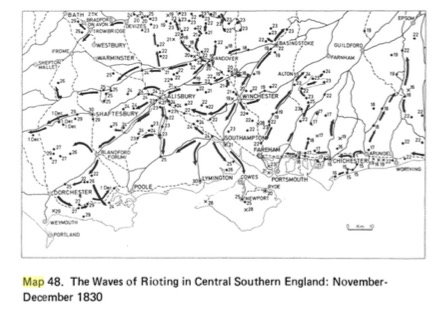
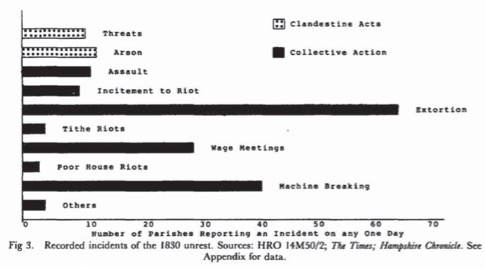


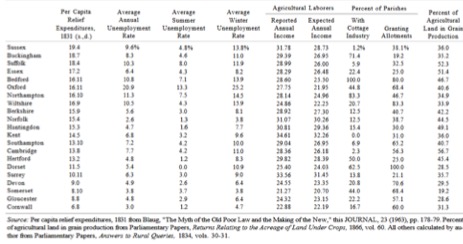
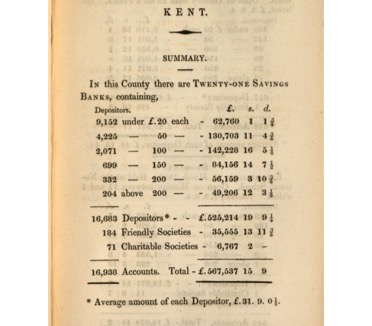

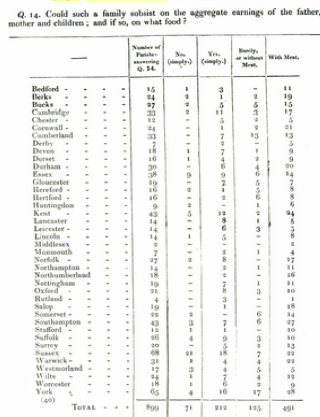
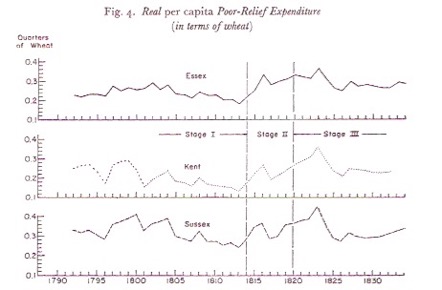

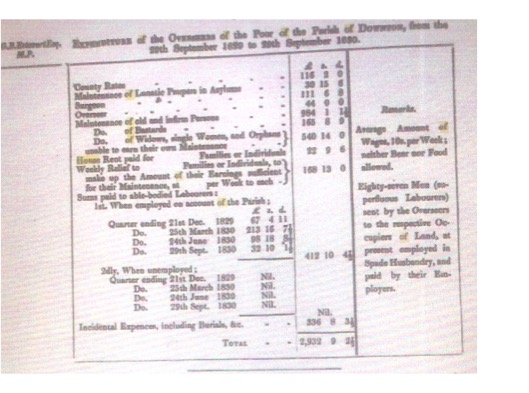


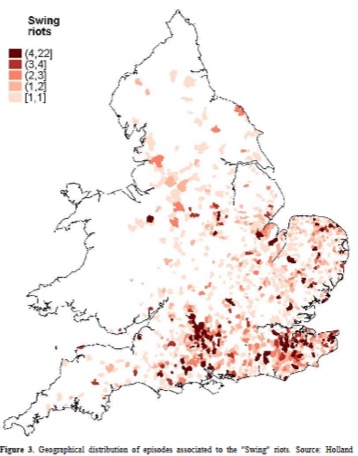


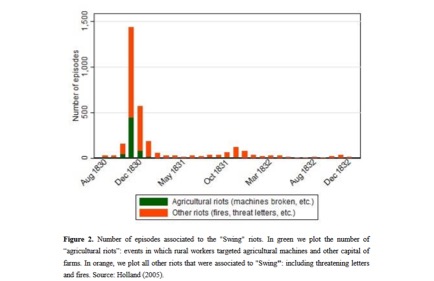

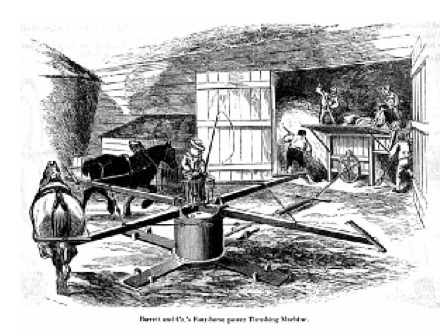

 The Industrial Revolution in England was not All Bad